


Taiwan will propose holding talks with the US under the Trade and Investment Framework Agreement (TIFA) during bilateral meetings on the sidelines of an APEC summit in Singapore, an official said yesterday.
“Given the close economic relations between the two sides, Taiwan hopes to discuss many bilateral trade issues with the US, including the TIFA talks,” Bureau of Foreign Trade Director-General Huang Chih-peng (黃志鵬) said.
Huang is in Singapore for a two-day meeting that marks the start of the annual APEC Leaders’ Week activities. The meeting of senior officials precedes meetings with ministers and leaders.
In the absence of diplomatic ties, the TIFA talks have become the most important channel for the Taiwan-US dialogue on trade and economic issues.
The annual TIFA talks are usually hosted alternately by Taiwan and the US. However, they have been suspended since 2007 because of differences between the two sides on a number of issues, including Taiwan’s ban on some US beef products.
Taiwan agreed last month to lift the ban on imports of US bone-in beef and ground beef, as well as bovine intestines, brains, spinal cords and processed beef from cattle younger than 30 months, but the decision drew flak at home, with local governments threatening to boycott the products.
Asked whether Minister of Economic Affairs Shih Yen-hsiang (施顏祥) would bring up the TIFA issue with the US representative at the APEC ministerial meeting that will follow the senior officials’ meeting, Huang said, “That’s right, he will come up with a proposal” for resuming TIFA talks.
But Taiwan’s representatives will not take the initiative to address the beef trade issue in their talks with their US counterparts on the APEC sidelines, Huang said, adding that beef importation is a bilateral issue and he cannot make any forecasts about problems that might develop.
The senior officials’ meeting began yesterday and is tasked with preparing the agenda and related documents for the ministerial and leaders’ meetings.
President Ma Ying-jeou (馬英九) designated former vice president Lien Chan (連戰) as his special envoy for the APEC summit, which has a theme this year of “Sustaining Growth, Connecting the Region.”
This will be the second consecutive year that Lien, also a former Chinese Nationalist Party (KMT) chairman, represents Taiwan at the APEC leaders summit.
He is expected to hold talks with foreign leaders on the sidelines of the summit.
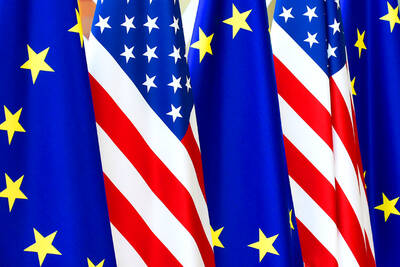
The EU and US are nearing an agreement to coordinate on producing and securing critical minerals, part of a push to break reliance on Chinese supplies. The potential deal would create incentives, such as minimum prices, that could advantage non-Chinese suppliers, according to a draft of an “action plan” seen by Bloomberg. The EU and US would also cooperate on standards, investments and joint projects, as well as coordinate on any supply disruptions by countries like China. The two sides are additionally seeking other “like-minded partners” to join a multicountry accord to help create these new critical mineral supply chains, which feed into
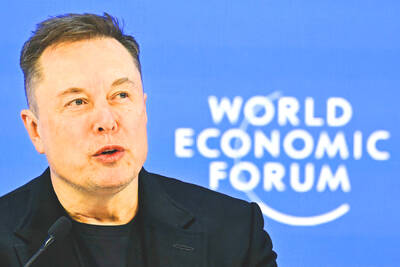
Elon Musk’s lieutenants have reached out to chip industry suppliers, including Applied Materials Inc, Tokyo Electron Ltd and Lam Research Corp, for his envisioned Terafab, early steps in an audacious and likely arduous attempt to break into the production of cutting-edge chips. Staff working for the joint venture between Tesla Inc and Space Exploration Technologies Corp (SpaceX) have sought price quotes and delivery times for an array of chipmaking gear, people familiar with the matter said. In past weeks, they’ve contacted makers of photomasks, substrates, etchers, depositors, cleaning devices, testers and other tools, according to the people, who asked not to

Japan approved ¥631.5 billion (US$3.97 billion) in additional subsidies to hasten Rapidus Corp’s entry into the high-stakes artificial intelligence (AI) chipmaking arena, ramping up support for a project widely regarded as a long shot. The capital is intended to bankroll Rapidus’ work for information technology firm Fujitsu Ltd, one of the initial customers that Tokyo hopes would get the signature endeavor off the ground. The new money raises the fees and investments that the government is injecting into the start-up to ¥2.6 trillion by the end of the current fiscal year to March next year, the Japanese Ministry of Economy, Trade and
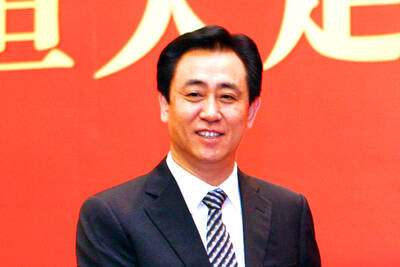
The founder of Chinese property giant Evergrande Group (恆大集團) has pleaded guilty to charges of fraud and bribery, a court said yesterday, the latest blow for what was once the country’s leading developer. Evergrande’s rise was propelled by decades of rapid urbanization and rising living standards, but in 2020, its access to credit dramatically narrowed when the government introduced curbs on excessive borrowing and speculation. The company defaulted in 2021 after struggling to repay creditors. Founder Xu Jiayin (許家印), 67, known as Hui Ka Yan in Cantonese, was reportedly held by police in 2023, with Evergrande saying he had been subjected to


 RSS
RSS