


As 87-year-old casino tycoon Stanley Ho (何鴻燊) convalesces after a serious fall at home in Macau, his rivals are speculating on who will fill the power vacuum when he eventually dies.
Ho’s heir is far from apparent, analysts argue, as his relations with his family are unconventional at best — his sister has filed dozens of lawsuits against him and he counts two children among his business rivals.
The billionaire underwent surgery last month as reports of his poor health sent shares in his casino firm tumbling. Media have reported that Ho tripped and hit his head at home but is now in a stable condition.
Although recovering well, his advancing years have analysts speculating on whether he is losing his grip on the southern Chinese casino haven he has dominated for the last 40 years.
“Since Macau opened its markets to foreign investors the era of Stanley Ho has been diminishing gradually,” said Zeng Zhonglu (曾忠祿), a gaming industry expert at Macau Polytechnic Institute. “I don’t think there will be another figure like Stanley Ho — that time has gone.”
COLORFUL STORY
Ho’s life story is as colorful as the gleaming towers of his flagship Grand Lisboa casino.
The nephew of one of Asia’s first tycoons, Ho made his first fortune smuggling luxury goods across the Chinese border during World War II, before securing the only gaming license in the then-Portuguese colony in 1962.
He ran the monopoly until 2002, when foreign operators were allowed to open casinos, sparking a boom in the city’s revenues. Macau now makes more from gaming than Las Vegas.
Ho went on to run transport businesses and a racetrack, making him one of Asia’s richest men. Along the way, the keen ballroom dancer cultivated a playboy lifestyle, taking four wives and fathering at least 17 children, two of whom, Pansy and Lawrence, run rival concessions with foreign partners in Macau.
“Stanley Ho’s greatest achievement in Macau before 1999 was that he was its biggest employer,” Zeng said, adding that the tycoon had changed the face of the resort. “And he made a great contribution to the government as a taxpayer.”
But since 2002 Ho has been engaged in a bitter legal dispute with his estranged sister Winnie (何婉琪), a shareholder in the parent company of his casino firm Sociedade de Jogos de Macau (SJM), who has taken out more than 30 lawsuits in Macau and Hong Kong against him and his firm.
In February, an article in Forbes magazine said Ho’s personal fortune had dropped 89 percent over a year, from US$9 billion to just US$1 billion, mainly because of the disappointing listing of SJM.
When the IPO was first mooted in January last year, SJM hoped to raise around US$2 billion. The final figure, however, was around a quarter of that.
Ho has struggled to adapt to the influx of foreign-owned casinos and operators such as Las Vegas Sands and Wynn have torn into his market share, overshadowing his less glitzy gaming dens.
SJM still controls 19 gaming halls, the two tallest Macau buildings, horse and dog-racing tracks, a jetfoil fleet, a helicopter service, five hotels, department stores and residential and commercial property, a recent report in the South China Morning Post said. But the firm’s share of gaming revenue decreased from 74.7 percent in 2005, a year after the first foreign-run casino opened, to 39.9 percent in 2007, the company’s prospectus said.
Proceeds decreased from US$4.4 billion in 2006 to US$4.1 billion in 2007, the prospectus said, at a time when the city’s overall take skyrocketed to exceed that of the Las Vegas Strip.
Ho’s son Lawrence (何猷龍) — who says he never gambles — is often seen as Macau’s next “gambling king.”
The 31-year-old’s company, a NASDAQ-listed joint venture with Australian entertainment tycoon James Packer, is one of six concessionaires allowed to operate casinos in Macau.
WELL-GROOMED
“Stanley Ho has done a great job of grooming several of his family members with an understanding of business, relationships, and the strategic partnerships necessary to carry the business forward,” Jonathan Galaviz, a partner at Las Vegas-based consulting firm Globalysis, told reporters.
“SJM now has a significant management depth, that if Dr Ho were to retire the company would certainly remain as a company with significant influence in the Asian marketplace,” he said.
Perhaps the more vexing question for analysts is what will happen to Macau in the post-Ho decades.
“There is an increasing element of competition in all sectors of Macau’s economy as the SAR [Special Administrative Region] opens its economy to foreign competition and as it liberalises its regulatory environment,” Galaviz said.
“It is critical for Macau to diversify its economy to be a stronger player in the financial services, technology, and medical services sectors of Asia while also continuing to grow its core tourism offering,” he said.

Cairo’s new monorail slices across the city skyline, running above the familiar chaos of blaring horns and aging buses’ exhaust fumes that mark rush hour below. The US$4.5 billion monorail, opened this month, is among Egypt’s most prominent new transport projects, part of a debt-funded infrastructure drive criticized for sapping state finances while bringing limited benefits to most of the country’s 109 million people. “It feels like you’re in a different country,” said Ramy Sayed, a restaurant manager, aboard a driverless Innovia 300 train. “No noise, no traffic, we’re not used to this.” The eastern line runs 56km from the bustling middle-class

Taiwanese firms have increased investment in the Philippines in recent years as Manila’s ties with Washington deepen and global supply chains continue to shift away from China, an expert at the Chung-Hua Institution for Economic Research (CIER, 中華經濟研究院) said yesterday. The Philippines had not been among Taiwanese investors’ top choices in Southeast Asia, CIER Taiwan ASEAN Studies Center director Kristy Hsu (徐遵慈) said at a seminar in Taipei. However, Taiwan’s investment in the country has grown significantly since the COVID-19 pandemic, reaching US $257 million last year, a high in recent years, she said. Although Taiwan’s total investment in the Philippines still lags

Intel Corp regards Taiwan Semiconductor Manufacturing Co (TSMC, 台積電) as a longstanding partner, as the US chipmaker would continue outsourcing production of advanced chips to TSMC, Intel chief executive officer Lip-Bu Tan (陳立武) said yesterday. “I don’t look at people as competitors. I look at the collaboration... Nvidia is also, you know, a good friend,” Tan told a news conference following his keynote speech at the Computex trade show in Taipei. “It’s a very trusted partnership for us... We are a big, top customer for them, and we’re going to continue doing that,” he said, referring to TSMC, the world’s largest foundry
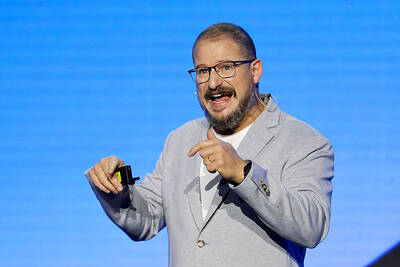
Artificial intelligence (AI) agents would supplant smartphones as the center of people’s digital lives, fundamentally reshaping personal devices and driving a major computing upgrade cycle, Qualcomm Inc CEO Cristiano Amon said yesterday. In his keynote speech for this year’s Computex trade show in Taipei, Amon said that the rise of "agentic AI" — AI systems capable of reasoning, planning and carrying out tasks autonomously — would transform how people interact with technology across phones, PCs, vehicles and wearable devices. Describing the technology as the next major evolution in computing, Amon said that "2026 is the year of agents.” For decades, smartphones have sat


 RSS
RSS