


Taiwan should play a more active role in “getting ready” to facilitate full currency convertibility between the New Taiwan dollar and the yuan, Nicholas Kwan (關家明), regional head of research in Asia for Standard Chartered Bank Ltd, told a media briefing yesterday.
“Along with enhanced cross-strait trade, it is of mutual interest for both Taiwan and China to prepare for a currency clearance mechanism to launch full convertibility between the NT dollar and the Renminbi [yuan],” the Hong Kong-based economist said.
Taiwan began limited exchanges between the NT dollar and the Chinese yuan in June last year in the wake of increased Chinese tourists visiting Taiwan even though the two sides had yet to work out clearing and settlement measures. Under the ceiling of 20,000 yuan per transaction, the exchange services are available at most banks, hotels and department stores.
Taiwan and China agreed to establish a clearing system in April when Taiwan’s Straits Exchange Foundation and its Chinese counterpart, the Association for Relations Across the Taiwan Strait, signed a financial cooperation agreement following their third round of negotiations.
Tony Phoo (符銘財), the bank’s Taipei-based chief economist, said converting yuan directly into local currency, without having to convert into US dollars or Hong Kong dollars, was feasible and efficient in terms of transaction costs.
However, Phoo said it may not be of great urgency in the short term as the nation’s China-bound capital outflows still outweigh the inflows of Chinese capital.
The convertibility issue will be addressed when Taiwan opens itself to Chinese capital and narrows the gap in capital exchanges, he said.
Both economists agreed that Taiwan enjoys economic advantages from its warming businesses ties with China — one of the fastest-growing economies in the world, with an estimated 8 percent GDP growth this year.
Against this background, Kwan urged Taiwan to first enact the “contents” of the financial memorandum of understanding and the cross-strait economic cooperation framework agreement (ECFA), rather than focus on the timing for signing the two deals.
News over last weekend that the government might delay the signing of an ECFA with China until next year triggered a more than 3 percent decline in local stocks on Monday.
On Tuesday, Minister of Economic Affairs Yiin Chii-ming (尹啟銘) said representatives from both sides of the Strait would begin negotiations on the ECFA in October after the ministry releases the results of a study of the proposed pact and its impact later this month.
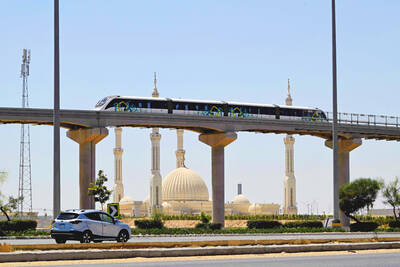
Cairo’s new monorail slices across the city skyline, running above the familiar chaos of blaring horns and aging buses’ exhaust fumes that mark rush hour below. The US$4.5 billion monorail, opened this month, is among Egypt’s most prominent new transport projects, part of a debt-funded infrastructure drive criticized for sapping state finances while bringing limited benefits to most of the country’s 109 million people. “It feels like you’re in a different country,” said Ramy Sayed, a restaurant manager, aboard a driverless Innovia 300 train. “No noise, no traffic, we’re not used to this.” The eastern line runs 56km from the bustling middle-class
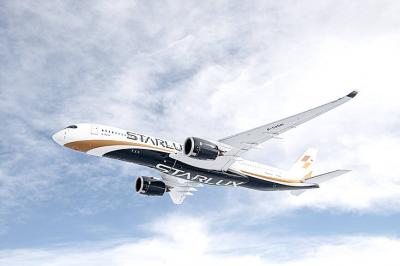
Starlux Airlines Co (星宇航空) today unveiled a long-haul network expansion plan at a shareholders’ meeting in Taipei, including direct flights to Barcelona, Spain, and Zurich, Switzerland, as well as a service connecting Taipei, Sydney and New Zealand. Starlux is to become the first Taiwanese carrier to offer non-stop services to the two European cities, while the inaugural oceanic route is expected to expand transit opportunities within the Australia-New Zealand market, Starlux said. Flight services to Chicago, Dallas, Washington and New York are under evaluation, the airline added. Prior to the shareholders’ meeting, the airline earlier this year announced that it would be

Taiwanese firms have increased investment in the Philippines in recent years as Manila’s ties with Washington deepen and global supply chains continue to shift away from China, an expert at the Chung-Hua Institution for Economic Research (CIER, 中華經濟研究院) said yesterday. The Philippines had not been among Taiwanese investors’ top choices in Southeast Asia, CIER Taiwan ASEAN Studies Center director Kristy Hsu (徐遵慈) said at a seminar in Taipei. However, Taiwan’s investment in the country has grown significantly since the COVID-19 pandemic, reaching US $257 million last year, a high in recent years, she said. Although Taiwan’s total investment in the Philippines still lags
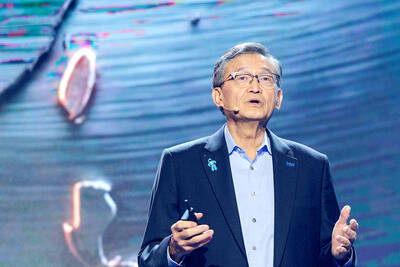
Intel Corp regards Taiwan Semiconductor Manufacturing Co (TSMC, 台積電) as a longstanding partner, as the US chipmaker would continue outsourcing production of advanced chips to TSMC, Intel chief executive officer Lip-Bu Tan (陳立武) said yesterday. “I don’t look at people as competitors. I look at the collaboration... Nvidia is also, you know, a good friend,” Tan told a news conference following his keynote speech at the Computex trade show in Taipei. “It’s a very trusted partnership for us... We are a big, top customer for them, and we’re going to continue doing that,” he said, referring to TSMC, the world’s largest foundry


 RSS
RSS