


The Asian Development Bank (ADB) yesterday called for a fundamental “rebalancing” of regional economies in response to the global crisis, while predicting a “mild recovery” next year.
Opening the ADB’s board of governors annual meeting in Bali, president Haruhiko Kuroda said the region would record only 3.4 percent growth this year but could expect a rebound to around 6 percent growth next year.
“With strong national and regional efforts and a mild recovery expected in the global economy next year, developing Asia and the Pacific should bounce back to about 6.0 percent growth in 2010,” he said. “These are positive signs, therefore this should not be a time of despair.”
He outlined a huge expansion in the ADB’s lending plans to help stimulate developing economies across Asia, after shareholders agreed last week to triple the bank’s capital base in response to the global downturn.
The bank will increase its overall lending assistance to the region’s poorest countries by more than US$10 billion this year and next year, including US$3 billion to meet “urgent needs stemming from the crisis,” Kuroda said.
Some of that lending would aim to help Asian economies adjust to plunging demand for their exports to markets such as the US.
“The transfer of savings from one part of the world to another worked well when advanced economies could absorb production from developing economies, but the current state of the global economy suggests that era has passed,” Kuroda said. “By rebalancing export-driven growth with a greater reliance on domestic demand and consumption, Asia can lead the way in charting a new, globally beneficial development course.”
Interest rate cuts and government spending will help spur the recovery in Asia, where banks are not suffering problems on the same scale as their US and European peers, the IMF has said.
Economic data have raised hopes that China could be the first major economy to disentangle itself from the worldwide crisis, providing new growth momentum for its trading partners in the region.
In India, expectations of a healthy harvest fueling consumer spending has driven India’s benchmark SENSEX share index to a six-month high as fund managers switch their country ratings to “overweight” from “underweight.”
Kuroda also called for changes in the global financial architecture to give voice to the aspirations of Asia, where powerhouses like China and India are emerging as rivals to US domination of the world economy.
Ten Asian countries plus China, Japan and South Korea agreed on Sunday to set up a US$120 billion regional emergency fund to help Asian economies out of crises.
Indonesian President Susilo Bambang Yudhoyono said “precautionary mechanisms” like the regional liquidity fund were necessary to “ensure foreign exchange stability and confidence” in crisis-hit local currencies.
He said Indonesia, Southeast Asia’s biggest economy, had learned from the economic turmoil that swept Asia in the late 1990s and had launched “sweeping reforms” that helped it avoid recession in the current downturn.
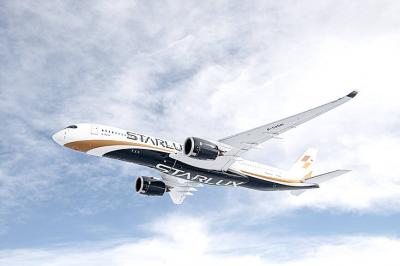
Starlux Airlines Co (星宇航空) today unveiled a long-haul network expansion plan at a shareholders’ meeting in Taipei, including direct flights to Barcelona, Spain, and Zurich, Switzerland, as well as a service connecting Taipei, Sydney and New Zealand. Starlux is to become the first Taiwanese carrier to offer non-stop services to the two European cities, while the inaugural oceanic route is expected to expand transit opportunities within the Australia-New Zealand market, Starlux said. Flight services to Chicago, Dallas, Washington and New York are under evaluation, the airline added. Prior to the shareholders’ meeting, the airline earlier this year announced that it would be
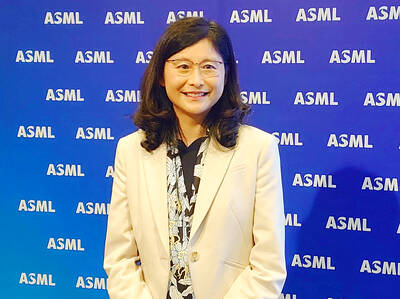
Netherlands-based semiconductor equipment supplier ASML Holding NV yesterday said that it is planning to hire an additional 1,000 people in Taiwan this year in response to growing demand from clients. ASML had previously planned to recruit 600 people this year, but that the plan has been adjusted upward, ASML vice president and ASML Taiwan general manager Grace Wang (汪佳慧) told reporters. ASML has a workforce of more than 4,500 in Taiwan, accounting for about 10 percent of its global total, Wang said. This year’s recruitment campaign would focus on adding people in the customer support, manufacturing and supply chain domains to assist ASML

UNDER MICROSCOPE: Taiwan detained three people who allegedly conspired to buy servers in Taiwan and export them using fraudulent documentation, prosecutors said Nvidia Corp chief executive officer Jensen Huang (黃仁勳) on Saturday urged Super Micro Computer Inc to tighten up on compliance after Taiwan detained three people this week for allegedly making fraudulent declarations about artificial intelligence (AI) servers made by its US partner. The development marked the nation’s first crackdown on semiconductor smuggling, which grew after the US slapped restrictions on exports of high-end chips such as Nvidia AI accelerators to China. Nvidia is “rigorous” in explaining regulations to all of its partners, Huang told reporters after arriving in Taipei. “Ultimately Super Micro has to run their own company,” he said in response to

Nvidia Corp yesterday announced that CEO Jensen Huang (黃仁勳) would attend an employee meeting in Taipei tomorrow to celebrate the launch of the company’s Taiwan headquarters project. Huang would attend a gathering at the site of Nvidia’s planned headquarters in Beitou Shilin Technology Park (北投士林科技園區), the company said in a statement. After arriving in Taiwan on Saturday last week, Huang told reporters that he plans to meet with Quanta Computer Inc (廣達) chairman Barry Lam (林百里) and Taiwan Semiconductor Manufacturing Co (TSMC, 台積電) chairman C.C. Wei (魏哲家), and would attend the groundbreaking ceremony for Nvidia’s Taiwan headquarters tomorrow. Nvidia has not yet applied


 RSS
RSS