


Twenty or more three-star hotels may be finished nationwide by the end of the year to accommodate the hundreds of thousands of Chinese tourists expected, a realtor said yesterday, adding that 12 hotel operators had expressed an interest in the market.
That will translate into a total investment of between NT$1 billion and NT$3 billion (US$28.9 million to US$86.7 million) at a cost of between NT$50 million per 40-room hotel and NT$150 million per 150-room hotel, King Chiao (焦文華), president of Hsin-Yuan Business Rehouse Co (欣元商仲), said by telephone.
“The investment return can be attractive although it takes three to five years for businesses to break even,” Chiao said.
Thirty to 50 three-star hotels in good locations needed to be developed for Chinese tourists whose room budget ranges between NT$1,500 and NT$3,000 per night, and this could be done by by renovating office buildings, he said.
For example, if an 1,800-ping office building was turned into a 100-room hotel with a room rate of NT$2,000 per night, the return could reach NT$5.4 million — based on 90 percent occupancy. Chiao said. That is much higher the monthly rent of NT$2.16 million, or NT$1,200 per ping, he said.
In Taipei City alone, 1,000 three-star hotels such as Dandy Hotel (丹迪旅店) and CityInn Hotel (新驛旅店) — most of which boast an average occupancy rate of 90 percent — have opened in the past three years, he said.
Twelve operators, including five-star chains Howard Hotel (福華飯店), Grand Formosa Regent Hotel (晶華酒店) and Leofoo Hotel (六福客棧), have expressed an interest in the three-star business, he said. Chinese chains Home Inns (如家酒店) and Jinjiang Inn Co (錦江之星) are also mulling expanding into Taiwan if the rules on Chinese property investments are relaxed.
Not everyone is as optimistic as Chiao.
Jeffrey Huang (黃增福), an assistant manager at Evertrust Rehouse Co’s (永慶房屋) research and development department, said it remained to be seen whether all the Chinese tourists expected — up to 800,000 before the end of the year — would turn up.
Meanwhile, Evertrust Rehouse’s latest statistics showed that the luxury home market in the greater Taipei area began to show signs of stabilizing last month.
The average selling price of luxury homes in Taipei and Taipei County last month reached NT$483,000 and NT$284,000 per ping respectively, down 1.4 percent and 2.1 percent from two months ago, the realtor said in a statement.
The number of deals closed last month increased by 2 percent and 4.2 percent in Taipei City and Taipei County respectively, compared with the fourth quarter of last year, the company said.

SECOND-RATE: Models distilled from US products do not perform the same as the original and undo measures that ensure the systems are neutral, the US’ cable said The US Department of State has ordered a global push to bring attention to what it said are widespread efforts by Chinese companies, including artificial intelligence (AI) start-up DeepSeek (深度求索), to steal intellectual property from US AI labs, according to a diplomatic cable. The cable, dated Friday and sent to diplomatic and consular posts around the world, instructs diplomatic staff to speak to their foreign counterparts about “concerns over adversaries’ extraction and distillation of US AI models.” Distillation is the process of training smaller AI models using output from larger, more expensive ones to lower the costs of training a powerful new
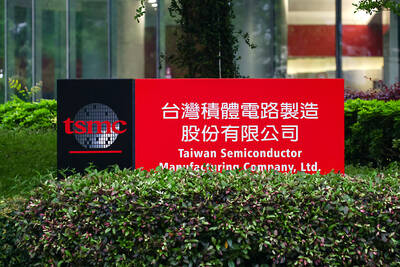
Shares of Taiwan Semiconductor Manufacturing Co (TSMC, 台積電) have repeatedly hit new highs, but an equity analyst said the stock’s valuation remains within a reasonable range and any pullback would likely be technical. The contract chipmaker’s historical price-to-earnings (P/E) ratio has ranged between 20 and 30, Cathay Futures Consultant Co (國泰證期) analyst Tsai Ming-han (蔡明翰) told Central News Agency. With market consensus projecting that TSMC would post earnings per share of about NT$100 (US$3.17) this year, supported by strong global demand for artificial intelligence (AI) applications, and the stock currently trading at a P/E ratio of below 25, Tsai said the valuation
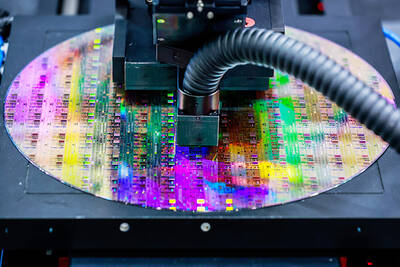
The artificial intelligence (AI) boom has triggered a seismic reshuffling of global equity markets, with Taiwan and South Korea muscling past European nations one by one. With its stock market now valued at nearly US$4.3 trillion, Taiwan surpassed the UK, Europe’s biggest market, earlier this month, data compiled by Bloomberg showed. South Korea is about US$140 billion away from doing the same. The tech-heavy Asian markets have shot past Germany and France in the past seven months. The shift is largely down to massive gains in shares of three companies that provide essential hardware for AI: Taiwan Semiconductor Manufacturing Co (TSMC, 台積電),
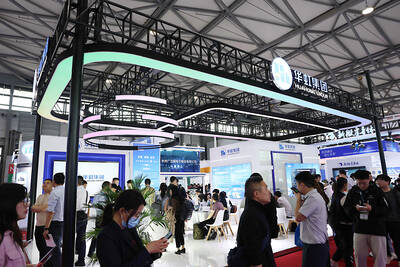
The US Department of Commerce last week ordered multiple chip equipment companies to halt shipments of certain tools to China’s second-largest chipmaker, Hua Hong Semiconductor Ltd (華虹半導體), its latest action to slow the country’s development of advanced chips, two people familiar with the matter said. The department sent letters to at least a handful of companies informing them of restrictions on tools and other materials destined for two Hua Hong facilities US officials believe make China’s most sophisticated chips, the people said. Top US chip equipment companies Lam Research Corp, Applied Materials Inc and KLA Corp, each of which has significant


 RSS
RSS