


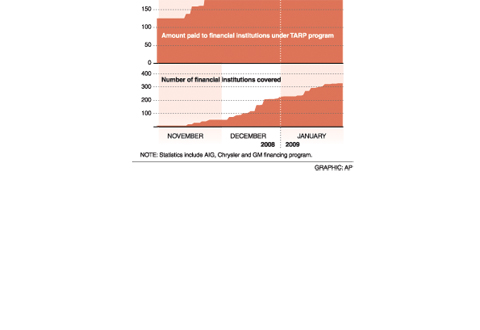
The administration of US President Barack Obama will impose tighter conditions on banks receiving money under the US$700 billion financial rescue program, but for now is not expected to ask Congress for more money in its sweeping overhaul of the bailout, industry and congressional officials said on Friday.
The decision not to request more money would be a relief to lawmakers, given that the administration is unveiling its changes in the midst of a debate over an economic recovery package that’s expected to cost about US$800 billion.
The program Treasury Secretary Timothy Geithner is scheduled to unveil in a speech tomorrow could cost more than the US$350 billion still unspent in the Troubled Asset Relief Program (TARP). But officials said the administration would have room to overhaul how the program works before determining whether to seek more money from Congress.
“Some of the reforms can be paid for without a new appropriation,” one official familiar with the plan said.
The industry and congressional officials who spoke did so on condition of anonymity because the administration had not yet publicly released details of the program.
Key members of Congress had urged the administration not to request more money for the rescue program. Congress approved the US$700 billion program last fall, but since then, many lawmakers have complained that the Bush administration implemented a confused and ad hoc strategy.
“Until they are successful in showing the average American that the money is being used reasonably, there’s no point in asking for it, because they won’t get it,” House Financial Services Committee Chairman Barney Frank said last week.
The administration declined Friday to provide any specifics of what will be in Geithner’s new plan to address the worst financial crisis to hit the country in seven decades. But the Treasury Department said the revamped plan would offer a comprehensive way to stabilize the financial system, while strengthening accountability, oversight and transparency to protect taxpayer money.
Industry and congressional officials said they thought the administration would continue to stress government purchases of bank stock as a way to bolster banks’ balance sheets and to try to get them to resume more normal lending.
But these officials said they believed the administration would impose tougher terms on the banks receiving money than in the first round of spending.
One official said the new terms will include requirements that banks that accept the next round of money work to get bad assets off their books.
The industry and congressional sources said they believed the new plan would also make broader use of government guarantees of bad assets that banks are carrying on their books. Those bad assets are helping to stifle lending.
The Bush administration used government guarantees in November when it agreed to limit Citigroup’s losses on a portfolio of US$301 billion in troubled assets.
It used the same approach last month, when it agreed to provide increased support to Bank of America by covering US$118 billion of that bank’s troubled assets.
The administration’s new plan is likely to include at least a limited effort to buy banks’ bad assets. One possibility is to use a new lending facility the Federal Reserve is developing called the Term Asset-Backed Securities Loan Facility, these officials said.
The Fed on Friday announced new terms and conditions for this program and said a date for it to begin would be announced later this month.
But the program to buy bad assets is expected to be much smaller than the so-called “bad bank” the administration had considered creating to take some toxic assets off banks’ books.
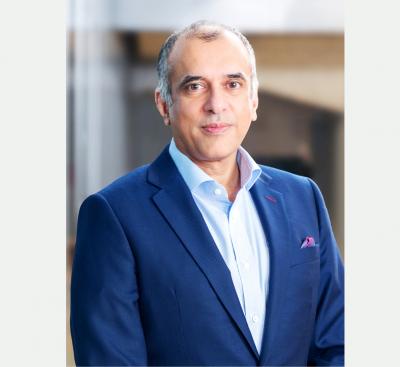
HSBC Holdings PLC is deepening its commitment to Taiwan as the economy emerges as one of the bank’s fastest-growing markets globally, driven by an artificial intelligence (AI) investment boom, expanding cross-border trade, and rising wealth creation. “The advantage that Taiwan has is a growth story linked to the semiconductor and broader AI industries, strong underlying corporate performance, and wealth creation,” said Surendra Rosha, HSBC’s co-chief executive for Asia and the Middle East, in an exclusive interview with the Taipei Times on June 2, during this year’s HSBC Taiwan Conference. That combination has helped HSBC cement its position as the most profitable international
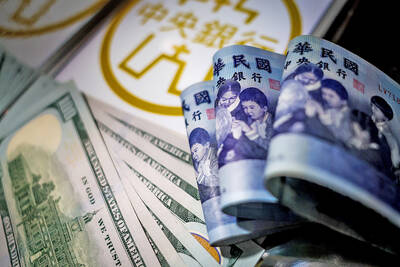
The New Taiwan dollar yesterday fell sharply against the US dollar to close at its lowest level since May 22 amid a massive outflow of funds from the country because of investors panicking over global equity markets. The NT dollar ended at NT$31.580 against the US dollar, slightly lower than its close of NT$31.568 on May 22, after moving between NT$31.5 and NT$31.648 on combined turnover of US$3.062 billion on the Taipei Foreign Exchange and the Cosmos Foreign Exchange. The NT dollar received a significant hit in the morning session, slumping as much as NT$0.173 at a time when other Asian currencies
Taiwan Semiconductor Manufacturing Co (TSMC, 台積電) is now ranked ninth among the world’s 100 most valuable companies after its market capitalization more than doubled over the past year, PricewaterhouseCoopers (PwC) Taiwan said in a report last month. TSMC’s market capitalization surged 101 percent year-on-year to US$1.427 trillion as of March 31, the accounting and consulting firm’s 2026 Global Top 100 Companies by Market Capitalization report said. The gain catapulted the world’s largest contract chipmaker from 12th place to ninth in the rankings, and it was the fastest-growing among the global top 10, it said. TSMC was the only Taiwanese company among the top
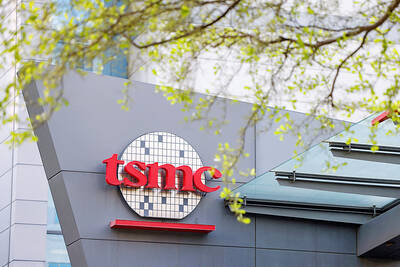
Taiwan Semiconductor Manufacturing Co (TSMC, 台積電) yesterday reported record revenue of NT$416.975 billion (US$13.17 billion) for last month, putting the world’s largest contract chipmaker on track to set a record for quarterly revenue. Last month’s figure surpassed March’s record NT$415.19 billion and represented increases of 1.5 percent from April and 30.1 percent from a year earlier. For the first five months of the year, TSMC generated NT$1.96 trillion in revenue, up 30 percent year-on-year, it said in a statement. TSMC has forecast second-quarter revenue of between US$39 billion and US$40.2 billion, representing sequential growth of about 10 percent and year-on-year growth of about


 RSS
RSS