


As the Cabinet is slated to call a cross-ministerial discussion today on how to boost the housing market, analysts said yesterday that government intervention could delay recovery, adding that overpricing poses the biggest obstacle to property deals.
The Cabinet is to convene a meeting of economic, financial, interior and public works officials today to find solutions to the sluggish property market.
Major developers have urged the government to lower legal thresholds on Chinese investors acquiring properties here.
To that end, Cabinet financial authorities are considering measures that include extending the stay visa for Chinese investors that own Taiwanese properties from a month to six months, easing checks on their capital sources and simplifying their acquisition procedures.
Victor Chang (張欣民), a marketing consultant with Era Real Estate Taiwan (易而安不動產), said the proposed deregulation would be of little help as China was battling its own economic slowdown.
The giant emerging market is struggling to retain 7 percent to 8 percent GDP this year after posting a two-digit increase in most recent years.
“I wonder how many Chinese investors would opt to buy properties in Taiwan amid the economic downturn,” Chang said by telephone. “Property prices are expected to drop further this year, prompting potential buyers to stay on the sidelines.”
Chang urged the government to refrain from intervention to let the market hit bottom, which would help the market recover faster.
The series of stimulus measures, including interest rate cuts, have contributed to the tug of war between sellers and buyers, the consultant said, adding that he believed real estate prices would decline another 20 percent to 30 percent.
“Taiwan property prices sank 10 [percent] to 15 percent last year while their counterparts in Singapore plunged up to 40 percent,” Chang pointed out.
Stanley Su (蘇啟榮), senior researcher at Sinyi Realty Co (信義房屋), Taiwan’s only listed property broker, agreed.
Su said deregulation for Chinese investors was part of the effort to spur cross-strait trade rather than a housing market stimulant.
“Any stimulus [short of price falls] will fail to achieve its intended effect as long as the world is in recession,” Su said by telephone. “The government should allow the market to adjust prices on its own.”
Su said the rate cuts helped boost transactions among first-time buyers but believed property prices would drop another 10 percent to attract investors at home and across the strait.
James Tien (田大權), executive director of Voix Marketing Co (大聲公行銷), urged the government to focus on improving infrastructure facilities if it means revitalizing the housing market.
“The sluggish market shows an imbalance between supply and demand,” Tien said by telephone. “It is time the unfit exit the market, which will regulate itself.”
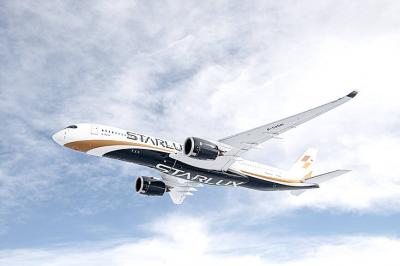
Starlux Airlines Co (星宇航空) today unveiled a long-haul network expansion plan at a shareholders’ meeting in Taipei, including direct flights to Barcelona, Spain, and Zurich, Switzerland, as well as a service connecting Taipei, Sydney and New Zealand. Starlux is to become the first Taiwanese carrier to offer non-stop services to the two European cities, while the inaugural oceanic route is expected to expand transit opportunities within the Australia-New Zealand market, Starlux said. Flight services to Chicago, Dallas, Washington and New York are under evaluation, the airline added. Prior to the shareholders’ meeting, the airline earlier this year announced that it would be
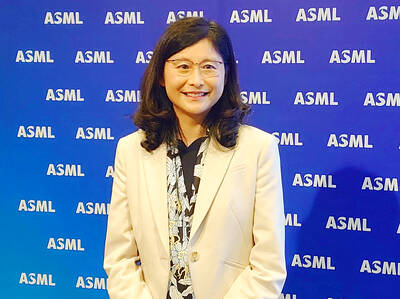
Netherlands-based semiconductor equipment supplier ASML Holding NV yesterday said that it is planning to hire an additional 1,000 people in Taiwan this year in response to growing demand from clients. ASML had previously planned to recruit 600 people this year, but that the plan has been adjusted upward, ASML vice president and ASML Taiwan general manager Grace Wang (汪佳慧) told reporters. ASML has a workforce of more than 4,500 in Taiwan, accounting for about 10 percent of its global total, Wang said. This year’s recruitment campaign would focus on adding people in the customer support, manufacturing and supply chain domains to assist ASML

UNDER MICROSCOPE: Taiwan detained three people who allegedly conspired to buy servers in Taiwan and export them using fraudulent documentation, prosecutors said Nvidia Corp chief executive officer Jensen Huang (黃仁勳) on Saturday urged Super Micro Computer Inc to tighten up on compliance after Taiwan detained three people this week for allegedly making fraudulent declarations about artificial intelligence (AI) servers made by its US partner. The development marked the nation’s first crackdown on semiconductor smuggling, which grew after the US slapped restrictions on exports of high-end chips such as Nvidia AI accelerators to China. Nvidia is “rigorous” in explaining regulations to all of its partners, Huang told reporters after arriving in Taipei. “Ultimately Super Micro has to run their own company,” he said in response to

Nvidia Corp yesterday announced that CEO Jensen Huang (黃仁勳) would attend an employee meeting in Taipei tomorrow to celebrate the launch of the company’s Taiwan headquarters project. Huang would attend a gathering at the site of Nvidia’s planned headquarters in Beitou Shilin Technology Park (北投士林科技園區), the company said in a statement. After arriving in Taiwan on Saturday last week, Huang told reporters that he plans to meet with Quanta Computer Inc (廣達) chairman Barry Lam (林百里) and Taiwan Semiconductor Manufacturing Co (TSMC, 台積電) chairman C.C. Wei (魏哲家), and would attend the groundbreaking ceremony for Nvidia’s Taiwan headquarters tomorrow. Nvidia has not yet applied


 RSS
RSS