


Global stock markets on Wednesday closed out a year suffering the worst losses since the Great Depression, with investors eyeing a possible recovery but cautious in the face of a deep economic crisis.
Investors are assessing the damage of a calamitous year that has sapped 40 percent or more from many stock indexes.
The Dow Jones Industrial Average of 30 blue chips suffered a loss of 33.84 percent, the worst since 1931, when the index plunged 52.67 percent.
The broad-market Standard & Poor’s 500 index lost 38.49 percent, also the worst in 77 years. It has been as much as 52 percent below its all-time peak in October 2007, marking the worst bear market since 1931, according to S&P.
The NASDAQ composite slid 40.54 percent last year, the worst year since its creation in 1971.
Other markets around the world also suffered brutal losses including Japan’s Nikkei (42.12 percent), Frankfurt’s DAX (40.37 percent) and the Paris CAC 40 (40.37 percent), while London’s FTSE has given back 31.33 percent.
TESTED
“It was a year in which our financial system was tested like no other time since the Depression,” said Kevin Giddis at Morgan Keegan. “We saw the complete collapse of storied firms on Wall Street, we saw Treasury bills achieve a negative yield, and we have seen the US government enter the fray in such a way that the walls of capitalism were rocked off its foundation.”
With the new year, he said “we carry a lot of our problems with us: a very weak economy, a banking system that is struggling to get back on its feet and a housing market that is passing into its third year of decline. But there is hope. At some point, the initiatives that the Fed and the Treasury have put forth will work; they have to, and banks will begin to lend on a greater scale.”
Art Hogan, an analyst at Jefferies, said the year saw devastation on a historic scale.
“It’s literally as bad as the market can get, in every shape or form: losses of jobs, economy, devastation in equities and residential real estate,” he said.
Because of the unprecedented losses, Hogan said the feeling was that “next year has got to be better.”
In other markets, Hong Kong and Singapore almost halved in value over the year, Sydney lost more than 40 percent, Mumbai 52 percent and Shanghai 65 percent — the steepest annual loss in the Chinese market’s 18-year history.
Sam Stovall, an equity strategist at S&P, said he saw a likely recovery from oversold conditions this year.
“There is a good chance that we could be seeing a bit of recovery next year but I still think what I would call a range-bound recovery,” he said.
‘SUCKER RALLY’?
Investors bruised by the worst losses in decades are trying to determine whether the worst is over or if what seems like a rebound will end up being a “sucker rally.”
But many analysts are banking on a “bottom” that will allow markets to recover even if the economy is still sputtering.
“The underpinnings of the markets continue to improve, but it is still too early to say that the worst is finally over,” said Paul Nolte at Hinsdale Investments.
“Our best guess at this point is that we rally a bit early in the New Year as investors wish 2008 good riddance. However, once the likelihood of a still weak economy persists into the second quarter, we could visit the old lows again,” he added. “We are expecting that the second half of the year is not only good for the market, but also we should begin to see the effects of the huge monetary ‘dump’ and the economy should also begin to improve.”
Yet there is no shortage of doomsayers arguing that the meltdown is not over. Bill Gross, a respected bond fund manager, urged caution.
“Stocks are cheap when valued within the context of a financed-based economy once dominated by leverage, cheap financing and even lower corporate tax rates,” he said.
“That world, however, is in our past, not our future,” he said.
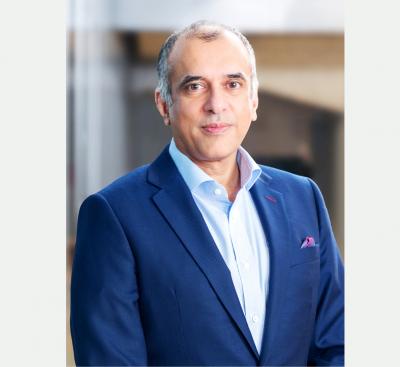
HSBC Holdings PLC is deepening its commitment to Taiwan as the economy emerges as one of the bank’s fastest-growing markets globally, driven by an artificial intelligence (AI) investment boom, expanding cross-border trade, and rising wealth creation. “The advantage that Taiwan has is a growth story linked to the semiconductor and broader AI industries, strong underlying corporate performance, and wealth creation,” said Surendra Rosha, HSBC’s co-chief executive for Asia and the Middle East, in an exclusive interview with the Taipei Times on June 2, during this year’s HSBC Taiwan Conference. That combination has helped HSBC cement its position as the most profitable international
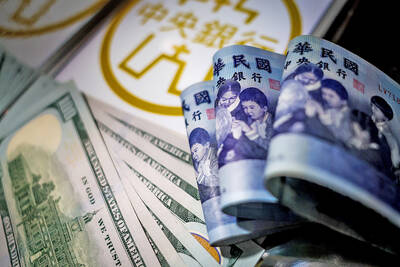
The New Taiwan dollar yesterday fell sharply against the US dollar to close at its lowest level since May 22 amid a massive outflow of funds from the country because of investors panicking over global equity markets. The NT dollar ended at NT$31.580 against the US dollar, slightly lower than its close of NT$31.568 on May 22, after moving between NT$31.5 and NT$31.648 on combined turnover of US$3.062 billion on the Taipei Foreign Exchange and the Cosmos Foreign Exchange. The NT dollar received a significant hit in the morning session, slumping as much as NT$0.173 at a time when other Asian currencies
Taiwan Semiconductor Manufacturing Co (TSMC, 台積電) is now ranked ninth among the world’s 100 most valuable companies after its market capitalization more than doubled over the past year, PricewaterhouseCoopers (PwC) Taiwan said in a report last month. TSMC’s market capitalization surged 101 percent year-on-year to US$1.427 trillion as of March 31, the accounting and consulting firm’s 2026 Global Top 100 Companies by Market Capitalization report said. The gain catapulted the world’s largest contract chipmaker from 12th place to ninth in the rankings, and it was the fastest-growing among the global top 10, it said. TSMC was the only Taiwanese company among the top
Taiwan Semiconductor Manufacturing Co (TSMC, 台積電) yesterday reported record revenue of NT$416.975 billion (US$13.17 billion) for last month, putting the world’s largest contract chipmaker on track to set a record for quarterly revenue. Last month’s figure surpassed March’s record NT$415.19 billion and represented increases of 1.5 percent from April and 30.1 percent from a year earlier. For the first five months of the year, TSMC generated NT$1.96 trillion in revenue, up 30 percent year-on-year, it said in a statement. TSMC has forecast second-quarter revenue of between US$39 billion and US$40.2 billion, representing sequential growth of about 10 percent and year-on-year growth of about


 RSS
RSS