


Software giant Microsoft Corp is collaborating with HiPages (中華黃頁) to launch Live Pages, the most comprehensive Internet commercial search engine and interactive map service of its kind in Taiwan.
This further expands Microsoft’s presence in the Taiwanese search engine market.
HiPages is the nation’s leading business directory.
It currently contains 2,000 categories and over 800,000 individual business listings in its database.
“After our recent success with Windows Live, we’re continuing our efforts to bring a better Internet experience to our users through value-added software propositions,” Geena Lin (林燕), vice president of Microsoft Taiwan’s MSN business division, said at a media briefing yesterday.
“With Live Pages, Microsoft makes the business information searches and the maps interactive by using Windows Live Messenger,” she said.
Chi Li-ping (齊立平), programming manager of Microsoft Taiwan’s MSN business division, listed ways in which Live Pages differs from Google and Yahoo: more extensive business listings, easy search words, location-based searches that also include neighboring businesses and direct dialing via the Internet.
Vincent Tao (陶闖), senior director of Microsoft Virtual Earth and the local search business unit, described Live Pages as a complete 2D/3D experience and shared the firm’s long-term vision during the briefing.
“With computer-aided renderings and spatial imaging, Virtual Earth expands online mapping to include location searches, infotainment [entertainment plus information], social networking and L-commerce across all devices,” he said.
Users can try Live Pages at www.livepages.com.tw.

SECOND-RATE: Models distilled from US products do not perform the same as the original and undo measures that ensure the systems are neutral, the US’ cable said The US Department of State has ordered a global push to bring attention to what it said are widespread efforts by Chinese companies, including artificial intelligence (AI) start-up DeepSeek (深度求索), to steal intellectual property from US AI labs, according to a diplomatic cable. The cable, dated Friday and sent to diplomatic and consular posts around the world, instructs diplomatic staff to speak to their foreign counterparts about “concerns over adversaries’ extraction and distillation of US AI models.” Distillation is the process of training smaller AI models using output from larger, more expensive ones to lower the costs of training a powerful new

Micron Technology Inc is a driving force pushing the US Congress to pass legislation that would put new export restrictions on equipment its Chinese competitors use to make their chips, according to people familiar with the matter. A US House of Representatives panel yesterday was to vote on the “MATCH Act,” a bill designed to close gaps in restrictions on chipmaking equipment. It would also pressure foreign companies that sell equipment to Chinese chipmaking facilities to align with export curbs on US companies like Lam Research Corp and Applied Materials Inc. The bill targets facilities operated by China’s ChangXin Memory Technologies Inc

Singapore-based ride-hailing and delivery giant Grab Holdings’ planned acquisition of Foodpanda’s Taiwan operations has yet to enter the formal review stage, as regulators await supplementary documents, the Fair Trade Commission (FTC) said yesterday. Acting FTC Chairman Chen Chih-min (陳志民) told the legislature’s Economics Committee that although Grab submitted its application on March 27, the case has not been officially accepted because required materials remain incomplete. Once the filing is finalized, the FTC would launch a formal probe into the deal, focusing on issues such as cross-shareholding and potential restrictions on market competition, Chen told lawmakers. Grab last month announced that it would acquire
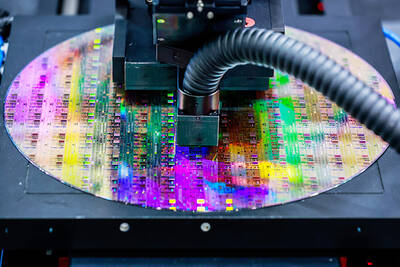
The artificial intelligence (AI) boom has triggered a seismic reshuffling of global equity markets, with Taiwan and South Korea muscling past European nations one by one. With its stock market now valued at nearly US$4.3 trillion, Taiwan surpassed the UK, Europe’s biggest market, earlier this month, data compiled by Bloomberg showed. South Korea is about US$140 billion away from doing the same. The tech-heavy Asian markets have shot past Germany and France in the past seven months. The shift is largely down to massive gains in shares of three companies that provide essential hardware for AI: Taiwan Semiconductor Manufacturing Co (TSMC, 台積電),


 RSS
RSS