


TSMC, Hon Hai post revenues
Taiwan Semiconductor Manufacturing Co (TSMC, 台積電) generated its highest-ever single-month consolidated revenue last month, while Taipei-based Hon Hai Precision Industry Co (鴻海精密), the world’s largest contract electronics maker, generated its fourth-largest single-month unconsolidated revenue since its 1974 founding.
TSMC, the world’s largest semiconductor foundry, said its consolidated revenue reached NT$31.81 billion (US$1.02 billion) last month, a 7.9 percent rise from June and a 7.9 percent increase from the same period last year.
The firm’s accumulated consolidated revenues in the first seven months of the year amounted to NT$207.43 billion, a growth of 22.5 percent compared with the same period last year.
Expecting a slowdown in market demand, TSMC executives estimated that the firm’s third-quarter revenues would be between NT$90 billion and NT$92 billion. Single-month consolidated revenue was therefore expected to drop to between NT$29 billion and NT$30 billion this month and next, they said.
Meanwhile, Hon Hai’s unconsolidated revenues reached NT$130.27 billion last month, posting growth of 21.2 percent from June, or 34.93 percent more than the same period last year.
Hon Hai said its accumulated revenues hit NT$745.67 billion in the first seven months this year, marking an annual growth rate of 22.8 percent.
Compal revenues rise 23%
Compal Electronics (仁寶電腦) posted revenue of NT$ 36.9 billion (US$ 1.189 billion) for last month, a 23 percent increase from June, but a 5 percent decline over the same period last year. Year to date revenue totals NT$237.1 billion.
Compal Electronics is the No. 2 original design manufacturer in the country. It produces notebook computers and monitors for Dell, Hewlett-Packard and Toshiba, among others.
LNG terminal delayed again
CPC Corp, Taiwan (CPC, 台灣中油) has once again delayed the startup of a new liquefied natural gas (LNG) terminal to the end of next month, the company’s vice president, Lin Cheng-hsiung (林正雄), said by phone yesterday.
The Taichung terminal, designed to process 3 million tonnes of LNG a year, will boost the nation’s capacity to handle LNG cargoes by almost 40 percent.
It had been scheduled to open in January, but the date was pushed back to last month. The project fell behind schedule as winds and waves slowed the construction of an undersea pipeline that is to transport gas from the terminal to the Tatan power plant.
“It’s difficult as winds and waves are huge in the north,” Lin said.
State-run CPC will cover any LNG shortfall caused by the delay with cargoes arriving at Yongan port, Lin said.
Taipei Smart Card alters name
Taipei Smart Card Corp (台北智慧卡票證公司) changed its name to EasyCard Corp yesterday to popularize the mass transit card of the same name, officials said.
They said 13.8 million Easy Cards had been issued to date in Taipei City and Taipei County.
The name “Easy Card” has gained higher recognition value than the company’s name, prompting the board of directors to make the change to support its efforts to expand into Keelung, Ilan, Matsu and elsewhere.
The hope is that consumers will easily identify the firm with its services, the officials said.
EasyCard Corp was founded in March 2000, with the mission of integrating the ticketing system of buses, Taipei City’s mass rapid transit system and parking lots, providing people with a seamless transportation environment, the officials said.
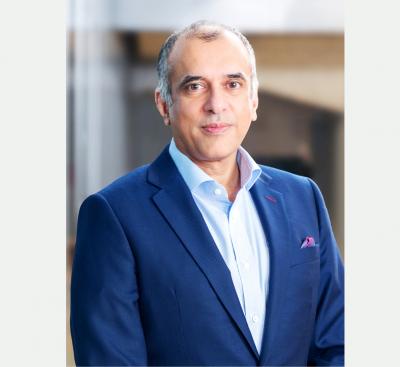
HSBC Holdings PLC is deepening its commitment to Taiwan as the economy emerges as one of the bank’s fastest-growing markets globally, driven by an artificial intelligence (AI) investment boom, expanding cross-border trade, and rising wealth creation. “The advantage that Taiwan has is a growth story linked to the semiconductor and broader AI industries, strong underlying corporate performance, and wealth creation,” said Surendra Rosha, HSBC’s co-chief executive for Asia and the Middle East, in an exclusive interview with the Taipei Times on June 2, during this year’s HSBC Taiwan Conference. That combination has helped HSBC cement its position as the most profitable international
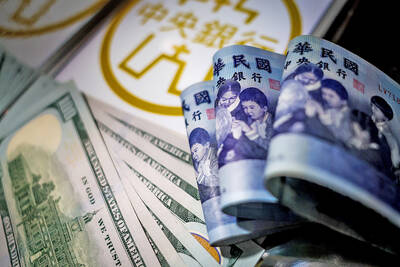
The New Taiwan dollar yesterday fell sharply against the US dollar to close at its lowest level since May 22 amid a massive outflow of funds from the country because of investors panicking over global equity markets. The NT dollar ended at NT$31.580 against the US dollar, slightly lower than its close of NT$31.568 on May 22, after moving between NT$31.5 and NT$31.648 on combined turnover of US$3.062 billion on the Taipei Foreign Exchange and the Cosmos Foreign Exchange. The NT dollar received a significant hit in the morning session, slumping as much as NT$0.173 at a time when other Asian currencies
Taiwan Semiconductor Manufacturing Co (TSMC, 台積電) is now ranked ninth among the world’s 100 most valuable companies after its market capitalization more than doubled over the past year, PricewaterhouseCoopers (PwC) Taiwan said in a report last month. TSMC’s market capitalization surged 101 percent year-on-year to US$1.427 trillion as of March 31, the accounting and consulting firm’s 2026 Global Top 100 Companies by Market Capitalization report said. The gain catapulted the world’s largest contract chipmaker from 12th place to ninth in the rankings, and it was the fastest-growing among the global top 10, it said. TSMC was the only Taiwanese company among the top
Taiwan Semiconductor Manufacturing Co (TSMC, 台積電) yesterday reported record revenue of NT$416.975 billion (US$13.17 billion) for last month, putting the world’s largest contract chipmaker on track to set a record for quarterly revenue. Last month’s figure surpassed March’s record NT$415.19 billion and represented increases of 1.5 percent from April and 30.1 percent from a year earlier. For the first five months of the year, TSMC generated NT$1.96 trillion in revenue, up 30 percent year-on-year, it said in a statement. TSMC has forecast second-quarter revenue of between US$39 billion and US$40.2 billion, representing sequential growth of about 10 percent and year-on-year growth of about


 RSS
RSS