


While bilateral economic and trade relations between Taiwan and France are already significant, French Institute in Taipei Director Jean-Claude Poimboeuf called for more investment and participation for French companies in Taiwan’s infrastructure projects to better reflect the strength of both economies.
In an interview at the end of his three-year tenure, Poimboeuf said bilateral trade reached about 4 billion to 4.5 billion euros (US$6.4 billion to US$7 billion) over the past few years and that Taiwan ranked as France’s sixth-largest trade partner in the Asia-Pacific region — surpassing Thailand and Malaysia and coming just after South Korea.
However, the top French official in Taiwan said there was still a lot of room for increasing bilateral trade.
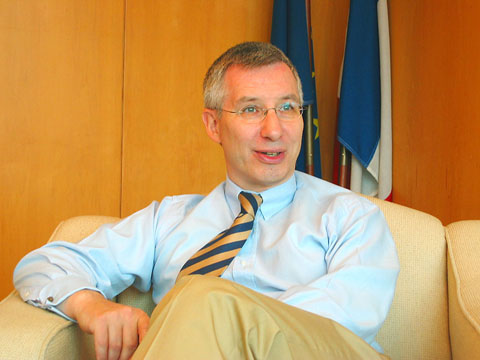
PHOTO: CNA
“My frustration over the past three years has been that trade has been a bit stagnant because it’s still at the same level of between 4 billion and 4.5 billion euros,” Poimboeuf said. “Maybe this is linked to Taiwan’s economic situation, in which consumption is rather low.”
The outgoing chief of the French de facto embassy in Taiwan said he was also disappointed that Taiwan’s investment in France was lower than its investments in the UK and Germany, which he said did not correspond with the strengths of these economies.
“For the sixth and 22nd [largest] economies in the world, there should be a higher level of investment, especially if you consider that France, depending on the year, is the No. 2 or No. 3 destination of Foreign Direct Investment in the world,” Poimboeuf said.
“I think we can improve the situation in the future. Right now it’s really below the expected level,” he said.
Poimboeuf said that apart from luxury products French companies would also like to participate in the government’s infrastructure projects, including nuclear energy, in which France is a pioneer.
“France is the country with the highest proportion of nuclear energy in the world, at around 80 percent,” Poimboeuf said. “We don’t see how Taiwan can avoid developing its nuclear industry if it wants to reach its carbon dioxide reduction targets.”
President Ma Ying-jeou (馬英九) said on June 12 that Taiwan would look to Europe’s leading experience in cutting greenhouse gas emissions to create a cleaner Taiwan, as his administration has set an ambitious goal of having greenhouse gas emissions equal to this year’s level by the year 2020, cutting them to the level of the year 2000 by 2025, and to half of the 2000 level by 2050.
“We of course are very keen to cooperate with Taiwan because we have very strong experience, including in waste management, which is a key issue for Taiwan,” Poimboeuf said.
He said the airline industry was another important sector for boosting bilateral trade, as Taiwan would need more aircraft to cater to Chinese tourists after the opening of direct weekend cross Taiwan-Strait charter flights.
Poimboeuf said he was particularly encouraged to see a recent purchase by China Airlines Ltd (中華航空), Taiwan’s largest air carrier, of 20 A350XWB-900 aircraft worth more than US$4.3 billion from the French-based European consortium Airbus.
However, he expressed regret that EVA Airways Corp (長榮航空) canceled direct flights from Taipei to Paris last November.
The French Institute in Taipei has seen a decreasing number of people going to France since the cancelation of the flights, Poimboeuf said.
He said he hoped the route could be resumed, as this would benefit bilateral economic relations.
“We have seen a drop since they stopped the flights because it’s not so convenient going from Taipei to Paris and it discourages people from traveling to Taiwan,” he said, adding that he had approached the relevant authorities with a view to getting the EVA flights resumed.
“We have had a few encouraging signs that we are heading in the right direction,” Poimboeuf said. “With the new situation here and across the Taiwan Strait, we can work out a solution.”
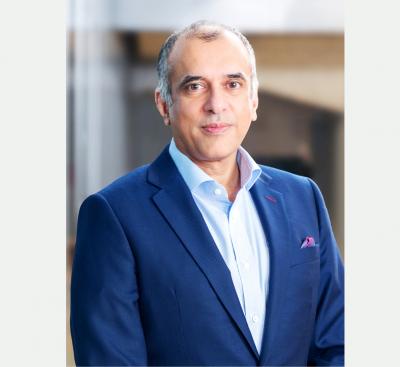
HSBC Holdings PLC is deepening its commitment to Taiwan as the economy emerges as one of the bank’s fastest-growing markets globally, driven by an artificial intelligence (AI) investment boom, expanding cross-border trade, and rising wealth creation. “The advantage that Taiwan has is a growth story linked to the semiconductor and broader AI industries, strong underlying corporate performance, and wealth creation,” said Surendra Rosha, HSBC’s co-chief executive for Asia and the Middle East, in an exclusive interview with the Taipei Times on June 2, during this year’s HSBC Taiwan Conference. That combination has helped HSBC cement its position as the most profitable international
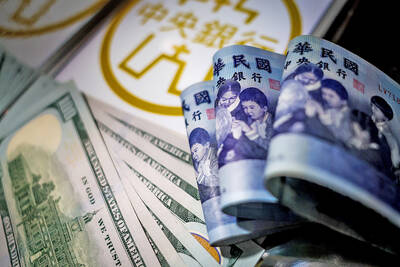
The New Taiwan dollar yesterday fell sharply against the US dollar to close at its lowest level since May 22 amid a massive outflow of funds from the country because of investors panicking over global equity markets. The NT dollar ended at NT$31.580 against the US dollar, slightly lower than its close of NT$31.568 on May 22, after moving between NT$31.5 and NT$31.648 on combined turnover of US$3.062 billion on the Taipei Foreign Exchange and the Cosmos Foreign Exchange. The NT dollar received a significant hit in the morning session, slumping as much as NT$0.173 at a time when other Asian currencies
Taiwan Semiconductor Manufacturing Co (TSMC, 台積電) is now ranked ninth among the world’s 100 most valuable companies after its market capitalization more than doubled over the past year, PricewaterhouseCoopers (PwC) Taiwan said in a report last month. TSMC’s market capitalization surged 101 percent year-on-year to US$1.427 trillion as of March 31, the accounting and consulting firm’s 2026 Global Top 100 Companies by Market Capitalization report said. The gain catapulted the world’s largest contract chipmaker from 12th place to ninth in the rankings, and it was the fastest-growing among the global top 10, it said. TSMC was the only Taiwanese company among the top
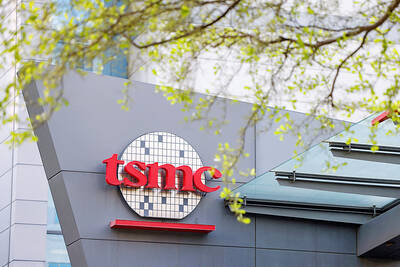
Taiwan Semiconductor Manufacturing Co (TSMC, 台積電) yesterday reported record revenue of NT$416.975 billion (US$13.17 billion) for last month, putting the world’s largest contract chipmaker on track to set a record for quarterly revenue. Last month’s figure surpassed March’s record NT$415.19 billion and represented increases of 1.5 percent from April and 30.1 percent from a year earlier. For the first five months of the year, TSMC generated NT$1.96 trillion in revenue, up 30 percent year-on-year, it said in a statement. TSMC has forecast second-quarter revenue of between US$39 billion and US$40.2 billion, representing sequential growth of about 10 percent and year-on-year growth of about


 RSS
RSS