


Taiwanese airlines may struggle to post profits this year as higher fuel costs erode gains from the start of regular services to China, the Taipei Airlines Association said.
Flights to China “aren’t a panacea,” Tony Su (蘇宏義), chairman of the group, which represents six carriers, said in an interview in Taipei on Friday. The services “are a business opportunity, but there is no guarantee the aviation industry can make money given the high oil prices.”
Five Taiwanese airlines, including China Airlines (華航) and EVA Airways Corp (長榮), the two biggest, began weekend flights to China on Friday, following the easing of a 59-year restriction. The carriers are seeking a further relaxation so they can fly more than the current cap of 18 return flights a week.
“How do you make the cake bigger? Allowing more tourists is one way,” said Su, who is also chairman of EVA Air’s Uni Airways Corp (立榮航空) unit.
Taiwan only allows 3,000 Chinese tourists a day at present.
Carriers need to fill 65 percent of seats to break even on the cross-strait flights, Su said.
He declined to say whether airlines were likely to achieve this target in the long term.
EVA Air and Uni Air filled more than 80 percent of seats in the first week, EVA Air acting spokeswoman Katherine Ko (柯文玲) said yesterday by phone.
Rising fuel costs may cause Uni Air’s losses to “be even worse this year” than last year’s NT$400 million (US$13 million), Su said.
Every US$1 increase in the price of a barrel of oil raises Uni Air’s annual costs by NT$100 million, he said.
The price of oil in New York trading has doubled over the past year. The price of jet fuel has jumped 64 percent this year in Singapore trading, hitting a record US$181.85 on Thursday.
Fuel now accounts for about half of Uni Air’s operating costs, compared with 20 percent when oil cost US$50 a barrel, Su said. Far Eastern Air Transport Corp (遠東航空), which served similar routes to Uni Air, halted flights earlier this year amid the surging prices.
Uni Air flies to domestic destinations and Asian cities, including Seoul, Hong Kong and Hanoi. It operates 11 Boeing Co MD-90s and nine Bombardier Inc Dash-8s, according to its Web site.
The carrier has replaced steel cutlery on planes with lighter plastic ones to help cut fuel costs, Su said. It has also sold six aircraft since 2004, he added.
China and Taiwan are to hold talks after the Olympics next month to discuss increasing the frequencies of cross-strait services, Su said. The discussions will also cover cargo flights, he said.
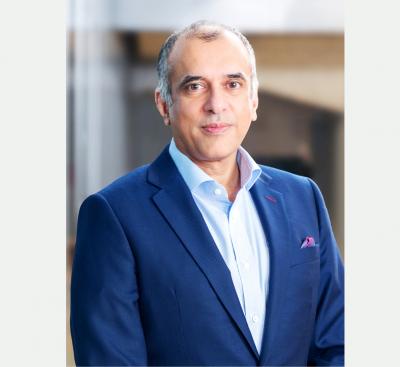
HSBC Holdings PLC is deepening its commitment to Taiwan as the economy emerges as one of the bank’s fastest-growing markets globally, driven by an artificial intelligence (AI) investment boom, expanding cross-border trade, and rising wealth creation. “The advantage that Taiwan has is a growth story linked to the semiconductor and broader AI industries, strong underlying corporate performance, and wealth creation,” said Surendra Rosha, HSBC’s co-chief executive for Asia and the Middle East, in an exclusive interview with the Taipei Times on June 2, during this year’s HSBC Taiwan Conference. That combination has helped HSBC cement its position as the most profitable international
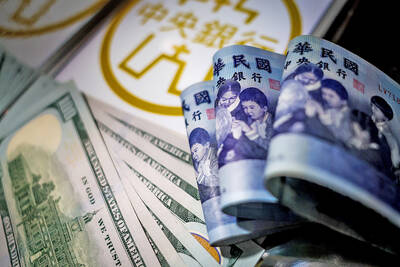
The New Taiwan dollar yesterday fell sharply against the US dollar to close at its lowest level since May 22 amid a massive outflow of funds from the country because of investors panicking over global equity markets. The NT dollar ended at NT$31.580 against the US dollar, slightly lower than its close of NT$31.568 on May 22, after moving between NT$31.5 and NT$31.648 on combined turnover of US$3.062 billion on the Taipei Foreign Exchange and the Cosmos Foreign Exchange. The NT dollar received a significant hit in the morning session, slumping as much as NT$0.173 at a time when other Asian currencies
Taiwan Semiconductor Manufacturing Co (TSMC, 台積電) is now ranked ninth among the world’s 100 most valuable companies after its market capitalization more than doubled over the past year, PricewaterhouseCoopers (PwC) Taiwan said in a report last month. TSMC’s market capitalization surged 101 percent year-on-year to US$1.427 trillion as of March 31, the accounting and consulting firm’s 2026 Global Top 100 Companies by Market Capitalization report said. The gain catapulted the world’s largest contract chipmaker from 12th place to ninth in the rankings, and it was the fastest-growing among the global top 10, it said. TSMC was the only Taiwanese company among the top
Taiwan Semiconductor Manufacturing Co (TSMC, 台積電) yesterday reported record revenue of NT$416.975 billion (US$13.17 billion) for last month, putting the world’s largest contract chipmaker on track to set a record for quarterly revenue. Last month’s figure surpassed March’s record NT$415.19 billion and represented increases of 1.5 percent from April and 30.1 percent from a year earlier. For the first five months of the year, TSMC generated NT$1.96 trillion in revenue, up 30 percent year-on-year, it said in a statement. TSMC has forecast second-quarter revenue of between US$39 billion and US$40.2 billion, representing sequential growth of about 10 percent and year-on-year growth of about


 RSS
RSS