


UBS, a leading global financial services company, said yesterday it remained upbeat about the Taiwanese investment market’s prospects in the second half of the year, when the positive impact from improvement in cross-strait relations should emerge despite the global economic slowdown.
In particular, analysts from the world’s largest manager of private wealth expressed confidence in the long-term growth of notebook computers as well as the banking sector.
William Dong (董成康), head of UBS Taiwan’s equities and research, said better cross-strait ties and a stable political environment would make the country a more attractive market in the years to come.
Local market valuation remains attractive with a forecast price-to-earnings ratio of 11.6 times next year, Dong told a media briefing yesterday.
“Further, we estimate that cash dividend by TAIEX-listed companies will reach a peak payment period between July and August, providing a boost to market liquidity,” Dong said.
The TAIEX yesterday dived 138.37 points, or 1.8 percent, to 7,738.12 at the close of trade. The stock index has shed more than 1,300 points since President Ma Ying-jeou (馬英九) of the Chinese Nationalist Party (KMT) took office on May 20.
Dong said that short-term uncertainties persist because of the global economic slowdown. But he predicted that Taiwan could emerge from the challenge unscathed if new measures on direct charter flights and stronger cross-strait tourism were implemented smoothly.
Arthur Hsieh (謝宗文), UBS’ leading electronics hardware analyst, echoed the sentiment, saying that a seasonal recovery in the sector was already under way.
Hsieh said that demand for notebooks had evolved from households to individuals as they helped increase the productivity of their users and notebook prices had been stable in contrast to rising commodity prices.
“We’re confident about the long-term growth prospects of conventional notebook PCs and new opportunities in the low-cost notebook PC [market],” he said.
“Supply chain companies in Taiwan could further cement their leading position in the industry with the successful introduction of low-cost notebook PCs,” Hsieh said.
Hsieh said he was not as optimistic about the outlook for the handset supply chain, as the sector has transformed from industrial designs to service based industry models and the market is near saturation.
Pandora Lee (李懿琁), a UBS financial and insurance research analyst, said she held a positive of the banking industry, which is poised to enjoy a multi-year earnings recovery through higher loan growth, greater fee income and lower credit costs.
“Overall, the industry will reap benefits from cross-strait charter flights and the upcoming influx of Chinese tourists,” Lee said.
Lee said she was cautious about the insurance sector, however, citing the gap between current property values and high expectations of property appreciation, as well as low cumulative write-off ratio on collateralized debt obligations and foreign exchange risks.
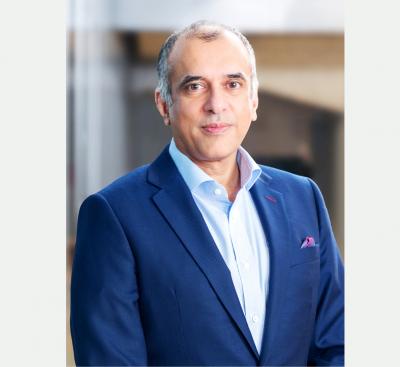
HSBC Holdings PLC is deepening its commitment to Taiwan as the economy emerges as one of the bank’s fastest-growing markets globally, driven by an artificial intelligence (AI) investment boom, expanding cross-border trade, and rising wealth creation. “The advantage that Taiwan has is a growth story linked to the semiconductor and broader AI industries, strong underlying corporate performance, and wealth creation,” said Surendra Rosha, HSBC’s co-chief executive for Asia and the Middle East, in an exclusive interview with the Taipei Times on June 2, during this year’s HSBC Taiwan Conference. That combination has helped HSBC cement its position as the most profitable international
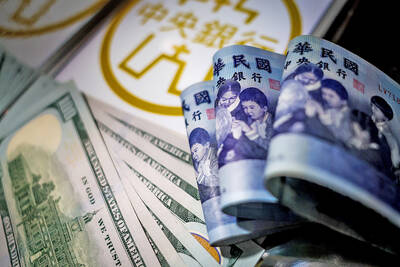
The New Taiwan dollar yesterday fell sharply against the US dollar to close at its lowest level since May 22 amid a massive outflow of funds from the country because of investors panicking over global equity markets. The NT dollar ended at NT$31.580 against the US dollar, slightly lower than its close of NT$31.568 on May 22, after moving between NT$31.5 and NT$31.648 on combined turnover of US$3.062 billion on the Taipei Foreign Exchange and the Cosmos Foreign Exchange. The NT dollar received a significant hit in the morning session, slumping as much as NT$0.173 at a time when other Asian currencies
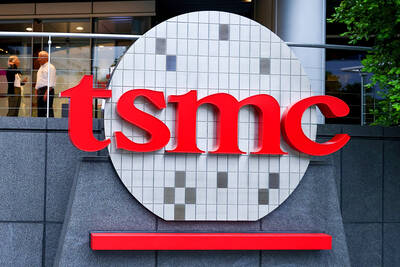
Taiwan Semiconductor Manufacturing Co (TSMC, 台積電) is now ranked ninth among the world’s 100 most valuable companies after its market capitalization more than doubled over the past year, PricewaterhouseCoopers (PwC) Taiwan said in a report last month. TSMC’s market capitalization surged 101 percent year-on-year to US$1.427 trillion as of March 31, the accounting and consulting firm’s 2026 Global Top 100 Companies by Market Capitalization report said. The gain catapulted the world’s largest contract chipmaker from 12th place to ninth in the rankings, and it was the fastest-growing among the global top 10, it said. TSMC was the only Taiwanese company among the top
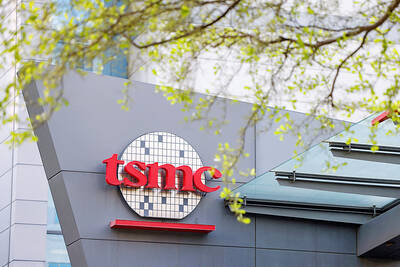
Taiwan Semiconductor Manufacturing Co (TSMC, 台積電) yesterday reported record revenue of NT$416.975 billion (US$13.17 billion) for last month, putting the world’s largest contract chipmaker on track to set a record for quarterly revenue. Last month’s figure surpassed March’s record NT$415.19 billion and represented increases of 1.5 percent from April and 30.1 percent from a year earlier. For the first five months of the year, TSMC generated NT$1.96 trillion in revenue, up 30 percent year-on-year, it said in a statement. TSMC has forecast second-quarter revenue of between US$39 billion and US$40.2 billion, representing sequential growth of about 10 percent and year-on-year growth of about


 RSS
RSS