


Global Mobile Corp (全球一動), one of Taiwan’s licensed WiMAX operators, yesterday signed a memorandum of understanding for a field trial with a US-based company that could lead to potential procurement deals depending on the trial’s outcome.
Global Mobile, awarded the Worldwide Interoperability for Microwave Access (WiMAX) license in October last year, said at a news conference in Taipei that it intended to make NextWave Wireless Inc, a global provider of mobile multimedia and wireless broadband technologies, its potential WiMAX partner.
The two companies plan to set up a comprehensive WiMAX field trial and demonstration network that would leverage shared resources to provide Global Mobile’s end-users a personalized mobile experience through the delivery of mobile multimedia services, including mobile TV, interactive media services and digital audio.
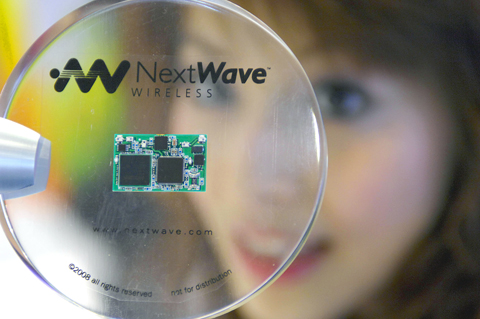
PHOTO: AFP
The trial network will be deployed in Taipei and will be monitored over several months.
Global Mobile chairwoman and chief executive Rosemary Ho (何薇玲) said her company picked NextWave because it had prior experience in helping New York City deploy WiMAX services.
Global Mobile will place procurement orders for WiMAX products from NextWave if the trial proves to be satisfactory, the company said, adding it planned to launch next-generation WiMAX service in the first half of next year.
Ho told reporters earlier this year her company would wait for a more favorable macro environment to start the service, or until there are more devices available to facilitate WiMAX connection, faster speeds to ensure smooth data transmission and lower base station costs.
While the cost of building a base station is estimated at around NT$2.5 million (US$79,900), Global Mobile believes that NT$1.5 million is more reasonable, she said.
All six WiMAX operators are required by the regulatory National Communications Commission to launch their commercial service within 15 months of obtaining their license, though they may ask for a one-year extension.

Cairo’s new monorail slices across the city skyline, running above the familiar chaos of blaring horns and aging buses’ exhaust fumes that mark rush hour below. The US$4.5 billion monorail, opened this month, is among Egypt’s most prominent new transport projects, part of a debt-funded infrastructure drive criticized for sapping state finances while bringing limited benefits to most of the country’s 109 million people. “It feels like you’re in a different country,” said Ramy Sayed, a restaurant manager, aboard a driverless Innovia 300 train. “No noise, no traffic, we’re not used to this.” The eastern line runs 56km from the bustling middle-class
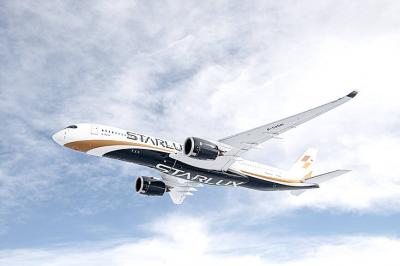
Starlux Airlines Co (星宇航空) today unveiled a long-haul network expansion plan at a shareholders’ meeting in Taipei, including direct flights to Barcelona, Spain, and Zurich, Switzerland, as well as a service connecting Taipei, Sydney and New Zealand. Starlux is to become the first Taiwanese carrier to offer non-stop services to the two European cities, while the inaugural oceanic route is expected to expand transit opportunities within the Australia-New Zealand market, Starlux said. Flight services to Chicago, Dallas, Washington and New York are under evaluation, the airline added. Prior to the shareholders’ meeting, the airline earlier this year announced that it would be

Taiwanese firms have increased investment in the Philippines in recent years as Manila’s ties with Washington deepen and global supply chains continue to shift away from China, an expert at the Chung-Hua Institution for Economic Research (CIER, 中華經濟研究院) said yesterday. The Philippines had not been among Taiwanese investors’ top choices in Southeast Asia, CIER Taiwan ASEAN Studies Center director Kristy Hsu (徐遵慈) said at a seminar in Taipei. However, Taiwan’s investment in the country has grown significantly since the COVID-19 pandemic, reaching US $257 million last year, a high in recent years, she said. Although Taiwan’s total investment in the Philippines still lags

Taiwanese prosecutors suspect that three people successfully smuggled at least one shipment of Nvidia Corp artificial intelligence (AI) chips to China after first exporting them to Japan, people familiar with the matter said. The trio was detained last week by the Keelung District Prosecutors’ Office for allegedly falsifying documents related to exports of Super Micro Computer Inc servers containing advanced Nvidia chips, which the US has barred from sale to China without a license from Washington. The move marked Taiwan’s first public crackdown on AI chip diversion after years of pressure from the US to take a more active role in curtailing


 RSS
RSS