


Exhibitors praised the design of the newly opened Taipei World Trade Center (TWTC) Nangang Exhibition Hall yesterday, but said transportation in the vicinity of the exhibition space needed to be improved.
On the first day of the four-day Taipei International Cycle Show, the world's biggest bicycle manufacturer, Taichung-based Giant Inc (
"Giant was worried at first about the new exhibition location in Nangang, since it's not that convenient to get here. Hopefully, the transportation problem will improve once the Nangang MRT line is completed," Giant marketing coordinator Ray Lin (
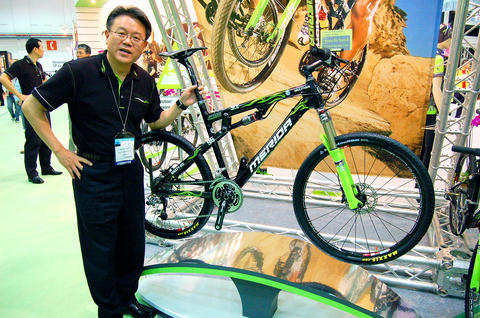
PHOTO: KAO CHIA-HO, TAIPEI TIMES
BETTER DESIGN
Nonetheless, Lin applauded the layout of the Nangang Exhibition Hall, citing the complex's column-free upper floor, designed to increase exhibition space and visibility.
"The new design and route planning at the Nangang Exhibition Hall help solve the problems at the TWTC Exhibition Hall 1 [in Xinyi District], where exhibitors placed in the corners often receive less visitors," Lin said.
SNEAK PEAK
Alessandro Colnago, marketing director of the Milan, Italy-based Colnago, which manufactures high-end bicycles starting at around US$1,500, said it was the first time the company was showcasing its products for next year at the Taipei International Cycle Show.
Colnago has previously showcased its product lineup at the Eurobike expo in Friedrichshafen, Germany, which is the world's largest bike industry exhibition. Eurobike will be held this year from Sept. 4 to Sept 7.
"Colnago invited our global distributors to participate in this year's Taipei International Cycle Show as they will get to see our latest products in advance," Colnago said.
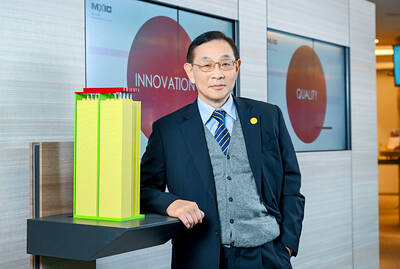
Macronix International Co (旺宏), the world’s biggest NOR flash memory supplier, yesterday said it would spend NT$22 billion (US$699.1 million) on capacity expansion this year to increase its production of mid-to-low-density memory chips as the world’s major memorychip suppliers are phasing out the market. The company said its planned capital expenditures are about 11 times higher than the NT$1.8 billion it spent on new facilities and equipment last year. A majority of this year’s outlay would be allocated to step up capacity of multi-level cell (MLC) NAND flash memory chips, which are used in embedded multimedia cards (eMMC), a managed

CULPRITS: Factors that affected the slip included falling global crude oil prices, wait-and-see consumer attitudes due to US tariffs and a different Lunar New Year holiday schedule Taiwan’s retail sales ended a nine-year growth streak last year, slipping 0.2 percent from a year earlier as uncertainty over US tariff policies affected demand for durable goods, data released on Friday by the Ministry of Economic Affairs showed. Last year’s retail sales totaled NT$4.84 trillion (US$153.27 billion), down about NT$9.5 billion, or 0.2 percent, from 2024. Despite the decline, the figure was still the second-highest annual sales total on record. Ministry statistics department deputy head Chen Yu-fang (陳玉芳) said sales of cars, motorcycles and related products, which accounted for 17.4 percent of total retail rales last year, fell NT$68.1 billion, or

In the wake of strong global demand for AI applications, Taiwan’s export-oriented economy accelerated with the composite index of economic indicators flashing the first “red” light in December for one year, indicating the economy is in booming mode, the National Development Council (NDC) said yesterday. Moreover, the index of leading indicators, which gauges the potential state of the economy over the next six months, also moved higher in December amid growing optimism over the outlook, the NDC said. In December, the index of economic indicators rose one point from a month earlier to 38, at the lower end of the “red” light.
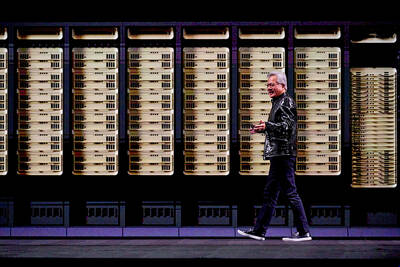
The global server market is expected to grow 12.8 percent annually this year, with artificial intelligence (AI) servers projected to account for 16.5 percent, driven by continued investment in AI infrastructure by major cloud service providers (CSPs), market researcher TrendForce Corp (集邦科技) said yesterday. Global AI server shipments this year are expected to increase 28 percent year-on-year to more than 2.7 million units, driven by sustained demand from CSPs and government sovereign cloud projects, TrendForce analyst Frank Kung (龔明德) told the Taipei Times. Demand for GPU-based AI servers, including Nvidia Corp’s GB and Vera Rubin rack systems, is expected to remain high,


 RSS
RSS