


Shin Kong Life Insurance Co (新光人壽), a subsidiary of Shin Kong Financial Holding Co (新光金控), and 12 competitors have expressed interest in acquiring the Agora Garden (亞太會館) hotel in Taipei City's Xinyi District (信義), auctioneer DTZ Debenham Tie Leung (戴德梁行) said yesterday.
"So far, we've shown the property to 12 potential bidders, although we don't know for sure who will actually show up and place bids," said a manager at the international real-estate consultancy who requested anonymity.
Potential bidders for the property, which is set for auction on March 28, must put down a deposit of NT$400 million (US$12.7 million) between March 20 and March 26 to secure entry to the auction.
A floor price of NT$6.9 billion has been set for the 14-story Agora Garden hotel and the minimum bidding unit has been set at NT$40 million, the manager said.
The five-star hotel, which sits on a 2,468 ping (0.82 hectare) lot of land, has a total floor space of 12,458 ping, with 213 guest rooms and an occupancy rate of 80 percent on average during the past three years, the auctioneer said.
After Shin Kong Life Insurance said in a filing to the Taiwan Stock Exchange that it would bid for the property, market watchers expect the deal's closing price to jump to as much as NT$8 billion, a report in the Chinese-language Economic Daily said on Saturday.
The board of Shin Kong Life Insurance also announced that the company, headed by chairman Eugene Wu (
Wu was upbeat about the prospects for Taipei's luxury home property market and predicted that land prices for luxury property could soon jump to NT$3 million per ping, media reported.
According to Shin Kong Financial spokesman Victor Hsu (許澎), the insurer's assets under management were NT$1.4 trillion, of which 8 percent were budgeted for real estate investments.
Should Shin Kong win the bid for Agora Garden, it will retain the hotel's present management until projects for luxury homes mature, Hsu said.
Shin Kong was also to bid today for a 300 ping parcel of land on Hangzhou S Road in Taipei City.

Cairo’s new monorail slices across the city skyline, running above the familiar chaos of blaring horns and aging buses’ exhaust fumes that mark rush hour below. The US$4.5 billion monorail, opened this month, is among Egypt’s most prominent new transport projects, part of a debt-funded infrastructure drive criticized for sapping state finances while bringing limited benefits to most of the country’s 109 million people. “It feels like you’re in a different country,” said Ramy Sayed, a restaurant manager, aboard a driverless Innovia 300 train. “No noise, no traffic, we’re not used to this.” The eastern line runs 56km from the bustling middle-class
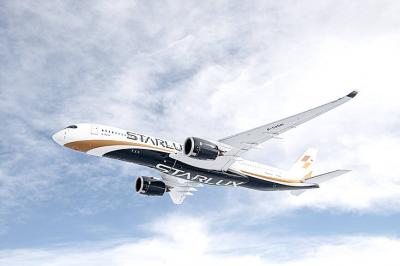
Starlux Airlines Co (星宇航空) today unveiled a long-haul network expansion plan at a shareholders’ meeting in Taipei, including direct flights to Barcelona, Spain, and Zurich, Switzerland, as well as a service connecting Taipei, Sydney and New Zealand. Starlux is to become the first Taiwanese carrier to offer non-stop services to the two European cities, while the inaugural oceanic route is expected to expand transit opportunities within the Australia-New Zealand market, Starlux said. Flight services to Chicago, Dallas, Washington and New York are under evaluation, the airline added. Prior to the shareholders’ meeting, the airline earlier this year announced that it would be

Taiwanese prosecutors suspect that three people successfully smuggled at least one shipment of Nvidia Corp artificial intelligence (AI) chips to China after first exporting them to Japan, people familiar with the matter said. The trio was detained last week by the Keelung District Prosecutors’ Office for allegedly falsifying documents related to exports of Super Micro Computer Inc servers containing advanced Nvidia chips, which the US has barred from sale to China without a license from Washington. The move marked Taiwan’s first public crackdown on AI chip diversion after years of pressure from the US to take a more active role in curtailing
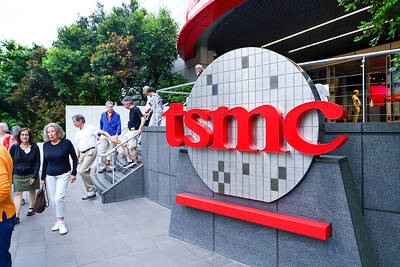
Taiwan Semiconductor Manufacturing Co (TSMC, 台積電) employee bonuses are likely to grow more than 30 percent this year, in line with the past few years as the company’s profits continue to set new records, an anonymous source cited TSMC chairman C.C. Wei (魏哲家) as saying yesterday. TSMC, the world’s largest contract chipmaker, is committed to taking care of its workers, the source said, citing Wei’s meeting with employees yesterday morning. Wei also expressed gratitude to employees for their contribution to the company’s improving bottom line, the source added. Since 2023, TSMC’s employee bonuses have grown at an annual rate of


 RSS
RSS