


NXP Semiconductors, the world's 10th largest chipmaker, said yesterday China Mobile Communications Corp (中國移動) planned to purchase handset chips from NXP to sell 3 million to 5 million 3G handsets this year.
NXP Semiconductors said it was optimistic about the development of TDSCDMA technology, the China-grown 3G mobile standard, in light of the Beijing Olympic Games and government support.
"The political atmosphere is in favor of the development of TDSCDMA and we believe government agencies will increase their measures to foster market growth at upcoming meetings in March," Stephen Lin (林博文), vice president of NXP Semiconductors' greater China operations, said in Taipei.
Lin said NXP Semiconductors would lead rivals in supplying TDSCDMA chips for mobile phones that let users access content about the Olympic Games in August.
The Eindhoven, Netherlands-based company plans to supply chips for thousands of TDSCDMA phones during the Games, Lin said.
For the full year, NXP Semiconductors expect to ship 3G chips for 3 million to 5 million phones for China Mobile, the biggest mobile carrier in China. China Mobile is expected to run a trial of the 3G technology in 35 cities, although Beijing has not granted any 3G licenses yet, Lin said.
Last year, China Mobile's TDSCDMA phone sales were low, at only several thousand units.
Growth next year is expected to be even faster as shipment volume should grow faster after breaking the 5 million-unit threshold this year, which will be a critical period for the development of TDSCDMA technology, Lin said without giving detailed figures.
Meanwhile, bigger rival Texas Instruments Inc (TI), the world's biggest handset chipmaker, is taking a conservative approach to TDSCDMA chips.
"We will supply TDSCDMA chips in accordance with customers' demand," Larry Tan (
NXP Semiconductors has invested in developing TDSCDMA technology over the past six years, during which it entered a four-way venture, T3G Technology Co, with Datang Telecom Technology Co (大唐電信), Samsung Electronics Co and Motorola Inc to develop TDSCDMA phones.
Separately, Lin said NXP Semiconductors would continue its asset-light strategy this year. The company hopes to improve its financial performance by outsourcing more production to partners including Taiwan Semiconductor Manufacturing Co (TSMC,
"It makes no sense for us to make chips at our European plants since Asian companies are doing quite well. And it is expensive to build next-generation plants," Lin said. "We certainly will increase outsourcing production of CMOS [image sensors], if the price is right."
NXP Semiconductors has been ordering CMOS sensors from TSMC, Lin said.
In 2006, about 22 percent of NXP's total revenue of 5 billion euros (US$7.3 billion) came from the greater China market, the fastest-growing chip market in the world.

Cairo’s new monorail slices across the city skyline, running above the familiar chaos of blaring horns and aging buses’ exhaust fumes that mark rush hour below. The US$4.5 billion monorail, opened this month, is among Egypt’s most prominent new transport projects, part of a debt-funded infrastructure drive criticized for sapping state finances while bringing limited benefits to most of the country’s 109 million people. “It feels like you’re in a different country,” said Ramy Sayed, a restaurant manager, aboard a driverless Innovia 300 train. “No noise, no traffic, we’re not used to this.” The eastern line runs 56km from the bustling middle-class
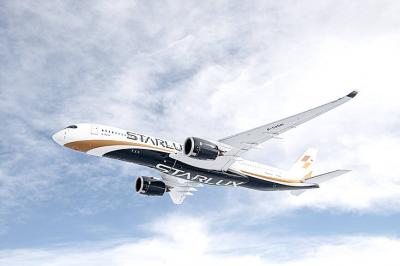
Starlux Airlines Co (星宇航空) today unveiled a long-haul network expansion plan at a shareholders’ meeting in Taipei, including direct flights to Barcelona, Spain, and Zurich, Switzerland, as well as a service connecting Taipei, Sydney and New Zealand. Starlux is to become the first Taiwanese carrier to offer non-stop services to the two European cities, while the inaugural oceanic route is expected to expand transit opportunities within the Australia-New Zealand market, Starlux said. Flight services to Chicago, Dallas, Washington and New York are under evaluation, the airline added. Prior to the shareholders’ meeting, the airline earlier this year announced that it would be

Taiwanese firms have increased investment in the Philippines in recent years as Manila’s ties with Washington deepen and global supply chains continue to shift away from China, an expert at the Chung-Hua Institution for Economic Research (CIER, 中華經濟研究院) said yesterday. The Philippines had not been among Taiwanese investors’ top choices in Southeast Asia, CIER Taiwan ASEAN Studies Center director Kristy Hsu (徐遵慈) said at a seminar in Taipei. However, Taiwan’s investment in the country has grown significantly since the COVID-19 pandemic, reaching US $257 million last year, a high in recent years, she said. Although Taiwan’s total investment in the Philippines still lags
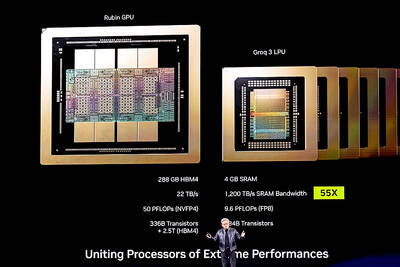
Taiwanese prosecutors suspect that three people successfully smuggled at least one shipment of Nvidia Corp artificial intelligence (AI) chips to China after first exporting them to Japan, people familiar with the matter said. The trio was detained last week by the Keelung District Prosecutors’ Office for allegedly falsifying documents related to exports of Super Micro Computer Inc servers containing advanced Nvidia chips, which the US has barred from sale to China without a license from Washington. The move marked Taiwan’s first public crackdown on AI chip diversion after years of pressure from the US to take a more active role in curtailing


 RSS
RSS