


Despite government approval, Formosa Plastics Corp's (FPC,
"The demand for steel in the Chinese market is likely to slow down in the short term as construction of infrastructure and at Olympic venues has mostly been completed," said Mike Chow (周道中), a senior manager at Yuanta Core Pacific Capital Management (元大京華投顧).
"Furthermore, the Chinese government will not aggressively address, in the near future, concerns over inflation and an overheating economy," Chow said, expressing his less-than-optimistic views toward Formosa Plastics' China-bound investments in the short to medium term.
In the long term, Chow was more optimistic as the enormous population of China could spell good news for Formosa Plastics' China-based plant.
On Friday, the Ministry of Economic Affairs' (MOEA) Investment Commission approved China-bound investments by Formosa Plastics and Advanced Semiconductor Engineering Inc (ASE, 日月光半導體), valued at US$100 million (NT$3.17 billion) and US$30 million respectively.
Formosa Plastics plans to build a stainless steel plant in Changzhou, Fujian Province, through a joint venture with its subsidiary Formosa Heavy Industries Corp (台朔重工), with each contributing US$50 million to the investment.
There is also a promise to invest a further NT$813.3 billion in Taiwan over the next five years.
Formosa Plastics hopes to have completed the plant's construction within two years, with an expected output of 720,000 tonnes annually, mostly intended for the Chinese steel market.
Chow also raised concerns over possible negative impact from a new labor law, which took effect in China last month, on Formosa's investments there.
Chow said the Chinese government had begun to step up its social welfare and pension systems in recent years following its economic boom.
As the government is unable to meet the expense, the tap is further put on businesses including China-based Taiwanese businesses, which will no longer enjoy low taxes and low labor costs there.
"Aside from high value-added industry, the new labor law will mostly hurt Taiwanese manufacturing oriented companies, which employee a large number of workers," Chow said.
Meanwhile, Taiwanese land developers urged the government on Friday to prevent exports of steel as local supplies fail to meet demand.
The MOEA said that it will keep an eye on the local demand-supply balance before reaching a decision on whether to bar local steelmakers from exporting.
The ministry's statistics showed that 378,000 tonnes of steel had been exported to overseas markets as of November.
The ministry's investment commission is expected to review the proposal this week.
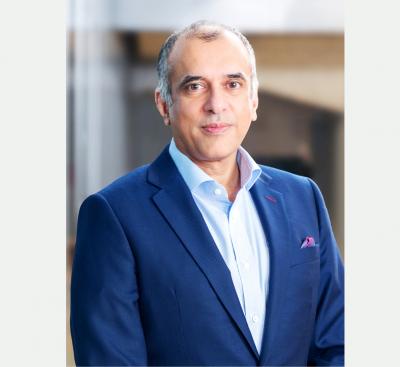
HSBC Holdings PLC is deepening its commitment to Taiwan as the economy emerges as one of the bank’s fastest-growing markets globally, driven by an artificial intelligence (AI) investment boom, expanding cross-border trade, and rising wealth creation. “The advantage that Taiwan has is a growth story linked to the semiconductor and broader AI industries, strong underlying corporate performance, and wealth creation,” said Surendra Rosha, HSBC’s co-chief executive for Asia and the Middle East, in an exclusive interview with the Taipei Times on June 2, during this year’s HSBC Taiwan Conference. That combination has helped HSBC cement its position as the most profitable international
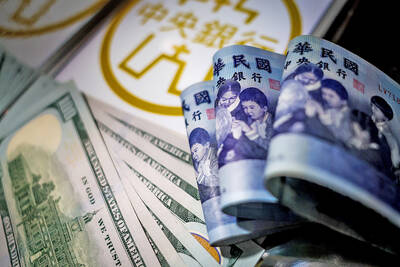
The New Taiwan dollar yesterday fell sharply against the US dollar to close at its lowest level since May 22 amid a massive outflow of funds from the country because of investors panicking over global equity markets. The NT dollar ended at NT$31.580 against the US dollar, slightly lower than its close of NT$31.568 on May 22, after moving between NT$31.5 and NT$31.648 on combined turnover of US$3.062 billion on the Taipei Foreign Exchange and the Cosmos Foreign Exchange. The NT dollar received a significant hit in the morning session, slumping as much as NT$0.173 at a time when other Asian currencies
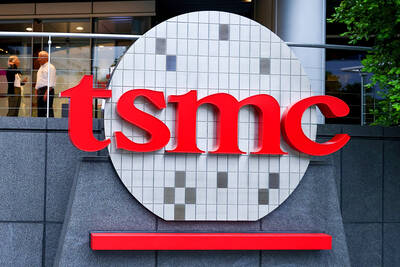
Taiwan Semiconductor Manufacturing Co (TSMC, 台積電) is now ranked ninth among the world’s 100 most valuable companies after its market capitalization more than doubled over the past year, PricewaterhouseCoopers (PwC) Taiwan said in a report last month. TSMC’s market capitalization surged 101 percent year-on-year to US$1.427 trillion as of March 31, the accounting and consulting firm’s 2026 Global Top 100 Companies by Market Capitalization report said. The gain catapulted the world’s largest contract chipmaker from 12th place to ninth in the rankings, and it was the fastest-growing among the global top 10, it said. TSMC was the only Taiwanese company among the top
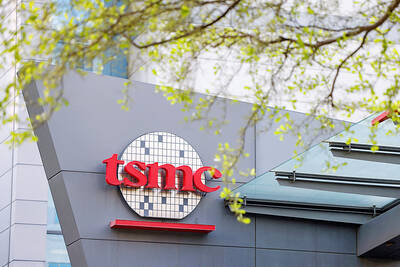
Taiwan Semiconductor Manufacturing Co (TSMC, 台積電) yesterday reported record revenue of NT$416.975 billion (US$13.17 billion) for last month, putting the world’s largest contract chipmaker on track to set a record for quarterly revenue. Last month’s figure surpassed March’s record NT$415.19 billion and represented increases of 1.5 percent from April and 30.1 percent from a year earlier. For the first five months of the year, TSMC generated NT$1.96 trillion in revenue, up 30 percent year-on-year, it said in a statement. TSMC has forecast second-quarter revenue of between US$39 billion and US$40.2 billion, representing sequential growth of about 10 percent and year-on-year growth of about


 RSS
RSS