


Consumer sentiment in Taiwan fell to its lowest level in five years, said MasterCard Worldwide's biannual forecast on consumer confidence, retail sales and travel departures in the first half of the year in 13 Asian economies, yesterday.
"Taiwan's consumer confidence index of 29.7 is the lowest that we've seen since the 26.5 registered in 2003 at the peak of the SARS crisis, reflecting pessimism especially in terms of prospects for employment, quality of living and the economy in the first half of 2008," said Tina Chiang (
With a score of 50 as the dividing point between optimism and pessimism, Taiwan's 29.7 is a far cry from China and Hong Kong's 85.5 and 85.9 respectively, let alone Vietman's 94.3.
Besides the consumer confidence index, Taiwan also lagged in a survey of 13 Asian markets in Mastercard Worldwide's travel and retail indices.
MasterCard Worldwide forecast that retail sales and resident departures in Taiwan for the first half of the year would rise 2.9 percent and 1.2 percent respectively from a year ago.
In comparison, China and Hong Kong would see growth of more than 10 percent in retail sales, while outbound tourism would increase 12.4 percent and 5.6 percent respectively year-on-year, MasterCard data showed.
The company also predicted that Taiwan's GDP would expand 2.8 percent this year -- ahead of Japan's 1.2 percent and New Zealand's 1.9 percent among the 13 Asian economies.
"The political uncertainty and the aftermath of the US subprime crisis have dampened an already lackluster economy," Chiang said. "I have to say that 2008 is a very challenging year [for Taiwan]."
However, Chiang said that, as the survey was conducted last month, it did not reflect the impact of the legislative elections this month. She said she wouldn't rule out a recovery in Taiwanese sentiment after the elections.
In a separate research, the credit card company saw strong potential in China's middle-class, single women or double-income-no-kids households.
Luxury goods, insurance policies, overseas travel and real estate are this market segment's favorite consumption or investment targets. Quality, not price, is the key factor that affects these consumers' purchasing decisions, the research said.
China's middle-class market, consisting of households with annual incomes of US$7,500 to US$25,000 and ranging in age from 20 to 49, is likely to hit 100 million people by 2016, up from 35 million in 2006, the report said.

Among the rows of vibrators, rubber torsos and leather harnesses at a Chinese sex toys exhibition in Shanghai this weekend, the beginnings of an artificial intelligence (AI)-driven shift in the industry quietly pulsed. China manufactures about 70 percent of the world’s sex toys, most of it the “hardware” on display at the fair — whether that be technicolor tentacled dildos or hyper-realistic personalized silicone dolls. Yet smart toys have been rising in popularity for some time. Many major European and US brands already offer tech-enhanced products that can enable long-distance love, monitor well-being and even bring people one step closer to

Malaysia’s leader yesterday announced plans to build a massive semiconductor design park, aiming to boost the Southeast Asian nation’s role in the global chip industry. A prominent player in the semiconductor industry for decades, Malaysia accounts for an estimated 13 percent of global back-end manufacturing, according to German tech giant Bosch. Now it wants to go beyond production and emerge as a chip design powerhouse too, Malaysian Prime Minister Anwar Ibrahim said. “I am pleased to announce the largest IC (integrated circuit) Design Park in Southeast Asia, that will house world-class anchor tenants and collaborate with global companies such as Arm [Holdings PLC],”

TRANSFORMATION: Taiwan is now home to the largest Google hardware research and development center outside of the US, thanks to the nation’s economic policies President Tsai Ing-wen (蔡英文) yesterday attended an event marking the opening of Google’s second hardware research and development (R&D) office in Taiwan, which was held at New Taipei City’s Banciao District (板橋). This signals Taiwan’s transformation into the world’s largest Google hardware research and development center outside of the US, validating the nation’s economic policy in the past eight years, she said. The “five plus two” innovative industries policy, “six core strategic industries” initiative and infrastructure projects have grown the national industry and established resilient supply chains that withstood the COVID-19 pandemic, Tsai said. Taiwan has improved investment conditions of the domestic economy
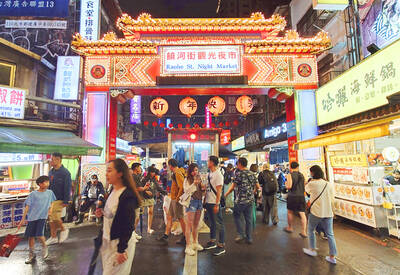
Sales in the retail, and food and beverage sectors last month continued to rise, increasing 0.7 percent and 13.6 percent respectively from a year earlier, setting record highs for the month of March, the Ministry of Economic Affairs said yesterday. Sales in the wholesale sector also grew last month by 4.6 annually, mainly due to the business opportunities for emerging applications related to artificial intelligence (AI) and high-performance computing technologies, the ministry said in a report. The ministry forecast that retail, and food and beverage sales this month would retain their growth momentum as the former would benefit from Tomb Sweeping Day


 RSS
RSS