

Shares of several local handset and handset component makers plunged yesterday after Motorola Inc, the world's No. 2 mobile phone maker, posted weaker than expected fourth-quarter earnings.
Merry Electronics Co (美律), Chi Cheng Enterprise Co (及成), Cheng Uei Precision Industry Co (正崴) and Catcher Technology Co (可成) saw shares drop by the maximum limit to NT$67.9, NT$31.75, NT$54.1 and NT$92.7 respectively.
The benchmark TAIEX rose 1.47 percent yesterday.
"We expect Motorola to continue to affect the performance of Taiwan handset component makers in the first-quarter," SinoPac Securities Corp (永豐金證券) analyst Vincent Chen wrote in a client note.
Chen said Chi Cheng, Merry, Compal Communications Inc (華寶), Ichia Technology Inc (毅嘉), Silitech Technology Corp (
Ichia and Largan also saw shares plunge by the limit to NT$19.4 and NT$277.5 respectively, after shares of Motorola plunged more than 23 percent overnight in New York following its bearish business assessment.
On Wednesday, Motorola said sales were expected to drop more than 15 percent this quarter from the previous quarter, adding that the company might see net losses of between US$0.05 and US$0.07 per share.
Citi Investment Research's Taipei-based analysts Dale Gai (蓋欣山) and Kirk Yang (楊應超) said they were less optimistic about Asian handset companies supplying Motorola.
"With little indication of a recovery and intensifying competition among Motorola's Asian suppliers, we think most stocks will trade even lower than their historical valuation troughs in the first half of this year," Gai and Yang wrote in an investment note released yesterday.
As a result of risks arising from the uncertainty of Motorola's orders and product launches, both Gai and Yang recommended that clients offload shares in Compal, Cheng Uei and Catcher.
They also named High Tech Computer Corp (HTC,

INFRINGEMENT: The investigation comes after a complaint from Vicor Corp, with the company seeking a limited exclusion order as well as cease-and-desist orders, the ITA said The US International Trade Commission (USITC) has launched a Section 337 investigation naming Taiwanese technology companies, including Hon Hai Precision Industry Co (鴻海), Delta Electronics Inc (台達電) and Quanta Computer Inc (廣達), as respondents. The Ministry of Economic Affairs (MOEA) pledged assistance if needed. The USITC said on Friday in a statement that it had voted to institute an investigation under Section 337 of the US Tariff Act of 1930 into certain vertical power delivery systems, related components and computing devices incorporating such systems. The investigation covers 20 companies from Taiwan, China, Germany and the US, the commission said, adding that it

IN GOOD FAITH: Lai said he appreciates Micron’s commitment to Taiwan and that it would continue expanding its investment in the country, while also working with labor President William Lai (賴清德) yesterday called for US memory maker Micron Technology Inc and its workers to negotiate “sincerely” ahead of a possible strike by the company’s union in Taiwan. Last week, a Taiwanese union representing workers at Micron said it had secured authorization from its members to strike over a dispute concerning the company’s bonus scheme, escalating a labor conflict at the chipmaker’s largest manufacturing hub. Micron employs about 15,000 people in Taiwan and has said it invested more than NT$1.6 trillion (US$49.6 billion) in the country. Speaking in Taichung at the opening of a new Micron advanced assembly and testing facility,

A man charged along with Super Micro Computer Inc co-founder Yih-Shyan “Wally” Liaw (廖益賢) of conspiring to send cutting-edge chips to China in violation of US export controls pleaded guilty, court documents said. Ting-Wei “Willy” Sun (孫廷瑋), a former outside contractor described by US authorities as a “fixer” who allegedly aided in the sales, pleaded guilty on Thursday at a hearing in federal court in New York as part of an agreement with prosecutors, court filings showed. Prosecutors claimed the men were part of a scheme to send Nvidia Corp-powered servers to an unnamed Southeast Asian company and then divert them to
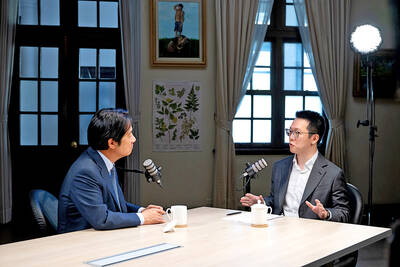
Taiwan should not rule out any energy source or abandon environmental sustainability in favor of ideology and short-term benefits, President William Lai (賴清德) said in an interview, calling for a “professional assessment” of whether nuclear power should be reintroduced into Taiwan’s energy mix. In an online interview with influencer Yu Ting-hao (游庭皓) that aired yesterday, Lai reiterated his position on nuclear power. SHIFT Lai’s remarks marked a shift from the Democratic Progressive Party’s (DPP’s) longstanding opposition to nuclear power. As premier from 2017 to 2019, Lai pushed for more gas-fired power capacity while sticking to the DPP’s nuclear free homeland ideology and rejected the


 RSS
RSS