


The European Central Bank (ECB) held its main interest rates steady yesterday against a background of rising inflation and slowing growth, shortly after the Bank of England (BoE) did the same.
The benchmark borrowing rate for the now 15-nation single currency zone remained at 4.0 percent as the ECB measured twin threats from a spike in oil and food prices coupled with a banking crisis that followed the collapse of the US subprime housing market.
Of the two issues, inflation was a greater concern to ECB policy makers meeting in Frankfurt, among whom figured for the first time central bank governors from Cyprus and Malta, which adopted the euro on Jan. 1.
"Inflation growth is still the prime worry," ING analyst Peter Vanden Houte said.
In Britain, the BoE held its main interest rate at 5.50 percent after cutting it last month for the first first time in more than two years owing to a dogged global credit squeeze that threatens to derail economic growth.
"After the ECB raised interest rates to a roughly neutral 4.0 percent in June, the strong euro and the lingering turmoil in money and credit markets will likely keep the central bank on hold until September 2008," said Holger Schmieding, senior European economist at Bank of America.
The ECB also held the deposit rate and the marginal lending rate unchanged at 3 percent and 5 percent respectively.

Cairo’s new monorail slices across the city skyline, running above the familiar chaos of blaring horns and aging buses’ exhaust fumes that mark rush hour below. The US$4.5 billion monorail, opened this month, is among Egypt’s most prominent new transport projects, part of a debt-funded infrastructure drive criticized for sapping state finances while bringing limited benefits to most of the country’s 109 million people. “It feels like you’re in a different country,” said Ramy Sayed, a restaurant manager, aboard a driverless Innovia 300 train. “No noise, no traffic, we’re not used to this.” The eastern line runs 56km from the bustling middle-class

Taiwanese firms have increased investment in the Philippines in recent years as Manila’s ties with Washington deepen and global supply chains continue to shift away from China, an expert at the Chung-Hua Institution for Economic Research (CIER, 中華經濟研究院) said yesterday. The Philippines had not been among Taiwanese investors’ top choices in Southeast Asia, CIER Taiwan ASEAN Studies Center director Kristy Hsu (徐遵慈) said at a seminar in Taipei. However, Taiwan’s investment in the country has grown significantly since the COVID-19 pandemic, reaching US $257 million last year, a high in recent years, she said. Although Taiwan’s total investment in the Philippines still lags
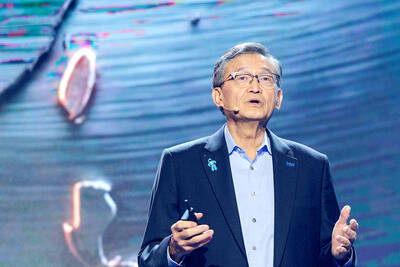
Intel Corp regards Taiwan Semiconductor Manufacturing Co (TSMC, 台積電) as a longstanding partner, as the US chipmaker would continue outsourcing production of advanced chips to TSMC, Intel chief executive officer Lip-Bu Tan (陳立武) said yesterday. “I don’t look at people as competitors. I look at the collaboration... Nvidia is also, you know, a good friend,” Tan told a news conference following his keynote speech at the Computex trade show in Taipei. “It’s a very trusted partnership for us... We are a big, top customer for them, and we’re going to continue doing that,” he said, referring to TSMC, the world’s largest foundry

Artificial intelligence (AI) agents would supplant smartphones as the center of people’s digital lives, fundamentally reshaping personal devices and driving a major computing upgrade cycle, Qualcomm Inc CEO Cristiano Amon said yesterday. In his keynote speech for this year’s Computex trade show in Taipei, Amon said that the rise of "agentic AI" — AI systems capable of reasoning, planning and carrying out tasks autonomously — would transform how people interact with technology across phones, PCs, vehicles and wearable devices. Describing the technology as the next major evolution in computing, Amon said that "2026 is the year of agents.” For decades, smartphones have sat


 RSS
RSS