


Asian stocks gained this week, led by commodities companies after gold and oil prices climbed. BHP Billiton Ltd and Nippon Steel Corp advanced.
Toyota Motor Corp advanced after it raised its sales forecast for next year.
Central Japan Railway Co was the biggest drag on a regional index this week after it announced a ¥5.1 trillion (US$45 billion) plan to build a magnetic-levitation train link.

PHOTO: AFP
"The outlook for the miners is relatively strong," said Steven Marsh, who helps manage the equivalent of US$632 million at Trust Co in Sydney.
The MSCI Asia Pacific Index rose 1.8 percent this week to 156.26, rebounding from a 6.8 percent slide in the past two weeks. For the year, the measure has advanced 11.2 percent, set for its smallest annual gain in five years.
TAIPEI
Taiwanese share prices closed up 1 percent after Chinese Nationalist Party (KMT) presidential candidate Ma Ying-jeou (馬英九) was cleared of corruption charges, resolving some political uncertainty, dealers said.
The TAIEX closed up 83.23 points at 8,396.95 on turnover of NT$114.74 billion (US$3.53 billion).
"The market too has handed down its verdict -- there was more buying than selling," said Oliver Fang (
TOKYO
Japanese share prices closed down 1.65 percent, the final session of this year, after losses on Wall Street following weak data and the assassination of Pakistani opposition leader Benazir Bhutto.
The Tokyo Stock Exchange's benchmark NIKKEI-225 index fell 256.91 points in the half-day final session to close at 15,307.78.
For this year as a whole, the NIKKEI lost 11.1 percent as fears over a US housing slump and related credit crunch battered global markets.
The broader TOPIX index of all first-section shares ended the final session down 24.26 points or 1.62 percent at 1,475.68.
Japanese financial markets will be closed Thursday.
HONG KONG
Hong Kong share prices closed 1.7 percent lower amid geopolitical worries after Bhutto's assassination, dealers said.
The Hang Seng index closed down 472.33 points at 27,370.60, off a low of 27,296.86 and a high of 27,678.40. For the week, the index is down 256 points or 0.93 percent.
The market will have a half-day session tomorrow.
SYDNEY
Australian stocks closed down 0.2 percent after Bhutto's assassination triggered sharp falls on Wall Street, dealers said.
The benchmark SP/ASX 200 dropped 11 points to end the week at 6,339.9 for the last full trading day of the year, while the broader All Ordinaries lost 2.7 points to close at 6,423.7.
SHANGHAI
Chinese share prices closed 0.89 percent lower on profit-taking in the last trading session ahead of the New Year holidays, dealers said.
The benchmark Shanghai Composite Index closed down 47.33 points at 5,261.56.
The Shanghai A-share Index fell 49.85 points or 0.89 percent to 5,521.49. The Shenzhen A-share Index was down 6.82 points or 0.45 percent at 1,520.99. The Shanghai B-share Index fell 0.93 points or 0.25 percent to 365.93. The Shenzhen B-share Index fell 2.23 points or 0.31 percent at 709.69.
SEOUL
South Korean share prices closed down 0.6 percent, the year's last trading day, as investors sold shares after the release of downbeat industrial output data, dealers said.
The KOSPI index ended 11.49 points or 0.6 percent lower at 1,897.13 after trading between 1,890.81 and 1,911.67.
SINGAPORE
Singapore share prices closed 0.9 percent lower in subdued year-end trading, dealers said.
The main Straits Times Index closed 31.38 points lower at 3,445.82.
KUALA LUMPUR
Malaysian share prices closed up 0.6 percent due to last-minute buying of big stocks like palm oil giant Sime Darby, dealers said.
The Kuala Lumpur Composite Index (KLCI) closed up 9.22 points at 1,447.04.
BANGKOK
Thai share prices closed 0.71 percent higher on buying of energy-linked stocks, dealers said.
The Stock Exchange of Thailand (SET) composite index rose 6.04 points to 858.10, while the blue-chip SET-50 index added 3.86 points to 630.73.
Over the year, the Thai index rose 178.26 points or 26.22 percent.
MUMBAI
Indian share prices closed little changed in cautious trade after the assassination of Bhutto triggered regional security concerns, dealers said.
The 30-share Mumbai stock exchange SENSEX index fell 9.77 points or 0.05 percent to 20,206.95, snapping five straight days of gains.
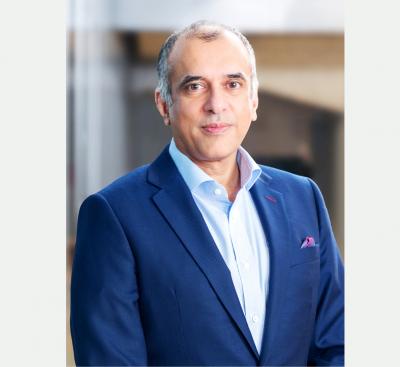
HSBC Holdings PLC is deepening its commitment to Taiwan as the economy emerges as one of the bank’s fastest-growing markets globally, driven by an artificial intelligence (AI) investment boom, expanding cross-border trade, and rising wealth creation. “The advantage that Taiwan has is a growth story linked to the semiconductor and broader AI industries, strong underlying corporate performance, and wealth creation,” said Surendra Rosha, HSBC’s co-chief executive for Asia and the Middle East, in an exclusive interview with the Taipei Times on June 2, during this year’s HSBC Taiwan Conference. That combination has helped HSBC cement its position as the most profitable international
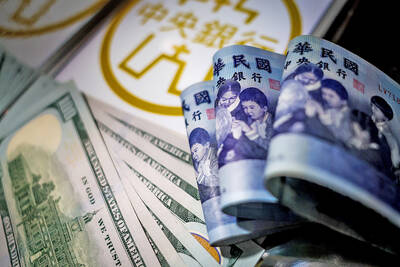
The New Taiwan dollar yesterday fell sharply against the US dollar to close at its lowest level since May 22 amid a massive outflow of funds from the country because of investors panicking over global equity markets. The NT dollar ended at NT$31.580 against the US dollar, slightly lower than its close of NT$31.568 on May 22, after moving between NT$31.5 and NT$31.648 on combined turnover of US$3.062 billion on the Taipei Foreign Exchange and the Cosmos Foreign Exchange. The NT dollar received a significant hit in the morning session, slumping as much as NT$0.173 at a time when other Asian currencies
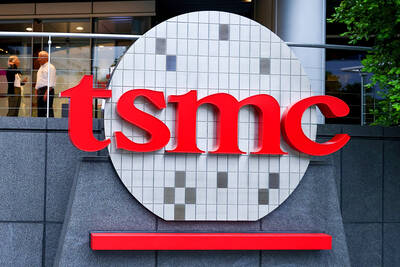
Taiwan Semiconductor Manufacturing Co (TSMC, 台積電) is now ranked ninth among the world’s 100 most valuable companies after its market capitalization more than doubled over the past year, PricewaterhouseCoopers (PwC) Taiwan said in a report last month. TSMC’s market capitalization surged 101 percent year-on-year to US$1.427 trillion as of March 31, the accounting and consulting firm’s 2026 Global Top 100 Companies by Market Capitalization report said. The gain catapulted the world’s largest contract chipmaker from 12th place to ninth in the rankings, and it was the fastest-growing among the global top 10, it said. TSMC was the only Taiwanese company among the top
Taiwan Semiconductor Manufacturing Co (TSMC, 台積電) yesterday reported record revenue of NT$416.975 billion (US$13.17 billion) for last month, putting the world’s largest contract chipmaker on track to set a record for quarterly revenue. Last month’s figure surpassed March’s record NT$415.19 billion and represented increases of 1.5 percent from April and 30.1 percent from a year earlier. For the first five months of the year, TSMC generated NT$1.96 trillion in revenue, up 30 percent year-on-year, it said in a statement. TSMC has forecast second-quarter revenue of between US$39 billion and US$40.2 billion, representing sequential growth of about 10 percent and year-on-year growth of about


 RSS
RSS