


Hyundai plans expansion
South Korea's top carmaker Hyundai Motor announced yesterday it would invest more than US$11 billion next year to raise production and upgrade facilities.
Hyundai Motor and affiliate Kia Motors will spend a combined 4.5 trillion won (US$4.8 billion), including 3.5 trillion won for research and development. About 5.2 trillion won would be spent on an integrated steel plant, Chung said.
Hyundai started building the plant, with an annual capacity of seven million tonnes, in October last year to avoid shortages of the key raw material.
The group, which controls more than 70 percent of the domestic auto market, aims to become number five in the world. But growth has been threatened by competition, falling productivity and labour disputes.
China steelmaker invests in IMX
Tonghua Iron & Steel Co (通化鋼鐵), the largest steelmaker in China's Jilin Province, bought a 9.9 percent stake in Australian iron ore explorer IMX Resources NL and will buy all the output from its Cairn Hill project.
Tonghua agreed to buy 16.4 million shares for A$14 million (US$12.3 million), Perth-based IMX said yesterday in a statement to the Australian Stock Exchange. The money will be used to develop Cairn Hill in South Australia state, it said.
China's mills have been funding iron ore companies in Australia as they seek to reduce reliance on Rio Tinto Group and BHP Billiton Ltd, the world's second and third-largest producers of the key steelmaking ingredient. The first shipment from IMX is planned for next year's fourth quarter.
Tonghua agreed to buy as much as 1.4 million tonnes of ore a year from the initial project for three years, IMX said. The sales deal with Tonghua is the Chinese company's first entry into Australia, IMX said.
Sharp to sell stake in Sampo
Japanese television maker Sharp Corp planned to withdraw its investment in local TV vendor Sampo Corp (聲寶) by selling its 6-percent holding in the form of global depositary receipts, Sampo said in a statement yesterday.
Sharp planned to sell those shares beginning next July as it was focusing on energy-efficient liquid-crystal-display and solar-cell businesses, the statement said.
By the end of this year, Sharp would resign its seat in the board of Sampo. The Taiwanese company is in a struggle to return to the black.
But, Sharp said it would maintain the current partnership with Sampo, which sells and makes some Sharp home appliances in Taiwan.
CPC delays plant reopening
CPC Corp, Taiwan (台灣中油), the nation's state-owned refiner, has delayed restarting a fire-damaged crude oil distillation unit at its Kaohsiung refinery by two weeks as it waits for approval from the government.
The unit may start next week after permission is obtained from the Kaohsiung city labor bureau, said a CPC official who declined to be identified because of company rules.
The 100,000 barrel-a-day facility was expected to be restarted in the week of Dec. 17, CPC spokeswoman Jessica Tang (唐苑莉) said on Dec. 13. She couldn't immediately be reached by telephone.
The plant in southern Taiwan has been shut since Oct. 26, when a pump leak caused a fire. Taipei-based CPC has three refineries with a total capacity of 720,000 barrels a day.
The unit is the main part of a refinery that heats crude oil to separate it into different products.
NT dollar firms
The New Taiwan dollar yesterday firmed by NT$0.027 to close at NT$32.499 against the greenback on turnover of US$974 million.
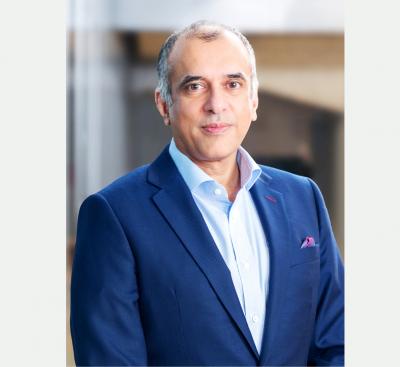
HSBC Holdings PLC is deepening its commitment to Taiwan as the economy emerges as one of the bank’s fastest-growing markets globally, driven by an artificial intelligence (AI) investment boom, expanding cross-border trade, and rising wealth creation. “The advantage that Taiwan has is a growth story linked to the semiconductor and broader AI industries, strong underlying corporate performance, and wealth creation,” said Surendra Rosha, HSBC’s co-chief executive for Asia and the Middle East, in an exclusive interview with the Taipei Times on June 2, during this year’s HSBC Taiwan Conference. That combination has helped HSBC cement its position as the most profitable international
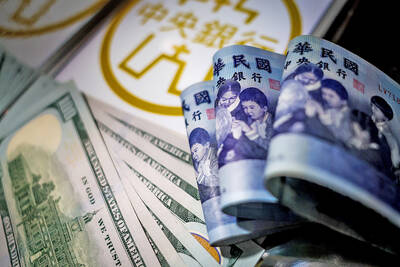
The New Taiwan dollar yesterday fell sharply against the US dollar to close at its lowest level since May 22 amid a massive outflow of funds from the country because of investors panicking over global equity markets. The NT dollar ended at NT$31.580 against the US dollar, slightly lower than its close of NT$31.568 on May 22, after moving between NT$31.5 and NT$31.648 on combined turnover of US$3.062 billion on the Taipei Foreign Exchange and the Cosmos Foreign Exchange. The NT dollar received a significant hit in the morning session, slumping as much as NT$0.173 at a time when other Asian currencies
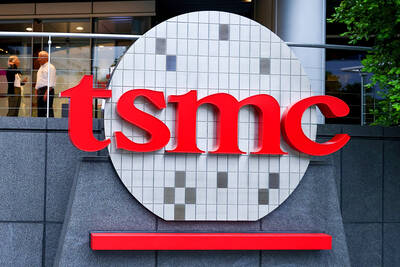
Taiwan Semiconductor Manufacturing Co (TSMC, 台積電) is now ranked ninth among the world’s 100 most valuable companies after its market capitalization more than doubled over the past year, PricewaterhouseCoopers (PwC) Taiwan said in a report last month. TSMC’s market capitalization surged 101 percent year-on-year to US$1.427 trillion as of March 31, the accounting and consulting firm’s 2026 Global Top 100 Companies by Market Capitalization report said. The gain catapulted the world’s largest contract chipmaker from 12th place to ninth in the rankings, and it was the fastest-growing among the global top 10, it said. TSMC was the only Taiwanese company among the top
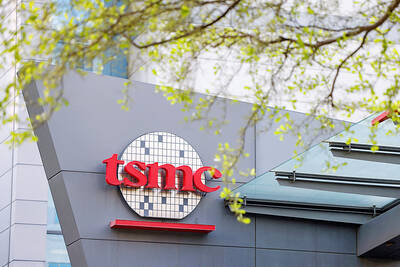
Taiwan Semiconductor Manufacturing Co (TSMC, 台積電) yesterday reported record revenue of NT$416.975 billion (US$13.17 billion) for last month, putting the world’s largest contract chipmaker on track to set a record for quarterly revenue. Last month’s figure surpassed March’s record NT$415.19 billion and represented increases of 1.5 percent from April and 30.1 percent from a year earlier. For the first five months of the year, TSMC generated NT$1.96 trillion in revenue, up 30 percent year-on-year, it said in a statement. TSMC has forecast second-quarter revenue of between US$39 billion and US$40.2 billion, representing sequential growth of about 10 percent and year-on-year growth of about


 RSS
RSS