


Local financial holding groups face increased competition from their multinational counterparts as the world's four major banking conglomerates have expanded their networks through acquisitions, market analysts said on Saturday.
The warning came after HSBC Holdings PLC (匯豐銀行), Europe's largest bank by market value, took over control of debt-laden The Chinese Bank (中華商銀) on Friday after the government agreed to pay NT$47.49 billion (US$1.46 billion) for HSBC to take it off its hands.
The HSBC deal was the latest in a series of forays by multinational banks into the local market. On June 8, ABN Amro Holding NV (荷蘭銀行) assumed control of Taitung Business Bank (台東企銀) while New York-based Citigroup Inc (花旗銀行), the nation's most profitable overseas bank, bought the Bank of Overseas Chinese (華僑銀行) for NT$14.1 billion in April. In September last year, London-based Standard Chartered PLC (渣打銀行) acquired Hsinchu International Bank (新竹商銀).
Market analysts said multinational banking groups had one eye on the Chinese market when making their acquisitions in Taiwan. Given that Taiwan and China share the same language and cultural background, multinational banks would be able to use the experience they obtain here and build on it when they enter the Chinese market, analysts said.
Moreover, the Taiwanese acquisitions offer easy access to the market for financial services for the large number of Taiwan-funded companies doing business in China and other Asian countries.
In addition, the analysts said, the local consumer banking and personal financial management markets are also showing steady growth. With a limited number of branches, multinational banks previously found it difficult to get a foothold in these emerging sectors.
Following the acquisitions, multinational banks are expanding their local service networks and the return of their investment would become evident in two to three years' time, the analysts said.
Local financial holding company executives say that the arrival of competition from overseas has posed a new threat to their market shares.
"If we fail to improve our service quality and design more innovative financial products, we could be overtaken by our multinational counterparts within three years," said a senior executive of a local financial holding company who preferred to remain anonymous.
The multinationals would offer attractive employment terms in order to lure outstanding financial managers away from local banks, posing yet another challenge to the local banks, the executive said.
In the face of this growing competition, the executive said local banks must step up their staff training, streamline their operations, improve their product design capabilities and seek merger and acquisition opportunities with local counterparts to expand their economies of scale. An ideal number of domestic branches of a financial holding group would be between 180 and 200, the executive said.
The deal reached between HSBC and the government-owned Central Deposit Insurance Corp (CDIC) on Friday means that HSBC will take over The Chinese Bank's assets, including its branches, its debts and at least half of the bank's employees, while Taiwan's Financial Reconstruction Fund will pay HSBC NT$47.49 billion.
The Chinese Bank was a subsidiary of the bankrupt Rebar Group (力霸集團). The CDIC assumed control of the bank after a run on its deposits early this year.
HSBC said in a statement on Friday that it plans to inject between US$300 million and US$400 million of fresh capital into The Chinese Bank.
"The Chinese Bank will provide HSBC in Taiwan with significant opportunities in retail, commercial and corporate banking," HSBC's Taiwan chief executive Alistair Currie said in the statement.
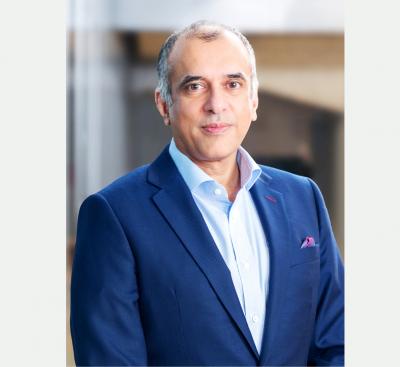
HSBC Holdings PLC is deepening its commitment to Taiwan as the economy emerges as one of the bank’s fastest-growing markets globally, driven by an artificial intelligence (AI) investment boom, expanding cross-border trade, and rising wealth creation. “The advantage that Taiwan has is a growth story linked to the semiconductor and broader AI industries, strong underlying corporate performance, and wealth creation,” said Surendra Rosha, HSBC’s co-chief executive for Asia and the Middle East, in an exclusive interview with the Taipei Times on June 2, during this year’s HSBC Taiwan Conference. That combination has helped HSBC cement its position as the most profitable international
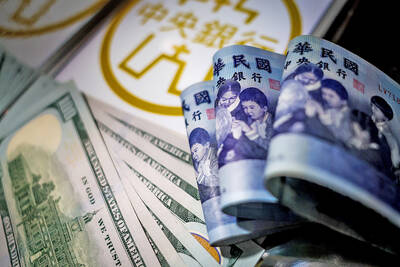
The New Taiwan dollar yesterday fell sharply against the US dollar to close at its lowest level since May 22 amid a massive outflow of funds from the country because of investors panicking over global equity markets. The NT dollar ended at NT$31.580 against the US dollar, slightly lower than its close of NT$31.568 on May 22, after moving between NT$31.5 and NT$31.648 on combined turnover of US$3.062 billion on the Taipei Foreign Exchange and the Cosmos Foreign Exchange. The NT dollar received a significant hit in the morning session, slumping as much as NT$0.173 at a time when other Asian currencies
Taiwan Semiconductor Manufacturing Co (TSMC, 台積電) is now ranked ninth among the world’s 100 most valuable companies after its market capitalization more than doubled over the past year, PricewaterhouseCoopers (PwC) Taiwan said in a report last month. TSMC’s market capitalization surged 101 percent year-on-year to US$1.427 trillion as of March 31, the accounting and consulting firm’s 2026 Global Top 100 Companies by Market Capitalization report said. The gain catapulted the world’s largest contract chipmaker from 12th place to ninth in the rankings, and it was the fastest-growing among the global top 10, it said. TSMC was the only Taiwanese company among the top
Taiwan Semiconductor Manufacturing Co (TSMC, 台積電) yesterday reported record revenue of NT$416.975 billion (US$13.17 billion) for last month, putting the world’s largest contract chipmaker on track to set a record for quarterly revenue. Last month’s figure surpassed March’s record NT$415.19 billion and represented increases of 1.5 percent from April and 30.1 percent from a year earlier. For the first five months of the year, TSMC generated NT$1.96 trillion in revenue, up 30 percent year-on-year, it said in a statement. TSMC has forecast second-quarter revenue of between US$39 billion and US$40.2 billion, representing sequential growth of about 10 percent and year-on-year growth of about


 RSS
RSS