


Cosmos Bank Taiwan (萬泰銀行), which launched the nation's first cash-advance cards eight years ago, said yesterday that its bondholders had signed agreements for its recapitalization plan.
The cash-strapped lender's bondholders have agreed to convert their debt holdings into Cosmos equities to help improve the bank's financial structure, Cosmos said in a statement.
As of yesterday, bondholders held NT$4.685 billion (US$145.1 million) in the lender's debt, or 35.4 percent of the total, it said. The bondholders agreed to exchange their debt holdings for the lender's equities at NT$2 per share, which will represent a fully diluted stake of 4.2 percent in the bank, Cosmos said.
"Bondholders' participation in the recapitalization is a strong testimonial to Cosmos' future," bank chairman and president Hu Chien-chu (
The bondholders' agreements depend on the planned capital injection of NT$29.7 billion (US$900 million) from US private equity firm SAC Private Capital Group LLC and GE Money.
The bondholders reportedly include Shin Kong Life Insurance Co (新光人壽), Shin Kong Commercial Bank (新光銀行), Mingtai Fire and Marine Insurance Co (明台產險), Allianz Taiwan Life Insurance Co (安聯人壽), South China Insurance Co (華南
產險), Chunan Credit Cooperative (竹南信合社), Sanjhih Township Farmers Association (三芝農會) and the life insurance unit of Bank of Taiwan (台灣銀行).
In September, Cosmos agreed to sell a combined 80 percent controlling stake to SAC PCG and GE Money through subscription to the lender's common shares, preferred shares and convertible debt issuance.
But there has been limited progress in the cash-injection plan and it might not close before today's deadline, amid market rumors that SAC may withdraw from the deal.
Cosmos spokesman Shih Kung-liang (施坤良) did not return calls yesterday.
However, in its statement Cosmos said it expected to achieve the cash injection this month.
“The SAC PCG and GE Money investment remains subject to the approval of Cosmos Bank's shareholders and other closing conditions, including receipt of financing and regulatory approvals, and is expected to close in December
2007,” the statement said.
Shares of Cosmos closed 6.61 percent higher at NT$2.42 yesterday. The news of bondholders's definitive agreements came after the local stock market closed.

Cairo’s new monorail slices across the city skyline, running above the familiar chaos of blaring horns and aging buses’ exhaust fumes that mark rush hour below. The US$4.5 billion monorail, opened this month, is among Egypt’s most prominent new transport projects, part of a debt-funded infrastructure drive criticized for sapping state finances while bringing limited benefits to most of the country’s 109 million people. “It feels like you’re in a different country,” said Ramy Sayed, a restaurant manager, aboard a driverless Innovia 300 train. “No noise, no traffic, we’re not used to this.” The eastern line runs 56km from the bustling middle-class

Taiwanese firms have increased investment in the Philippines in recent years as Manila’s ties with Washington deepen and global supply chains continue to shift away from China, an expert at the Chung-Hua Institution for Economic Research (CIER, 中華經濟研究院) said yesterday. The Philippines had not been among Taiwanese investors’ top choices in Southeast Asia, CIER Taiwan ASEAN Studies Center director Kristy Hsu (徐遵慈) said at a seminar in Taipei. However, Taiwan’s investment in the country has grown significantly since the COVID-19 pandemic, reaching US $257 million last year, a high in recent years, she said. Although Taiwan’s total investment in the Philippines still lags

Intel Corp regards Taiwan Semiconductor Manufacturing Co (TSMC, 台積電) as a longstanding partner, as the US chipmaker would continue outsourcing production of advanced chips to TSMC, Intel chief executive officer Lip-Bu Tan (陳立武) said yesterday. “I don’t look at people as competitors. I look at the collaboration... Nvidia is also, you know, a good friend,” Tan told a news conference following his keynote speech at the Computex trade show in Taipei. “It’s a very trusted partnership for us... We are a big, top customer for them, and we’re going to continue doing that,” he said, referring to TSMC, the world’s largest foundry
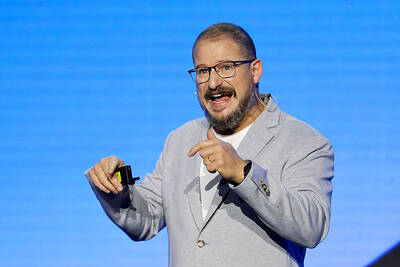
Artificial intelligence (AI) agents would supplant smartphones as the center of people’s digital lives, fundamentally reshaping personal devices and driving a major computing upgrade cycle, Qualcomm Inc CEO Cristiano Amon said yesterday. In his keynote speech for this year’s Computex trade show in Taipei, Amon said that the rise of "agentic AI" — AI systems capable of reasoning, planning and carrying out tasks autonomously — would transform how people interact with technology across phones, PCs, vehicles and wearable devices. Describing the technology as the next major evolution in computing, Amon said that "2026 is the year of agents.” For decades, smartphones have sat


 RSS
RSS