


Food and beverage chain stores are appealing to young generations of Taiwanese who wish to open up their own businesses, a chain store fair exhibitor said yesterday.
"Our main franchisees are between the age of 30 and 40. However, we are attracting an increasing number of younger franchisees, who are around 25," said Chung Wan-ping (鐘婉屏), a business planning official at Laguardia (拉亞漢堡), an American-style breakfast restaurant based in Yangmei Township (楊梅), Taoyuan County.
Chung made the remark at the Taiwan International Chain Store Fair yesterday at Taipei World Trade Center Exhibition Hall I. She said Laguardia's unique foods and its bright and clean store images were the company's main asset.
The four-day fair ends today.
A would-be franchisee surnamed Wang (王), who works in the food service industry, told the Taipei Times yesterday that he was interested in opening his own breakfast restaurant.
He said Laguardia appealed to him because of its unique products. Laguardia's NT$680,000 (US$21,000) investment is higher than other breakfast stores, such as My Warm Day (麥味登), which only needed NT$400,000 to 600,000, the 26-year-old Wang said. Nevertheless, he believed Laguardia's high-priced products would result in a higher rate of return.
Another visitor surnamed Wang said she was interested in joining beverage chain stores, as they required lower franchise fees and are easier to operate.
The 23-year-old nurse said she would quit her current job if she found a franchise that met her expectations.
Investors often choose breakfast restaurants, tea beverage cafes and street vending as their startup options after taking costs and investment risk into consideration, an industry analyst said.
"The low-cost food and beverage industry has been investors' franchises of choice in the past five years, because of low costs, high profits and high rates of return," Beryl Lee (李培芬), secretary-general of the Association of Chain and Franchise Promotion (台灣連鎖加盟促進協會), said in a report posted on the Taipei-based association's Web site.
"Taiwan's beverage chain store density is far higher than that of convenience stores. However, beverage chain store investors can survive in the market with only one-third a convenience store's investment fee," Lee said in the report titled 2007 Chain and Franchise Trend Analysis published in May.
However, every investment has its own risk and not every business is going to become successful.
"The main reasons for failed FamilyMart franchises are long working hours and a lack of employees," said Hsu Shu-ching (
"The lack of employees is convenience stores' biggest problem. The young generation is constantly looking for something new so they are mainly looking for short-term jobs," she said on Friday.

Taichung reported the steepest fall in completed home prices among the six special municipalities in the first quarter of this year, data compiled by Taiwan Realty Co (台灣房屋) showed yesterday. From January through last month, the average transaction price for completed homes in Taichung fell 8 percent from a year earlier to NT$299,000 (US$9,483) per ping (3.3m²), said Taiwan Realty, which compiled the data based on the government’s price registration platform. The decline could be attributed to many home buyers choosing relatively affordable used homes to live in themselves, instead of newly built homes in the city’s prime property market, Taiwan Realty
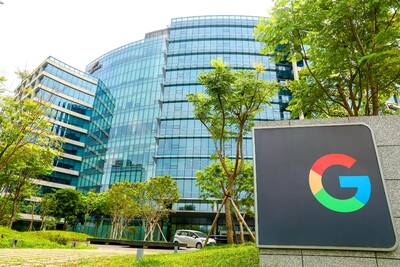
The government yesterday approved applications by Alphabet Inc’s Google to invest NT$27.08 billion (US$859.98 million) in Taiwan, the Ministry of Economic Affairs said in a statement. The Department of Investment Review approved two investments proposed by Google, with much of the funds to be used for data processing and electronic information supply services, as well as inventory procurement businesses in the semiconductor field, the ministry said. It marks the second consecutive year that Google has applied to increase its investment in Taiwan. Google plans to infuse NT$25.34 billion into Charter Investments Ltd (特許投資顧問) through its Singapore-based subsidiary Fructan Holdings Singapore Pte Ltd, and

JET JUICE: The war on Iran’s secondary effects have seen fuel prices skyrocket, knocking flight schedules down to earth in return as airlines struggle with costs Airline passengers should brace for more irritation in the next few months as carriers worldwide cancel flights and ground planes to cope with stratospheric increases in jet-fuel prices. Dutch flag carrier KLM is the latest company to cut its schedule, saying on Thursday that it would scrap 80 return flights at Amsterdam’s Schiphol Airport in the coming month. That puts it in the same league as United Airlines Holdings Inc, Deutsche Lufthansa AG and Cathay Pacific Airways Ltd, which have all pruned itineraries to mitigate costs. Global capacity for next month has been reduced by about 3 percentage points, with all

FORESEEABLE CONSEQUENCES: New technology always comes with new innovations by the iniquitous in exploiting users for financial gain or more nefarious ends Artificial intelligence (AI) “agents” say they can save users time and energy by automating tasks, but the growing power of systems such as OpenClaw is putting cybersecurity experts on edge. Powered by a wave of hype, OpenClaw today says it has more than three million users worldwide. The system allows users to create so-called agents, tools based on a large language model (LLM) such as OpenAI’s ChatGPT or Anthropic PBC’s Claude, that can carry out online tasks. “We’ve moved from an AI you could talk with via a chatbot to an agentic AI, which can take action... the threat and the risks are


 RSS
RSS