


Premier Chang Chun-hsiung (
"[The Cabinet] would not fabricate [the number]," Chang said when fielding questions from Chinese Nationalist Party (KMT) Legislator Lin Te-fu (
"The number does not lie," he said, adding that the economic growth forecast made by the Directorate-General of Budget, Accounting and Statistics was based on real figures.
Lin was questioning Chang over the government announcement on Thursday raising this year's GDP growth forecast to 5.46 percent, from its previous estimate of 4.58 percent growth. Lin said the upward adjustment was purely for election show.
"Commodity prices are soaring, but salaries are not. The public is feeling the pain and can't feel this so-called `economic growth,'" Lin said, while accusing the government of faking the number in hopes of improving the Democratic Progressive Party's chances in next year's elections.
Earlier yesterday, KMT Legislator Lee Jih-chu (
Speaking at a press conference, Lee accused the government of manipulating currency exchange and interest rates to benefit certain export industries and groups of people, while ignoring the plight of the public.
Chang, however, defended the government's action, saying it is concerned about the widening gap between the rich and the poor, adding that the Cabinet has devoted efforts to finding a solution to the problem.
Meanwhile, President Chen Shui-bian (
Speaking at a meeting of the Rotary Club in Taipei County, Chen said he had attained the goal he had set when running for the presidency in 2004 -- raising research and development expenditures to 3 percent of GDP, reducing the average unemployment rate to below 4 percent and lifting the average economic growth rate to more than 5 percent.
"I felt encouraged because I fulfilled my promise," the president said.
Exports were expected to hit a new record high of US$2.69 billion last month and reach US$25 billion for the full year, Chen said.
Shares of contract chipmaker Taiwan Semiconductor Manufacturing Co (TSMC, 台積電) came under pressure yesterday after a report that Apple Inc is looking to shift some orders from the Taiwanese company to Intel Corp. TSMC shares fell NT$55, or 2.4 percent, to close at NT$2,235 on the local main board, Taiwan Stock Exchange data showed. Despite the losses, TSMC is expected to continue to benefit from sound fundamentals, as it maintains a lead over its peers in high-end process development, analysts said. “The selling was a knee-jerk reaction to an Intel-Apple report over the weekend,” Mega International Investment Services Corp (兆豐國際投顧) analyst Alex Huang
Taiwan Semiconductor Manufacturing Co (TSMC, 台積電) is expected to remain Apple Inc’s primary chip manufacturing partner despite reports that Apple could shift some orders to Intel Corp, industry experts said yesterday. The comments came after The Wall Street Journal reported on Friday that Apple and Intel had reached a preliminary agreement following more than a year of negotiations for Intel to manufacture some chips for Apple devices. Taiwan Institute of Economic Research (台灣經濟研究院) economist Arisa Liu (劉佩真) said TSMC’s advanced packaging technologies, including integrated fan-out and chip-on-wafer-on-substrate, remain critical to the performance of Apple’s A-series and M-series chips. She said Intel and Samsung
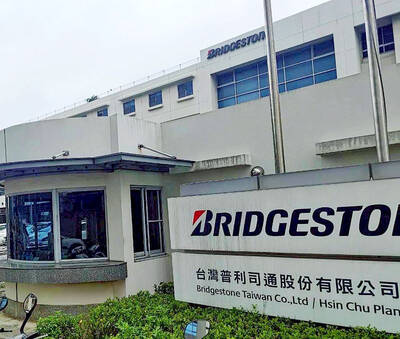
TRANSITION: With the closure, the company would reorganize its Taiwanese unit to a sales and service-focused model, Bridgestone said Bridgestone Corp yesterday announced it would cease manufacturing operations at its tire plant in Hsinchu County’s Hukou Township (湖口), affecting more than 500 workers. Bridgestone Taiwan Co (台灣普利司通) said in a statement that the decision was based on the Tokyo-based tire maker’s adjustments to its global operational strategy and long-term market development considerations. The Taiwanese unit would be reorganized as part of the closure, effective yesterday, and all related production activities would be concluded, the statement said. Under the plan, Bridgestone would continue to deepen its presence in the Taiwanese market, while transitioning to a sales and service-focused business model, it added. The Hsinchu
Taiwan Semiconductor Manufacturing Co (TSMC, 台積電) has approved a capital budget of US$31.28 billion for production expansion to meet long-term development needs during the artificial intelligence (AI) boom. The company’s board meeting yesterday approved the capital appropriation plan for purposes such as the installation of advanced technology capacity and fab construction, the world’s largest contract chipmaker said in a statement. At an earnings conference last month, TSMC forecast that its capital expenditure for this year would be at the higher end of the US$52 billion to US$56 billion range it forecast in January in response to robust demand for 5G, AI and


 RSS
RSS