


A US-Africa business summit has ended with a rebuke from the Ugandan president, who said the West was more interested in exploiting than nurturing the resources of the world's poorest continent.
Ugandan President Yoweri Museveni said industrialized countries were wrong to place a higher value on Africa's raw materials than on its 900 million people, who should no longer be considered aid recipients but potential consumers.
"The greatest enemy of business in the world is under-consumption," Museveni told a gathering of hundreds of senior executives from companies like Coca-Cola and Chevron on Friday. "If they were consuming enough you would be much richer than you are now," he said.
Africa was long synonymous with famine, war and corruption; dependent on aid rather than investment. But that is changing. It is experiencing its highest rates of growth and lowest levels of inflation in 30 years and stable democracies have become the norm rather than the exception.
China and India have led the rush for influence and investment in the continent that is both rich in natural resources and offers huge untapped potential in consumer demand, leaving the US scrambling behind.
US Treasury Secretary Henry Paulson said the US-Africa business summit, organized by the Corporate Council on Africa, was proof that international companies realize that Africa is becoming an active player in the global economy.
"Investors see attractive direct, portfolio and equity investment opportunities all across the continent," he said at the closing dinner.
"These results demonstrate the immediate impact of good leadership," he said, adding that African leaders still needed to do more to fight corruption and mismanagement, to increase respect for human rights, and to spread economic progress more widely.
"Africa needs properly regulated and well-functioning financial markets," he said.
This includes legal structures to protect property and investors' rights, he said.
He said research showed that lack of access to finance was one of the biggest constraints on private sector growth in Africa -- less than 20 percent of Africans have a bank account.
He said the telecommunications industry showed Africa's potential. It is the fastest growing mobile phone market in the world, and the penetration level has grown from practically nothing to more than 20 percent in the space of a few years, with more than 200 million cell phones, he said.
A World Bank report on Wednesday said that African economic growth averaged 5.4 percent over the past decade thanks to high commodity and oil prices, which have created booms in oil-producing countries like Nigeria and Angola. About 25 African countries have growth rates of more than 3 percent.
Despite the economic progress and the spread of stable democracies, Africa receives less than 3 percent of global foreign direct investment, and most of this is linked to oil.
Uganda's Museveni said lack of infrastructure remained one of the biggest obstacles to investment. But in a tone symbolic of Africa's growing self-confidence, he said that if Western governments and private companies would not invest in the construction of dams for hydroelectric power, for instance, then Africa would do it alone.
Museveni's economic policies have made Uganda one of the darlings of the West. He has also won acclaim for his insistence on education and training as the key to future prosperity.
But in his speech at the closing dinner, Museveni made it clear that Uganda and other African countries owed the West no favors.
"Africa has been hemorrhaging resources," he said. "It is a misnomer that the West is helping Africa. This is not true."
He said Uganda, the world's fourth biggest coffee exporter, receives US$1 per kilogram of coffee. The beans are roasted and ground in London, and sold for US$20, he said.
"For each 1 kilogram of coffee, we are donating US$19," he said. "We have been doing this for a long time. But we are fighting it. We are going to change."
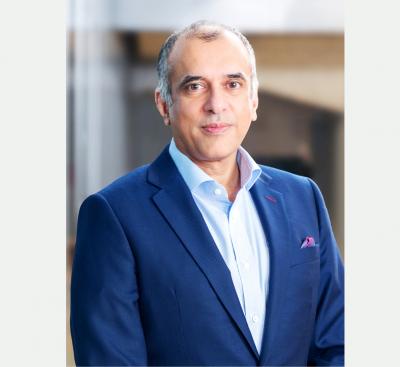
HSBC Holdings PLC is deepening its commitment to Taiwan as the economy emerges as one of the bank’s fastest-growing markets globally, driven by an artificial intelligence (AI) investment boom, expanding cross-border trade, and rising wealth creation. “The advantage that Taiwan has is a growth story linked to the semiconductor and broader AI industries, strong underlying corporate performance, and wealth creation,” said Surendra Rosha, HSBC’s co-chief executive for Asia and the Middle East, in an exclusive interview with the Taipei Times on June 2, during this year’s HSBC Taiwan Conference. That combination has helped HSBC cement its position as the most profitable international
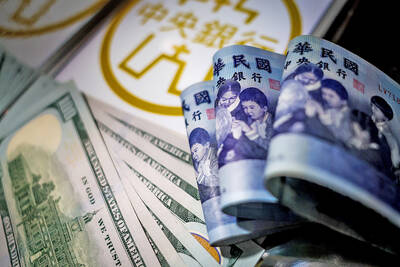
The New Taiwan dollar yesterday fell sharply against the US dollar to close at its lowest level since May 22 amid a massive outflow of funds from the country because of investors panicking over global equity markets. The NT dollar ended at NT$31.580 against the US dollar, slightly lower than its close of NT$31.568 on May 22, after moving between NT$31.5 and NT$31.648 on combined turnover of US$3.062 billion on the Taipei Foreign Exchange and the Cosmos Foreign Exchange. The NT dollar received a significant hit in the morning session, slumping as much as NT$0.173 at a time when other Asian currencies
Taiwan Semiconductor Manufacturing Co (TSMC, 台積電) is now ranked ninth among the world’s 100 most valuable companies after its market capitalization more than doubled over the past year, PricewaterhouseCoopers (PwC) Taiwan said in a report last month. TSMC’s market capitalization surged 101 percent year-on-year to US$1.427 trillion as of March 31, the accounting and consulting firm’s 2026 Global Top 100 Companies by Market Capitalization report said. The gain catapulted the world’s largest contract chipmaker from 12th place to ninth in the rankings, and it was the fastest-growing among the global top 10, it said. TSMC was the only Taiwanese company among the top
Taiwan Semiconductor Manufacturing Co (TSMC, 台積電) yesterday reported record revenue of NT$416.975 billion (US$13.17 billion) for last month, putting the world’s largest contract chipmaker on track to set a record for quarterly revenue. Last month’s figure surpassed March’s record NT$415.19 billion and represented increases of 1.5 percent from April and 30.1 percent from a year earlier. For the first five months of the year, TSMC generated NT$1.96 trillion in revenue, up 30 percent year-on-year, it said in a statement. TSMC has forecast second-quarter revenue of between US$39 billion and US$40.2 billion, representing sequential growth of about 10 percent and year-on-year growth of about


 RSS
RSS