

Microsoft Corp and China's No. 2 personal computer maker signed an agreement yesterday to pre-install Microsoft's Windows operating system on PCs to combat widespread Chinese product piracy.
The agreement with Founder Technology Group Corp (
HARDWARE
Founder also will sell Microsoft keyboards, Webcams and other hardware in more than 500 stores across China, the companies said.
"Our partnership with Founder is an essential part of our strategy here in China and around the world," Microsoft CEO Steve Ballmer said at a signing ceremony.
Founder president Qi Dongfeng (
Ballmer did not take questions from reporters or mention piracy directly in his comments.
GROWING PIRACY
China is the world's leading source of illegally copied software, music and other goods. Foreign officials and business groups say the scale of piracy is growing despite increased Chinese enforcement.
Some 82 percent of software used in China last year was pirated, well above the Asian regional average of 55 percent, according to an industry group, the US-based Business Software Alliance.
SEEKING A SOLUTION
Microsoft, based in Redmond, Washington, has been pursuing tie-ups with Chinese equipment makers to discourage use of unlicensed copies of its products.
In March, the country's biggest PC maker, Lenovo Group (
Beijing-based Founder also will pre-load Microsoft's Windows Live system on PCs equipped with Windows for the next two years, the companies said.
The system includes programs for e-mail, instant messaging, blogging and sharing photos.
The package includes Microsoft's search service Live Search, which could help the company compete for traffic in China with the country's dominant search engine, Baidu.com Inc (
Lenovo also has agreed to pre-load Windows live in laptop and desktop computers.

INFRINGEMENT: The investigation comes after a complaint from Vicor Corp, with the company seeking a limited exclusion order as well as cease-and-desist orders, the ITA said The US International Trade Commission (USITC) has launched a Section 337 investigation naming Taiwanese technology companies, including Hon Hai Precision Industry Co (鴻海), Delta Electronics Inc (台達電) and Quanta Computer Inc (廣達), as respondents. The Ministry of Economic Affairs (MOEA) pledged assistance if needed. The USITC said on Friday in a statement that it had voted to institute an investigation under Section 337 of the US Tariff Act of 1930 into certain vertical power delivery systems, related components and computing devices incorporating such systems. The investigation covers 20 companies from Taiwan, China, Germany and the US, the commission said, adding that it
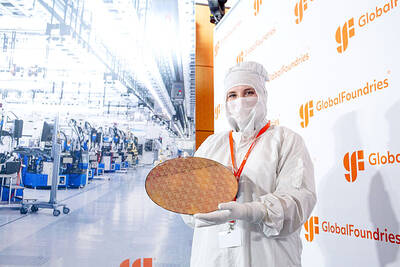
PACKAGING PUSH: The chipmaker said that it would begin ramping up silicon interposer production in New York in the first half of 2028 to support AI systems GlobalFoundries Inc shares gained as much as 7 percent after the chip manufacturer announced a five-year, US$2 billion deal to provide US production capacity to Taiwan Semiconductor Manufacturing Co (TSMC, 台積電). Under the agreement, announced on Thursday, GlobalFoundries is to help supply components known as silicon interposers. The US company is to rely on manufacturing at its facility in Malta, New York, and said it has the option to expand capacity “as customer demand grows.” An interposer is a small layer of silicon that sits between a chip and its packaging. It is home to the wires that carry electronic signals and
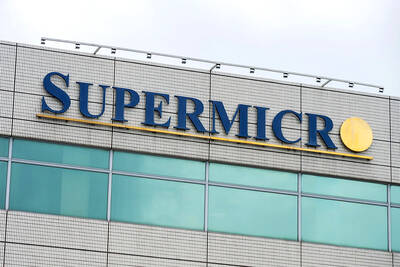
A man charged along with Super Micro Computer Inc co-founder Yih-Shyan “Wally” Liaw (廖益賢) of conspiring to send cutting-edge chips to China in violation of US export controls pleaded guilty, court documents said. Ting-Wei “Willy” Sun (孫廷瑋), a former outside contractor described by US authorities as a “fixer” who allegedly aided in the sales, pleaded guilty on Thursday at a hearing in federal court in New York as part of an agreement with prosecutors, court filings showed. Prosecutors claimed the men were part of a scheme to send Nvidia Corp-powered servers to an unnamed Southeast Asian company and then divert them to
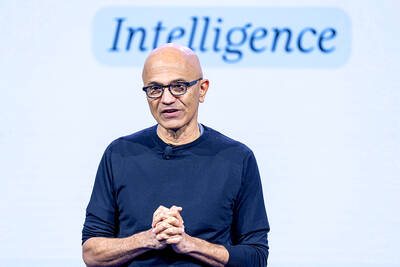
Microsoft Corp chief executive officer Satya Nadella said companies should treat powerful artificial intelligence (AI) models as potential insider threats, assume they could be compromised and create an “emergency brake” system to prevent agentic models from going rogue. Nadella said that those deploying advanced AI should not rely on assurances from model makers. “We must assume a model is compromised and contain it from the start,” Nadella wrote on Saturday in a post on X. “Think of it like an emergency brake. An authorized person should always be able to pause or shut down a model mid-task.” The statement comes as Anthropic PBC


 RSS
RSS