

In the latest display of its manufacturing might, Intel Corp is opening a US$3 billion factory in the US, widening its lead over smaller rival Advanced Micro Devices Inc (AMD) in the industry's switch to a new chipmaking technique.
The new facility in Arizona will be Intel's first plant dedicated to churning out microprocessors -- the brains of personal computers and servers -- with an average size of 45 nanometers, or 45 billionths of a meter.
The transistors on such chips are so small that more than 30 million can fit onto the head of a pin.
How small they are is critical to the fight between Intel and AMD because smaller features open more room for transistors on a single slice of silicon, boosting performance while lowering manufacturing costs.
The new processors are also made with materials that reduce the amount of electric current escaping from transistors, a major problem as chip parts shrink to the atomic scale.
Intel is at least six months ahead of AMD in the transition to the new chipmaking method.
Intel and AMD currently make their most advanced chips on 65-nanometer technology, and both companies are spending heavily to outfit their factories with the cutting-edge equipment and technologies needed to make 45-nanometer chips.
Intel's new factory, with more than 1,000 workers, is so big that more than 17 football fields could fit inside it.
Its products will go on sale on Nov. 12.
AMD is aiming to roll out chips based on its own new technique -- developed in a partnership with IBM Corp -- in the middle of next year but has not provided more specifics.
Intel is drawing on its deeper financial resources to fund its more rapid changeover.
The company, whose US$150 million market value is 21 times bigger than AMD's, plans to spend up to US$8 billion on upgrading or building factories for 45-nanometer chips.
That figure includes the new factory, up to US$3.5 billion for a new factory in Kiryat Gat, Israel, and US$1.5 billion to retool an existing facility in New Mexico, both of which are scheduled to open next year.
AMD is retooling one of its factories in Dresden, Germany, to handle the new technology. The company has not given a cost for its transition.
The battle over manufacturing technology amplifies the competition between the world's No. 1 and No. 2 makers of microprocessors.
"Customers buy much more than nanometers," AMD spokesman Gary Silcott said. "We may be behind certain companies by a few months in terms of introducing 45-nanometer, but we're way ahead in a number of critical design features. We think we're in a very competitive position."
Intel's lead applies more pressure to AMD as it struggles to emerge from a deep financial funk. AMD has lost US$1.61 billion through the first nine months of the year on sales of US$4.24 billion.
Meanwhile, Intel is thriving, racking up US$4.77 billion in profits on US$27.6 billion in sales over the same period.
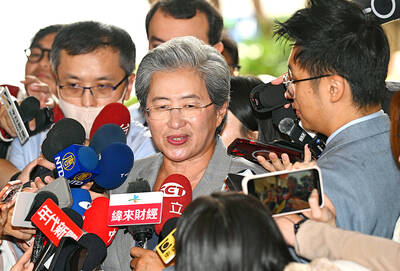
SILICON ISLAND: When asked about geopolitical tensions, Lisa Su said that ‘Taiwan is absolutely critical to the semiconductor supply chain, and very, very critical for AMD’ Advanced Micro Devices Inc (AMD) CEO Lisa Su (蘇姿丰) yesterday said the company plans to “substantially” increase manufacturing capacity next year through its Taiwanese supply chain, particularly with Taiwan Semiconductor Manufacturing Co (TSMC, 台積電), as surging demand for artificial intelligence (AI)-related processors continues to outstrip supply. “It is a very exciting time right now for all kinds of compute, and especially on the CPU [central processing unit] side,” Su said during a visit to Taiwan. “The overall market has increased a lot in 2026, and so we have also increased our own supply and capacity in 2026, but I can
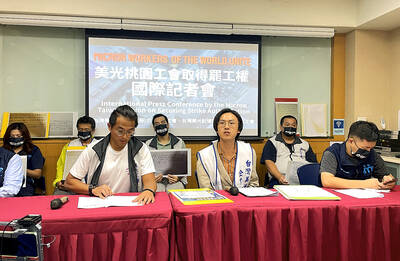
INDUSTRY STANDARD: Most global semiconductor companies have tied employee bonuses directly to corporate profits, the union said, urging Micron to do the same Micron Memory Taiwan Co’s (台灣美光) Taoyuan union secured strike authorization yesterday after a six-day vote, ramping up pressure on management to build a reasonable profit-sharing mechanism. Before the strike, the Taoyuan union “encourages” members to join a protest in Taipei on Oct. 19, union chairman Jerry Lin (林哲瑞) told a news conference in Taipei. The union did not rule out staging a snap strike, Lin said. The union has 2,258 registered members, with 88.3 percent backing the strike, he said. The vote comes as Micron’s board of directors is meeting today and tomorrow in the US. The union expects the board to respond

INFRINGEMENT: The investigation comes after a complaint from Vicor Corp, with the company seeking a limited exclusion order as well as cease-and-desist orders, the ITA said The US International Trade Commission (USITC) has launched a Section 337 investigation naming Taiwanese technology companies, including Hon Hai Precision Industry Co (鴻海), Delta Electronics Inc (台達電) and Quanta Computer Inc (廣達), as respondents. The Ministry of Economic Affairs (MOEA) pledged assistance if needed. The USITC said on Friday in a statement that it had voted to institute an investigation under Section 337 of the US Tariff Act of 1930 into certain vertical power delivery systems, related components and computing devices incorporating such systems. The investigation covers 20 companies from Taiwan, China, Germany and the US, the commission said, adding that it

Elon Musk said his business empire would build and operate Terafab independently, quashing speculation about industry leader Taiwan Semiconductor Manufacturing Co (TSMC, 台積電) swooping in to run his ambitious chipmaking venture. Based in Texas, the Terafab project is Musk’s effort to break into the business of fabricating chips, in service of his companies Tesla Inc and SpaceXAI. While Musk had said that he was in discussions with TSMC, the trillionaire clarified in an X post yesterday that the only matter under consideration is for TSMC potentially leasing some part of the planned site and would not involve any operational role. “Maybe TSMC


 RSS
RSS