


Chunghwa Telecom Co (中華電信), the nation's biggest telecom operator, said yesterday it was evaluating the feasibility of increasing its stake in Taipei Financial Center Corp (台北金融大樓公司), the operator of the world's tallest skyscraper, Taipei 101.
This was part of the telecom firm's bigger intention to tap into the nation's property market after the carrier said last month it would spend NT$5 billion to set up a property development and management subsidiary by the end of the year at the earliest.
Shares of Chunghwa Telecom rose 1.04 percent to NT$58.5, outpacing the benchmark TAIEX index's 0.17 percent gain.
under review
"We are evaluating [the case]. I cannot comment further as this is confidential," Chunghwa Telecom spokesman Chang Feng-hsiung (張豐雄) said by telephone.
Chunghwa Telecom holds 11.76 percent of Taipei Financial Center's shares, Ministry of Economic Affairs data showed.
Chang's comment came after the Chinese-language Economic Daily News reported yesterday that Chunghwa Telecom intended to purchase the 15 percent stake, or 370.34 million shares of Taipei Financial Center, owned by financially distressed China United Trust Investment Corp (中聯信託).
China United Trust went into receivership in March, with the state-run Central Deposit Insurance Co (
failed auction
Central Deposit Insurance failed to sell China United's holding of Taipei Financial Center early this month, as no bidder joined the first-round auction. The minimum bid price was set at NT$3.69 billion (US$112 million), or NT$9.97 per share.
Central Deposit Insurance had informed the original investors of Taipei Financial Center -- Chunghwa Telecom, China Development Industrial Bank (
If none of the three showed any interest, Central Deposit Insurance will hold a second round of bidding, the report said.

Cairo’s new monorail slices across the city skyline, running above the familiar chaos of blaring horns and aging buses’ exhaust fumes that mark rush hour below. The US$4.5 billion monorail, opened this month, is among Egypt’s most prominent new transport projects, part of a debt-funded infrastructure drive criticized for sapping state finances while bringing limited benefits to most of the country’s 109 million people. “It feels like you’re in a different country,” said Ramy Sayed, a restaurant manager, aboard a driverless Innovia 300 train. “No noise, no traffic, we’re not used to this.” The eastern line runs 56km from the bustling middle-class

Taiwanese firms have increased investment in the Philippines in recent years as Manila’s ties with Washington deepen and global supply chains continue to shift away from China, an expert at the Chung-Hua Institution for Economic Research (CIER, 中華經濟研究院) said yesterday. The Philippines had not been among Taiwanese investors’ top choices in Southeast Asia, CIER Taiwan ASEAN Studies Center director Kristy Hsu (徐遵慈) said at a seminar in Taipei. However, Taiwan’s investment in the country has grown significantly since the COVID-19 pandemic, reaching US $257 million last year, a high in recent years, she said. Although Taiwan’s total investment in the Philippines still lags
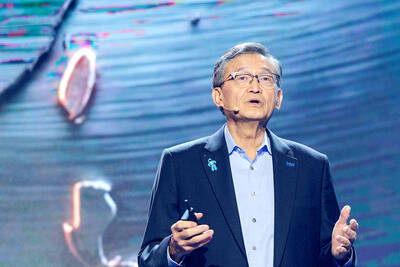
Intel Corp regards Taiwan Semiconductor Manufacturing Co (TSMC, 台積電) as a longstanding partner, as the US chipmaker would continue outsourcing production of advanced chips to TSMC, Intel chief executive officer Lip-Bu Tan (陳立武) said yesterday. “I don’t look at people as competitors. I look at the collaboration... Nvidia is also, you know, a good friend,” Tan told a news conference following his keynote speech at the Computex trade show in Taipei. “It’s a very trusted partnership for us... We are a big, top customer for them, and we’re going to continue doing that,” he said, referring to TSMC, the world’s largest foundry

Artificial intelligence (AI) agents would supplant smartphones as the center of people’s digital lives, fundamentally reshaping personal devices and driving a major computing upgrade cycle, Qualcomm Inc CEO Cristiano Amon said yesterday. In his keynote speech for this year’s Computex trade show in Taipei, Amon said that the rise of "agentic AI" — AI systems capable of reasoning, planning and carrying out tasks autonomously — would transform how people interact with technology across phones, PCs, vehicles and wearable devices. Describing the technology as the next major evolution in computing, Amon said that "2026 is the year of agents.” For decades, smartphones have sat


 RSS
RSS