


Following a strong push by Australia, this year's APEC summit centered on climate change, with the 21 leaders agreeing to set an "aspirational goal" on greenhouse gas reduction.
But while Sydney strove to increase its clout in the Asia-Pacific region, China made noise of its own -- some positive and some negative.
Chinese President Hu Jintao (胡錦濤), the first leader to arrive in Australia, took the media by storm with a announcement of hundreds of millions of dollars in investment.
The evolving relationship between Canberra and Beijing reached a climax with Hu announcing on Thursday a A$35 billion (US$28.8 billion) liquefied natural gas supply deal -- the biggest ever in Australia -- as well as giving the country a pair of pandas as a symbol of friendship between the two nations.
China's economic strength is proving so alluring to Australia that its government may choose to tolerate Beijing's behavior on a number of issues.
While it was beseeching the world to support a cut in greenhouse gas emissions, Australia was offering to sell more energy to China, one of the biggest emitters.
Beijing's reluctance to abide by the "aspirational goal" was underscored by Hu's speech at the APEC Business Summit. Deflecting most of the responsibility onto developed countries, Hu said the latter should strictly abide by their emission reduction targets set forth in the Kyoto Protocol, while emerging countries should help curb global warming "in light of their national conditions.''
Product safety, an issue APEC leaders were not expected to bring up during the meeting lest it embarrass Hu, nonetheless put the emerging power in the spotlight after a series of recalls in which China-made products were found to contain toxic chemicals.
While the entire world was fully aware that China was the origin of the product safety scare, Australian Trade Minister Warren Truss emphasized that a new food safety taskforce chaired by Australia and China was "not targeting Chinese manufacturing only."
Some commentators dubbed this year's APEC forum a "China summit" -- a symbol of its increasing clout in the region. US President George W. Bush denied this, but his actions pointed in another direction.
Already criticized for not paying enough attention to the Asia-Pacific region, Bush made a surprise visit to Iraq's Anbar Province before going to Australia and was absent from the second day of the summit, as he had hurried back to Washington for the release of a crucial White House report on the Iraq War.
Bush did tussle with Hu, however, taking the podium after Hu's speech on growing business opportunities the day before to talk about the value of democracy.
Sadly, Bush's remarks may have been shadowed by a gaffe, in which he mistook APEC for OPEC, taking attention away from an otherwise important issue.
Bush twice mentioned Taiwan in his speech, referring to it as an example of democracy and allaying fears in Taipei that he would side with Beijing in opposing Taiwan's planned referendum on joining the UN.
One day before Bush's speech, Hu told reporters that during 90-minute-plus bilateral talks, Bush had agreed with him that Taiwan should be blocked from changing the "status quo" in the Taiwan Strait.
Washington said it would seek to change Taipei's mind regarding the referendum, but also hinted to China that it should not bully the UN into affirming that Taiwan is part of China.
Hu's reference to the referendum at an international event revealed that it worried Beijing, as it has always avoided to internationalize what it aees as a "domestic issue."
Eager to demonstrate that it was not siding with China on the Taiwan issue, Bush made it a point to laud Taiwan's democracy.
Tensions between Taipei and Beijing were later eased by Taiwan's special envoy to the APEC summit, Stan Shih (施振榮), who tried to shift the focus from politics to business. The attempt, however, did not seem to have succeeded, as both local and international media continued to field questions on cross-strait relations. Nevertheless, through light conversations, such as Hu's interest in Shih's Mandarin accent, Shih managed reduce some of the pressure that had built up since the beginning of the summit.
The US then held landmark three-way security talks with Japan and Australia. Despite the three parties' insistence that their meeting was not aimed at isolating China, the details of their discussion were not made public.
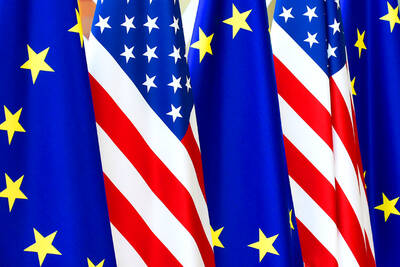
The EU and US are nearing an agreement to coordinate on producing and securing critical minerals, part of a push to break reliance on Chinese supplies. The potential deal would create incentives, such as minimum prices, that could advantage non-Chinese suppliers, according to a draft of an “action plan” seen by Bloomberg. The EU and US would also cooperate on standards, investments and joint projects, as well as coordinate on any supply disruptions by countries like China. The two sides are additionally seeking other “like-minded partners” to join a multicountry accord to help create these new critical mineral supply chains, which feed into
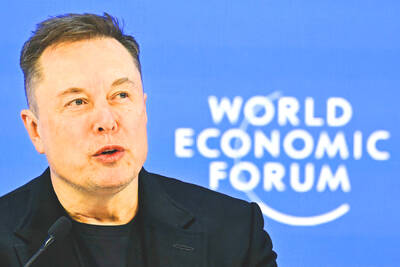
Elon Musk’s lieutenants have reached out to chip industry suppliers, including Applied Materials Inc, Tokyo Electron Ltd and Lam Research Corp, for his envisioned Terafab, early steps in an audacious and likely arduous attempt to break into the production of cutting-edge chips. Staff working for the joint venture between Tesla Inc and Space Exploration Technologies Corp (SpaceX) have sought price quotes and delivery times for an array of chipmaking gear, people familiar with the matter said. In past weeks, they’ve contacted makers of photomasks, substrates, etchers, depositors, cleaning devices, testers and other tools, according to the people, who asked not to
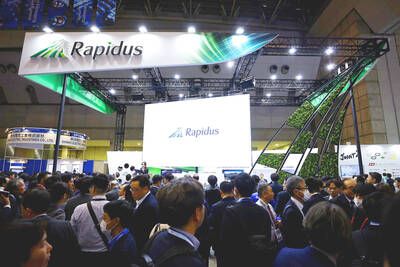
Japan approved ¥631.5 billion (US$3.97 billion) in additional subsidies to hasten Rapidus Corp’s entry into the high-stakes artificial intelligence (AI) chipmaking arena, ramping up support for a project widely regarded as a long shot. The capital is intended to bankroll Rapidus’ work for information technology firm Fujitsu Ltd, one of the initial customers that Tokyo hopes would get the signature endeavor off the ground. The new money raises the fees and investments that the government is injecting into the start-up to ¥2.6 trillion by the end of the current fiscal year to March next year, the Japanese Ministry of Economy, Trade and
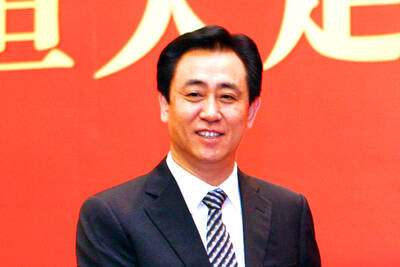
The founder of Chinese property giant Evergrande Group (恆大集團) has pleaded guilty to charges of fraud and bribery, a court said yesterday, the latest blow for what was once the country’s leading developer. Evergrande’s rise was propelled by decades of rapid urbanization and rising living standards, but in 2020, its access to credit dramatically narrowed when the government introduced curbs on excessive borrowing and speculation. The company defaulted in 2021 after struggling to repay creditors. Founder Xu Jiayin (許家印), 67, known as Hui Ka Yan in Cantonese, was reportedly held by police in 2023, with Evergrande saying he had been subjected to


 RSS
RSS