


China Life Insurance Co (
Unaudited net income rose to 23.3 billion yuan (US$3.1 billion), or 0.82 yuan a share, from 8.97 billion yuan, or 0.33 yuan per share a year earlier, beating the 16.6 billion yuan average estimate of five analysts surveyed by Bloomberg.
China Life's investment gains countered slowing premium growth as China's stock market -- the world's best performing this year -- lured people away from investment-linked policies. The Beijing-based insurer has been losing market share this year to smaller rivals such as China Pacific Insurance (Group) Co.
"Their story this year has been about spectacular investment gains, not business growth," said Dominic Chan, an analyst at CLSA Asia-Pacific Markets in Hong Kong, who rates the stock "buy."
Net investment income jumped to 24.1 billion yuan from 11.3 billion yuan a year earlier, helped by a quadrupling in the nation's benchmark CSI 300 Index in the past year.
China Life's net premiums minus reinsurance costs grew 17 percent to 63.4 billion yuan, slowing from a 29 percent expansion a year earlier. The firm's share of the nation's life insurance market shrank to 46.9 percent in the first six months from 49.4 percent a year earlier, according to China's industry watchdog.
The government will allow insurers to double the share of assets directly invested in domestic equities to 10 percent, industry executives briefed by the insurance regulator said last month.
China Life shares have jumped 24 percent in Shanghai since July 1 as investors bet relaxed rules on stock market investment will help drive returns. Smaller rival Ping An Insurance Co has surged 42 percent.
China Life, whose shares trade in Shanghai and Hong Kong, reported earnings after markets closed. The Shanghai stock rose 1.6 percent to 99.27 yuan yesterday and the Hong Kong shares jumped 7.2 percent to HK$79.40 (US$10.17). The company is worth US$174 billion, more than American Insurance Group Inc's US$173 billion.
Growth in policy sales may rebound in the second half as China Life uses its extensive network to serve a growing middle class in the nation's countryside, wrote HSBC analysts, including John Russell, in an Aug. 1 report.
"The fact that Ping An, which has historically focused on rich coastal areas, is now also itching to get into rural insurance shows there's a real market for it," said Chan Bao Ling, an analyst at Fox Pitt Kelton Ltd in Hong Kong. "China Life will have a leg up on Ping An in rural distribution for at least the next two years."
China's life insurance market expanded 15 percent to 263 billion yuan in the first half from a year earlier, as the nation's economic growth accelerated to the fastest pace in 12 years. Government efforts to dismantle the cradle-to-grave welfare system are also spurring policy sales.
China Life and Ping An together accounted for 63.2 percent of the nation's life insurance premiums in the first half, according to the industry regulator. The companies have raised a combined US$8.7 billion selling shares in Shanghai since December.
Investors pay a premium for China Life. The stock trades at about 45.4 times estimated full-year profit, according to data compiled by Bloomberg. That compares with a price-earnings multiple of 10.5 for AIG and 11.7 for MetLife Inc, the biggest US life insurer.
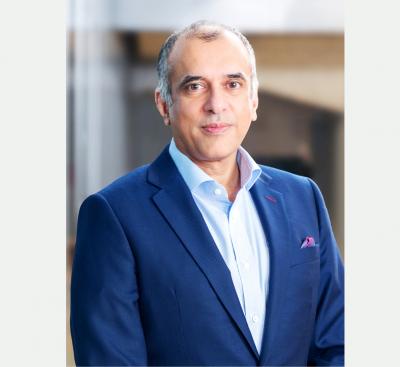
HSBC Holdings PLC is deepening its commitment to Taiwan as the economy emerges as one of the bank’s fastest-growing markets globally, driven by an artificial intelligence (AI) investment boom, expanding cross-border trade, and rising wealth creation. “The advantage that Taiwan has is a growth story linked to the semiconductor and broader AI industries, strong underlying corporate performance, and wealth creation,” said Surendra Rosha, HSBC’s co-chief executive for Asia and the Middle East, in an exclusive interview with the Taipei Times on June 2, during this year’s HSBC Taiwan Conference. That combination has helped HSBC cement its position as the most profitable international
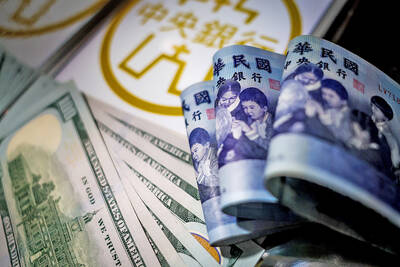
The New Taiwan dollar yesterday fell sharply against the US dollar to close at its lowest level since May 22 amid a massive outflow of funds from the country because of investors panicking over global equity markets. The NT dollar ended at NT$31.580 against the US dollar, slightly lower than its close of NT$31.568 on May 22, after moving between NT$31.5 and NT$31.648 on combined turnover of US$3.062 billion on the Taipei Foreign Exchange and the Cosmos Foreign Exchange. The NT dollar received a significant hit in the morning session, slumping as much as NT$0.173 at a time when other Asian currencies
Taiwan Semiconductor Manufacturing Co (TSMC, 台積電) is now ranked ninth among the world’s 100 most valuable companies after its market capitalization more than doubled over the past year, PricewaterhouseCoopers (PwC) Taiwan said in a report last month. TSMC’s market capitalization surged 101 percent year-on-year to US$1.427 trillion as of March 31, the accounting and consulting firm’s 2026 Global Top 100 Companies by Market Capitalization report said. The gain catapulted the world’s largest contract chipmaker from 12th place to ninth in the rankings, and it was the fastest-growing among the global top 10, it said. TSMC was the only Taiwanese company among the top
Taiwan Semiconductor Manufacturing Co (TSMC, 台積電) yesterday reported record revenue of NT$416.975 billion (US$13.17 billion) for last month, putting the world’s largest contract chipmaker on track to set a record for quarterly revenue. Last month’s figure surpassed March’s record NT$415.19 billion and represented increases of 1.5 percent from April and 30.1 percent from a year earlier. For the first five months of the year, TSMC generated NT$1.96 trillion in revenue, up 30 percent year-on-year, it said in a statement. TSMC has forecast second-quarter revenue of between US$39 billion and US$40.2 billion, representing sequential growth of about 10 percent and year-on-year growth of about


 RSS
RSS