


Conflicts of interest may still be rampant on Wall Street, with a new study showing that nearly two-thirds of investment-firm analysts received favors from executives of companies they cover and suggesting that the companies get favorable ratings in return.
The academic study published on Friday outlines a culture of blatant back-scratching on Wall Street as company executives bestow professional and personal favors on analysts -- putting them in touch with top executives of other companies, recommending them for a job -- and their companies receive positive ratings and evade stock downgrades. At the same time, executives punish analysts for negative reports by refusing to answer their phone calls or their questions.
For their study, management professor James Westphal of the University of Michigan and accounting professor Michael Clement at the University of Texas sent 4,500 questionnaires to financial analysts between 2001 and 2003 and follow-up surveys to hundreds of executives at the large and mid-size public companies covered by the analysts.
The study, to be presented at the Academy of Management's annual meeting next month, found that the more a company's earnings slipped below analysts' consensus forecasts, the more favors the company's executives showered on the analysts covering it -- especially at big investment firms.
The study comes four years after a crackdown by the Securities and Exchange Commission (SEC), then-New York Attorney General Eliot Spitzer and other state regulators exposed Wall Street conflicts that skewed analysts' research, and forced the big investment firms to alter their research practices and pay a total US$1.4 billion in a landmark settlement. The regulators found that analysts at the powerhouse investment firms -- including Citigroup, Merrill Lynch and Credit Suisse -- misled investors with stock recommendations designed to win their firms investment-banking business and lucrative fees.
As part of the settlement, the investment firms agreed to sever the links between analysts' research and investment banking, and to pay hundreds of millions of dollars for independent stock research for their customers and to compensate them for losses caused by biased recommendations.
Wall Street's biggest lobbying organization, the Securities Industry and Financial Markets Association, on Friday downplayed the significance of the new study.
Its authors "are using old data from a survey conducted before many of the new rules on analysts' behavior had been fully implemented," spokesman Travis Larson said.
He cited a December 2005 study by the New York Stock Exchange and the National Association of Securities Dealers (NASD), the brokerage industry's self-policing organization, which found that the analyst conflict-of-interest rules which came after the crackdown have been effective and brought more accurate research for investors.
"Therefore we don't think this is a systemic issue, but where individual problems are found we expect the regulators to vigorously enforce the rules," Larson said.
Kurt Schacht, executive director of the Center for Financial Market Integrity at the CFA Institute, which represents financial analysts, said the sort of favor-trading depicted in the study "would be a flat-out violation of our standards and our code of ethical conduct."
The organization has not heard of many instances of such behavior, Schacht said, noting that many securities analysts are not members of it.
Spokesmen for the SEC had no immediate comment.
The new study found that doing two favors for an analyst after a company released lower-than-forecast earnings reduced by half the likelihood of the analyst downgrading the company's stock. Sixty-three percent of the analysts surveyed received favors from CEOs, chief financial officers and other top executives.
Frequent favors done by corporate executives for analysts, according to the study:
* Putting the analyst in touch with a top executive of another company, the most frequently reported favor representing 28 percent of all favors.
* Giving the analyst career advice, 20 percent.
* Offering to meet with an analyst's clients, 13 percent.
* Providing advice to the analyst on a personal matter, 11 percent.
* Providing industry information to the analyst, 10 percent.
* Recommending the analyst for a job, 8 percent.
* Helping the analyst gain access to a private club or non-professional organization, 6 percent.
"Our findings provide multifaceted evidence for social influence and reciprocity in relations between top executives and the analysts who cover their firms," Westphal and Clement wrote. "The results suggest that favor-rendering is used as a social-influence tactic by top executives in their relations with [securities] analysts."
In addition, they say, bestowing such favors brings more positive stock recommendations from the analysts who receive them.
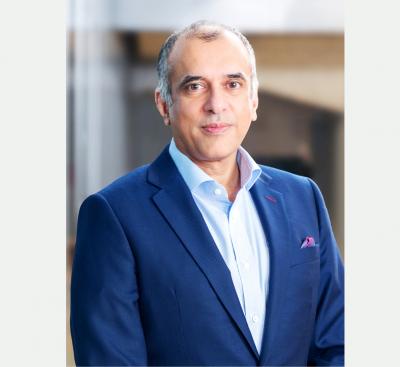
HSBC Holdings PLC is deepening its commitment to Taiwan as the economy emerges as one of the bank’s fastest-growing markets globally, driven by an artificial intelligence (AI) investment boom, expanding cross-border trade, and rising wealth creation. “The advantage that Taiwan has is a growth story linked to the semiconductor and broader AI industries, strong underlying corporate performance, and wealth creation,” said Surendra Rosha, HSBC’s co-chief executive for Asia and the Middle East, in an exclusive interview with the Taipei Times on June 2, during this year’s HSBC Taiwan Conference. That combination has helped HSBC cement its position as the most profitable international
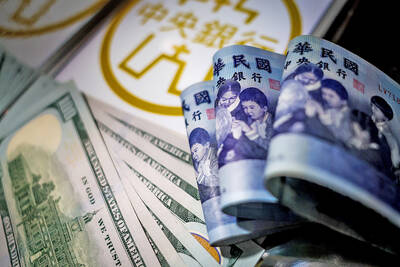
The New Taiwan dollar yesterday fell sharply against the US dollar to close at its lowest level since May 22 amid a massive outflow of funds from the country because of investors panicking over global equity markets. The NT dollar ended at NT$31.580 against the US dollar, slightly lower than its close of NT$31.568 on May 22, after moving between NT$31.5 and NT$31.648 on combined turnover of US$3.062 billion on the Taipei Foreign Exchange and the Cosmos Foreign Exchange. The NT dollar received a significant hit in the morning session, slumping as much as NT$0.173 at a time when other Asian currencies
Taiwan Semiconductor Manufacturing Co (TSMC, 台積電) is now ranked ninth among the world’s 100 most valuable companies after its market capitalization more than doubled over the past year, PricewaterhouseCoopers (PwC) Taiwan said in a report last month. TSMC’s market capitalization surged 101 percent year-on-year to US$1.427 trillion as of March 31, the accounting and consulting firm’s 2026 Global Top 100 Companies by Market Capitalization report said. The gain catapulted the world’s largest contract chipmaker from 12th place to ninth in the rankings, and it was the fastest-growing among the global top 10, it said. TSMC was the only Taiwanese company among the top
Taiwan Semiconductor Manufacturing Co (TSMC, 台積電) yesterday reported record revenue of NT$416.975 billion (US$13.17 billion) for last month, putting the world’s largest contract chipmaker on track to set a record for quarterly revenue. Last month’s figure surpassed March’s record NT$415.19 billion and represented increases of 1.5 percent from April and 30.1 percent from a year earlier. For the first five months of the year, TSMC generated NT$1.96 trillion in revenue, up 30 percent year-on-year, it said in a statement. TSMC has forecast second-quarter revenue of between US$39 billion and US$40.2 billion, representing sequential growth of about 10 percent and year-on-year growth of about


 RSS
RSS