


Thailand, known for its tasty food yet slim people, is getting fatter -- a trend that's creating a new market for high-tech weight loss therapies aimed at portly people who want to shed the kilos.
A commuter munching on a fatty breakfast roll at a busy downtown intersection need only glance up to see a slimming center billboard showing success stories in skimpy outfits flaunting their trim frames.
Across town, rotund Thais can begin the day strapped into rubber weight-loss suits at a high-tech gym, or sweating off the fat at one of Bangkok's many spas.

PHOTO: AFP
The boom in such treatments is partly driven by pressure to emulate noodle-thin movie stars, but also by a growing incidence of obesity.
"We eat more fat now ... compared with the traditional Thai food, which has a lot of vegetables," says Chaicharn Deerochanawong, a diabetes consultant who works for the Ministry of Public Health.
"In the past we did not eat a lot and we exercised a lot," says Chaicharn, who partly attributes the obesity levels to the increase in Western-style fast food outlets.
A ministry study in 2003 found that 33.8 percent of females and 31.5 percent of males were obese, a 50 percent rise from 1998.
The study focused on body mass index, which assesses a person's weight relative to height. It used tougher standards than those employed by the World Health Organization, which means many of the people considered obese in Thailand might merely be overweight in other countries.
The problem in Thailand is similar to many other developing Asian countries -- burgers, donuts and cream-topped lattes are replacing home-cooked meals, while a growing number of office workers are sitting immobile at desks all day.
This is causing waistlines to expand, but also creating a market for a huge number of slimming treatments and high-tech gyms.
One such gym is The Bodhi, which opened in December 2005 and at first glance looks more like the set of a science fiction film.
Tranquil music pipes into the low lit room, while Thais in rubber suits run on treadmills or lie on beds, their lower bodies encased in plastic. In the corner, a woman jiggles on a vibrating plate.
General manager Betty Kittichaiwong says that the German-made machines with names like "Vacunaut" and "Hypoxi Trainer" use vacuums to draw blood to areas where the client wants to burn fat, such as the stomach or hips.
"I had a personal trainer, it took two-and-a-half hours to get a workout. I thought there must be a better way. You still get your exercise, but spend less time in the gym with the same effect," Betty enthuses.
She claims The Bodhi gives the equivalent of a two-and-a-half hour workout in just 30 minutes, and that is what attracts customers like Vachara Phanchet, a 45-year-old entrepreneur.
"I work hard in my business," Vachara said. "To be able to shed off the unnecessary fat and make your muscles firmer, The Bodhi is a solution that would be less time-consuming to achieve this purpose."
For those who do not fancy paying 20,000 baht (US$580) a month to be strapped into a rubber suit filled with 400 suction cups, there are plenty of other options.
The Slim Up Centre is one of the most prominent, with billboards across Bangkok showing before and after shots of formerly frumpy women transformed into unrecognizable but ravishing beauties.
Their treatment combines diet and slimming machines, which the center's leaflet claims use infra-red technology to dissolve fat. A spokesperson said they have expanded from one branch in 2004 to 15 branches across Bangkok today.
But Chaicharn is not impressed with many of the quick fixes he sees, and says that there is no substitute for an improved diet and more exercise.
"This is not scientifically proven, and we don't accept this as a treatment for obesity," he said of the various slimming centers.
Anongnuth Chiangpradit is director of the Wellness Centre at Bumrungrad Hospital, a private hospital in Bangkok that offers everything from advice on a balanced diet to gastric banding -- or stomach-stapling -- surgery.
She thinks clinically obese people should consult a doctor, but says those wanting to shed a few kilograms could benefit from some of the more experimental treatments.
"Whenever the patient is committed to make a change, any additional help they can get is good," she says.
And it is not just locals who are being targeted. Tubby tourists are also heading to Thailand, where they can fast on Samui Island, get colonically irrigated in Phuket and have fat surgically sucked out in Bangkok.
Anongnuth says that half of her clients are from abroad, but advises both Thais and tourists to exercise a degree of skepticism when splashing out on some of the more far-fetched miracle slimming cures.
"There are a lot of treatments out there," she says. "Being a doctor, I would like to see the clinical proof that those treatments work."
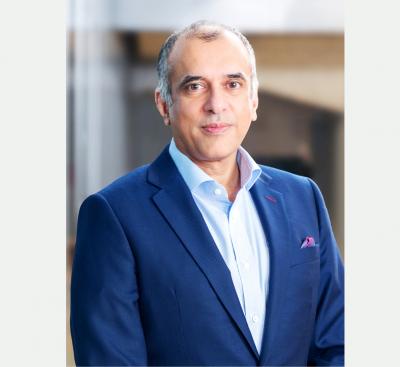
HSBC Holdings PLC is deepening its commitment to Taiwan as the economy emerges as one of the bank’s fastest-growing markets globally, driven by an artificial intelligence (AI) investment boom, expanding cross-border trade, and rising wealth creation. “The advantage that Taiwan has is a growth story linked to the semiconductor and broader AI industries, strong underlying corporate performance, and wealth creation,” said Surendra Rosha, HSBC’s co-chief executive for Asia and the Middle East, in an exclusive interview with the Taipei Times on June 2, during this year’s HSBC Taiwan Conference. That combination has helped HSBC cement its position as the most profitable international
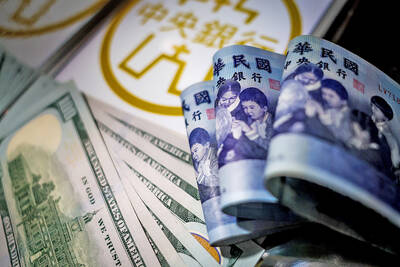
The New Taiwan dollar yesterday fell sharply against the US dollar to close at its lowest level since May 22 amid a massive outflow of funds from the country because of investors panicking over global equity markets. The NT dollar ended at NT$31.580 against the US dollar, slightly lower than its close of NT$31.568 on May 22, after moving between NT$31.5 and NT$31.648 on combined turnover of US$3.062 billion on the Taipei Foreign Exchange and the Cosmos Foreign Exchange. The NT dollar received a significant hit in the morning session, slumping as much as NT$0.173 at a time when other Asian currencies
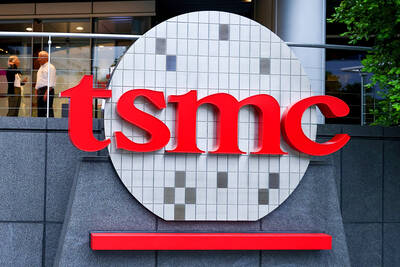
Taiwan Semiconductor Manufacturing Co (TSMC, 台積電) is now ranked ninth among the world’s 100 most valuable companies after its market capitalization more than doubled over the past year, PricewaterhouseCoopers (PwC) Taiwan said in a report last month. TSMC’s market capitalization surged 101 percent year-on-year to US$1.427 trillion as of March 31, the accounting and consulting firm’s 2026 Global Top 100 Companies by Market Capitalization report said. The gain catapulted the world’s largest contract chipmaker from 12th place to ninth in the rankings, and it was the fastest-growing among the global top 10, it said. TSMC was the only Taiwanese company among the top
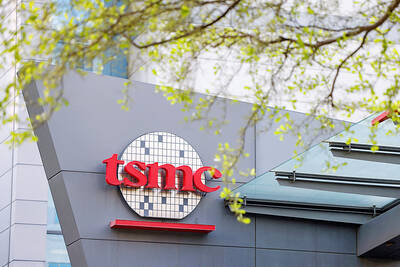
Taiwan Semiconductor Manufacturing Co (TSMC, 台積電) yesterday reported record revenue of NT$416.975 billion (US$13.17 billion) for last month, putting the world’s largest contract chipmaker on track to set a record for quarterly revenue. Last month’s figure surpassed March’s record NT$415.19 billion and represented increases of 1.5 percent from April and 30.1 percent from a year earlier. For the first five months of the year, TSMC generated NT$1.96 trillion in revenue, up 30 percent year-on-year, it said in a statement. TSMC has forecast second-quarter revenue of between US$39 billion and US$40.2 billion, representing sequential growth of about 10 percent and year-on-year growth of about


 RSS
RSS