


Clevo Computer Co (
Lenovo, the world's No. 3 personal computer maker, sued Clevo in New York last Friday, claiming the Taiwanese firm had infringed on two patents for PC functions and therefore owed millions of dollars in licensing royalties.
One patent, issued in 1996, was for a computer system with a single switch to turn it on or off, or to suspend or resume functions. The other, also issued in 1996, was for power management within a computer. Both were originally issued to IBM.
"We already listed the payment in our finances and the lawsuit will not affect us," a Clevo spokeswoman, who requested anonymity, said in a telephone interview yesterday.
IBM Corp granted Lenovo the right to collect licensing fees after selling its PC business to the Chinese company in 2005, and Clevo held discussions with Lenovo about a new contract for payment last year, she said.
"We are puzzled by the lawsuit filing as the negotiations on the new contract were nearly completed," she said.
Clevo wanted to have a new contract sealed by Lenovo instead of IBM after the rights transfer, because both IBM and Lenovo pursued the payments last year, she said.
According to the filing with the US District Court for the Southern District of New York, Lenovo claims Clevo has not made payments under a 1999 agreement with IBM scheduled to run through Dec. 31.
Clevo was supposed to pay US$3 million on Aug. 31 last year and another US$3 million by Aug. 31 this year. It owes a portion of the payment for this year, about US$41,000, in addition to last year's fee, Lenovo said.
Lenovo said in the complaint that Clevo had failed to pay ``despite repeated demands for payment from IBM and Lenovo, and despite repeated assurances of payment by Clevo.''
In response, the Taipei-based company said lawyers from both sides had held rational communications on the issue last year, by e-mail, telephone and in face-to-face meetings, and so it was surprised to learn of the lawsuit.
But since Clevo will settle the payment, the lawsuit should not impact on the companies' future relationship, the Clevo spokeswoman said.
Shares of Clevo, which is now running 10 outlets of Buynow (
Lenovo has joined LG Electronics Inc and Samsung Electronics Co in the ranks of foreign companies who have filed lawsuits against Taiwanese computer makers for patent infringement.
Last July, South Korea's LG won a suit against Quanta Computer Inc (廣達電腦) and Compal Electronics Inc (仁寶電腦).
Compal is also involved in a dispute with Samsung over software used to output data from notebook keyboards.
Taiwanese companies make about four out of five notebook computers shipped, including those by Hewlett-Packard Co, Dell Inc and Apple Computer Inc, according to researcher DisplaySearch.

The EU and US are nearing an agreement to coordinate on producing and securing critical minerals, part of a push to break reliance on Chinese supplies. The potential deal would create incentives, such as minimum prices, that could advantage non-Chinese suppliers, according to a draft of an “action plan” seen by Bloomberg. The EU and US would also cooperate on standards, investments and joint projects, as well as coordinate on any supply disruptions by countries like China. The two sides are additionally seeking other “like-minded partners” to join a multicountry accord to help create these new critical mineral supply chains, which feed into

For weeks now, the global tech industry has been waiting for a major artificial intelligence (AI) launch from DeepSeek (深度求索), seen as a benchmark for China’s progress in the fast-moving field. More than a year has passed since the start-up put Chinese AI on the map in early last year with a low-cost chatbot that performed at a similar level to US rivals. However, despite reports and rumors about its imminent release, DeepSeek’s next-generation “V4” model is nowhere in sight. Speculation is also swirling over the geopolitical implications of which computer chips were chosen to train and power the new

Elon Musk’s lieutenants have reached out to chip industry suppliers, including Applied Materials Inc, Tokyo Electron Ltd and Lam Research Corp, for his envisioned Terafab, early steps in an audacious and likely arduous attempt to break into the production of cutting-edge chips. Staff working for the joint venture between Tesla Inc and Space Exploration Technologies Corp (SpaceX) have sought price quotes and delivery times for an array of chipmaking gear, people familiar with the matter said. In past weeks, they’ve contacted makers of photomasks, substrates, etchers, depositors, cleaning devices, testers and other tools, according to the people, who asked not to
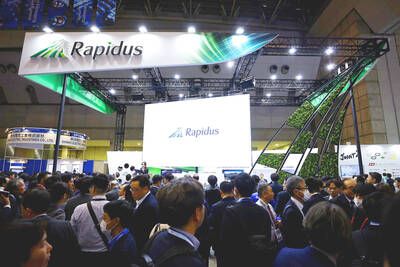
Japan approved ¥631.5 billion (US$3.97 billion) in additional subsidies to hasten Rapidus Corp’s entry into the high-stakes artificial intelligence (AI) chipmaking arena, ramping up support for a project widely regarded as a long shot. The capital is intended to bankroll Rapidus’ work for information technology firm Fujitsu Ltd, one of the initial customers that Tokyo hopes would get the signature endeavor off the ground. The new money raises the fees and investments that the government is injecting into the start-up to ¥2.6 trillion by the end of the current fiscal year to March next year, the Japanese Ministry of Economy, Trade and


 RSS
RSS