


Sharp Corp, Japan's largest maker of liquid-crystal-display (LCD) televisions, said it would start selling 17 new Aquos models in the country from March 10, focusing on large, high-definition sets to drive earnings.
The company will offer five new sets with screens measuring up to 65 inches (165cm), Sharp said yesterday at a news conference.
Unit prices start at ¥120,000 (US$1,000) for a 20-inch TV, while the largest model retails for ¥1 million, the company said.
"We are increasingly focusing on large-screen models," Mikio Katayama, who is in charge of Osaka-based Sharp's audio-visual and LCD business, told reporters. Monthly production of the five largest models will be between 1,000 and 5,000 units each, the company said.
The company is focusing on large, high-definition televisions to compete against rivals such as Suwon, South Korea-based Samsung Electronics Inc, the world's largest maker of LCDs. Sharp plans to spend ¥200 billion in the year starting April to triple output of LCD panels for use in flat-panel televisions.
Sony Corp, the second-largest consumer electronics maker in the world, overtook rival Sharp and Samsung to secure the top spot in the global LCD television market for the first time last year, according to market researcher NPD Group Inc.
Tokyo-based Sony had a 16 percent share of LCD TV revenue, New York-based NPD Group said in a press release on Feb 13. Suwon, South Korea-based Samsung took second with 15 percent, while Osaka-based Sharp slipped to third with 11.5 percent.
The three biggest LCD makers are expanding production to lower unit costs and stay ahead of price declines that are prompting more consumers to replace bulkier conventional TVs with flat-panel models.
Japanese consumer electronics manufacturers have benefited from a weaker yen that increased the value of sales in the US and Europe last year. Sony last month posted record earnings in its consumer electronics division, partly on sales of flat-panel televisions.
Matsushita Electric Industrial Co, the world's largest maker of consumer electronics, retained the biggest share of the plasma television market with 29 percent, ahead of Seoul-based LG Electronics Inc with 16 percent and Samsung at 14 percent, NPD said.
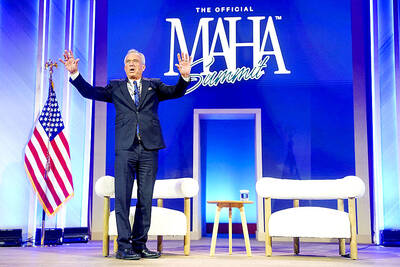
Sweeping policy changes under US Secretary of Health and Human Services Robert F. Kennedy Jr are having a chilling effect on vaccine makers as anti-vaccine rhetoric has turned into concrete changes in inoculation schedules and recommendations, investors and executives said. The administration of US President Donald Trump has in the past year upended vaccine recommendations, with the country last month ending its longstanding guidance that all children receive inoculations against flu, hepatitis A and other diseases. The unprecedented changes have led to diminished vaccine usage, hurt the investment case for some biotechs, and created a drag that would likely dent revenues and
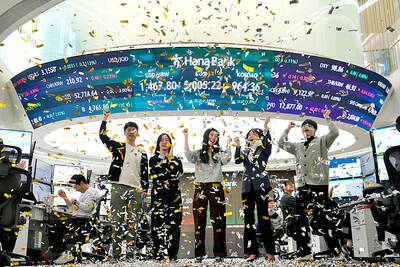
Global semiconductor stocks advanced yesterday, as comments by Nvidia Corp chief executive officer Jensen Huang (黃仁勳) at Davos, Switzerland, helped reinforce investor enthusiasm for artificial intelligence (AI). Samsung Electronics Co gained as much as 5 percent to an all-time high, helping drive South Korea’s benchmark KOSPI above 5,000 for the first time. That came after the Philadelphia Semiconductor Index rose more than 3 percent to a fresh record on Wednesday, with a boost from Nvidia. The gains came amid broad risk-on trade after US President Donald Trump withdrew his threat of tariffs on some European nations over backing for Greenland. Huang further
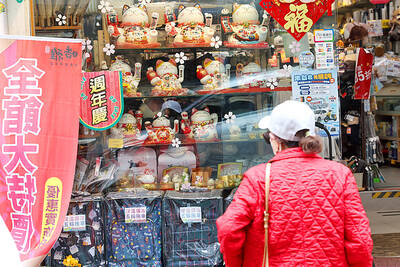
CULPRITS: Factors that affected the slip included falling global crude oil prices, wait-and-see consumer attitudes due to US tariffs and a different Lunar New Year holiday schedule Taiwan’s retail sales ended a nine-year growth streak last year, slipping 0.2 percent from a year earlier as uncertainty over US tariff policies affected demand for durable goods, data released on Friday by the Ministry of Economic Affairs showed. Last year’s retail sales totaled NT$4.84 trillion (US$153.27 billion), down about NT$9.5 billion, or 0.2 percent, from 2024. Despite the decline, the figure was still the second-highest annual sales total on record. Ministry statistics department deputy head Chen Yu-fang (陳玉芳) said sales of cars, motorcycles and related products, which accounted for 17.4 percent of total retail rales last year, fell NT$68.1 billion, or
MediaTek Inc (聯發科) shares yesterday notched their best two-day rally on record, as investors flock to the Taiwanese chip designer on excitement over its tie-up with Google. The Taipei-listed stock jumped 8.59 percent, capping a two-session surge of 19 percent and closing at a fresh all-time high of NT$1,770. That extended a two-month rally on growing awareness of MediaTek’s work on Google’s tensor processing units (TPUs), which are chips used in artificial intelligence (AI) applications. It also highlights how fund managers faced with single-stock limits on their holding of market titan Taiwan Semiconductor Manufacturing Co (TSMC, 台積電) are diversifying into other AI-related firms.


 RSS
RSS