


Asian stocks closed sharply lower on Friday after heavy losses on Wall Street overnight as the latest US housing sales figures undercut hopes for an early interest rate cut, dealers said.
They said the figures were taken to show that the US housing market may be touching bottom and that the US economy is accordingly much stronger than previously thought, making lower interest rates more unlikely.
The sharp stock gains at the end of last year were in part built on hopes the US Federal Reserve would begin cutting interest rates early this year, but recent data has begun to seriously undermine that view.
Dealers said this was the case on Friday, but it was significant too that investors were once again prepared to come back in after the initial sell-off, suggesting there is still considerable liquidity looking for a home.
Bargain-hunting in Tokyo helped the market to finish just 0.21 percent lower after morning losses of 0.53 percent, while in Shanghai a 2.85 percent early loss was turned around for a gain of 0.88 percent as trade turned volatile on one of the year's best performing markets so far.
Markets in Mumbai and Sydney were closed for public holidays.
TAIPEI
Taiwanese share prices closed 1.29 percent lower as sentiment was undermined by the slump on Wall Street overnight while Taiwan Semiconductor Manufacturing Co (TSMC, 台積電) undermined the key tech sector following its lackluster first-quarter guidance, dealers said.
They said that TSMC shares listed in New York fell sharply overnight after its lower-than-expected earnings and sales outlook for the current quarter to March and this hit sentiment overall.
The TAIEX lost 102.45 points at 7,821.32, having traded between 7,793.91 and 7,883.50, on turnover of NT$97.65 billion (US$2.97 billion). Decliners outnumbered gainers 811 to 371, with 199 stocks unchanged.
The electronic sector was down 1.49 percent.
First Taisec Securities (一銀證券) manager Stanley Hsu said TSMC's guidance pointing to weak first-quarter earnings added additional pressure on a market having a hard time breaking through the psychological barrier on the index at 8,000 points.
"The slump in TSMC dragged the index down" given that the company is a large-cap stock, he said.
TOKYO
Japanese share prices closed down 0.21 percent as investors took profits on recent gains following a slump on Wall Street overnight and an uncertain outlook for domestic interest rates, dealers said.
Chipmakers led the fall after negative outlooks from Elpida Memory and NEC Electronics, which hit sentiment despite a retreat in the yen which would normally boost exporters.
The Tokyo Stock Exchange's NIKKEI-225 index of leading shares fell 36.37 points to 17,421.93, trimming morning losses.
The broader TOPIX index of all first-section companies slipped 1.38 points to close at 1,728.02.
Declines narrowly beat gainers 829 to 731, with 152 stocks unchanged. Volume was 1.95 billion shares, down from 2.31 billion on Thursday.
The market opened on the backfoot after Wall Street retreated overnight following US sales figures for existing homes which were taken to suggest the US economy could be doing better than thought, with interest rates less likely to be cut in the near-term.
SEOUL
South Korean shares closed 0.80 percent lower as foreign investors turned sellers following Wall Street's reverse overnight, dealers said.
They said fresh concerns that Beijing might take further measures to slow its runaway economy added to the downward pressure, with many local companies having extensive business ties with China.
Disappointing guidance from the world's top wafer foundry, TSMC, for first-quarter sales dampened the key high-tech sector.
The KOSPI index lost 11.03 points at 1,371.33, after trading between 1,366.10 and 1,378.48. It ended the week with a gain of 10.77 points or 0.79 percent. Trading was thin, with volume at 150 million shares.
HONG KONG
Hong Kong share prices closed sharply lower, falling 1.88 percent as investors sold off property and China stocks following Wall Street's sharp drop overnight, dealers said.
They said the weak performance on Wall Street and concerns Beijing might take more measures in an effort to slow its runaway economy encouraged investors to take profits after recent record gains.
The Hang Seng index lost 388.70 points at 20,281.13, off a low of 20,204.67 and a high of 20,457.48. For the week, the index was down 46.59 points or 0.23 percent.
SHANGHAI
Chinese share prices closed 0.88 percent higher as heavyweight banks shrugged off early weakness, helping to boost market sentiment shaken by sharp falls on Thursday, dealers said.
They said the turnaround was significant, with stocks down 2.85 percent in the morning session after Thursday's near 4 percent fall on concerns the government would take fresh measures to slow the fast growing economy.
With China racking up growth of 10.7 percent last year, the fastest in 11 years despite Beijing's efforts to cool the pace, officials had warned of the need for restraint and voiced concerns over the amount of funds pouring into the record-breaking stockmarket.
Dealers said investors took advantage of the downturn to get into the high-flying banks but trade could continue volatile in the short-term as the market and the government go over their options.
The benchmark Shanghai Composite Index, which covers both A- and B-shares, closed up 25.19 points at 2,882.56.
SINGAPORE
Singapore share prices closed 0.67 percent lower as investors took profits after the market's recent record-breaking run, dealers said.
The main Straits Times Index fell 20.89 points to 3,087.74. Losers led gainers 456 to 263, with 651 stocks unchanged.
"Most institutional investors who have recently pumped in funds are in for the long haul," Fraser Securities research chief Najeeb Jarhom said in a note to clients.
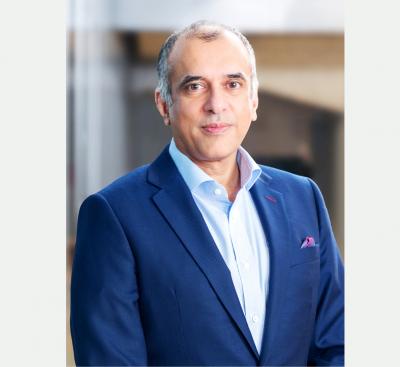
HSBC Holdings PLC is deepening its commitment to Taiwan as the economy emerges as one of the bank’s fastest-growing markets globally, driven by an artificial intelligence (AI) investment boom, expanding cross-border trade, and rising wealth creation. “The advantage that Taiwan has is a growth story linked to the semiconductor and broader AI industries, strong underlying corporate performance, and wealth creation,” said Surendra Rosha, HSBC’s co-chief executive for Asia and the Middle East, in an exclusive interview with the Taipei Times on June 2, during this year’s HSBC Taiwan Conference. That combination has helped HSBC cement its position as the most profitable international
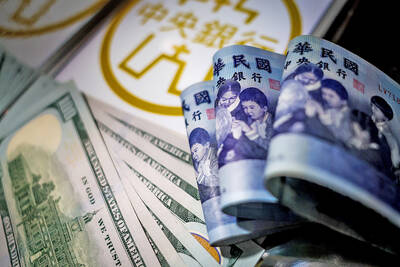
The New Taiwan dollar yesterday fell sharply against the US dollar to close at its lowest level since May 22 amid a massive outflow of funds from the country because of investors panicking over global equity markets. The NT dollar ended at NT$31.580 against the US dollar, slightly lower than its close of NT$31.568 on May 22, after moving between NT$31.5 and NT$31.648 on combined turnover of US$3.062 billion on the Taipei Foreign Exchange and the Cosmos Foreign Exchange. The NT dollar received a significant hit in the morning session, slumping as much as NT$0.173 at a time when other Asian currencies
Taiwan Semiconductor Manufacturing Co (TSMC, 台積電) is now ranked ninth among the world’s 100 most valuable companies after its market capitalization more than doubled over the past year, PricewaterhouseCoopers (PwC) Taiwan said in a report last month. TSMC’s market capitalization surged 101 percent year-on-year to US$1.427 trillion as of March 31, the accounting and consulting firm’s 2026 Global Top 100 Companies by Market Capitalization report said. The gain catapulted the world’s largest contract chipmaker from 12th place to ninth in the rankings, and it was the fastest-growing among the global top 10, it said. TSMC was the only Taiwanese company among the top
Taiwan Semiconductor Manufacturing Co (TSMC, 台積電) yesterday reported record revenue of NT$416.975 billion (US$13.17 billion) for last month, putting the world’s largest contract chipmaker on track to set a record for quarterly revenue. Last month’s figure surpassed March’s record NT$415.19 billion and represented increases of 1.5 percent from April and 30.1 percent from a year earlier. For the first five months of the year, TSMC generated NT$1.96 trillion in revenue, up 30 percent year-on-year, it said in a statement. TSMC has forecast second-quarter revenue of between US$39 billion and US$40.2 billion, representing sequential growth of about 10 percent and year-on-year growth of about


 RSS
RSS