


Cathay Financial Holding Co (國泰金控) continues to be the nation's biggest conglomerate by assets, with many rivals having experienced major shakeups after a series of merger and acquisition (M&A) activities over the past two years, China Credit Information Service Ltd (
Cathay Financial controlled NT$3.08 trillion (US$94 billion) of assets at the end of last year followed by Taiwan Cooperative Bank's (合作金庫銀行) NT$2.58 trillion and Taishin Financial Holding Co's (台新金控) NT$2.35 trillion, according to data from a survey released by China Credit yesterday.
Taiwan Cooperative and Taishin Financial were two wild cards elbowing into the list of top ten syndicates for the first time after their takeover of Farmers Bank of China (
"M&As played a key role in the change of positions," China Credit's president David Chang (
Another example was Yuen Foong Yu Group (
The newcomers kicked Shin Kong Financial Holding Co (新光金控) out of the top ten, for the first time, and into 11th position from second in 2004, the survey showed.
Besides Formosa Plastics Group's (台塑集團) sixth place, down from fifth, and Yuen Foong Yu, the remaining eight of the 10 biggest syndicates in Taiwan were all financial institutions, it said.
Consolidation of the fragmented financial sector would take longer than expected, considering the public concern over the possibility that the nation's financial resources could be controlled by a few family-run financial groups, China Credit's editor-in-chief Liu Jen (劉任) said.
Liu named several favorable potential mergers, including one between Cathay Financial and Fubon Financial Holding Co (富邦金控) that could create a financial group with combined assets of NT$4.72 trillion with complementary synergies.
A merger between state-controlled Hua Nan Financial Holding Co (
Meanwhile, the survey showed 217 out of the top 250 conglomerates have invested in China, four more than in 2004, with the number of China-based subsidiaries rising to 2,053 from 1,788 over the same period.
However, companies that invested in China saw a narrower margin, while the amount of investment and debts continued to increase, which could indicate the nation's rising operation costs and the decreasing availability of preferential investment terms, Chang said.
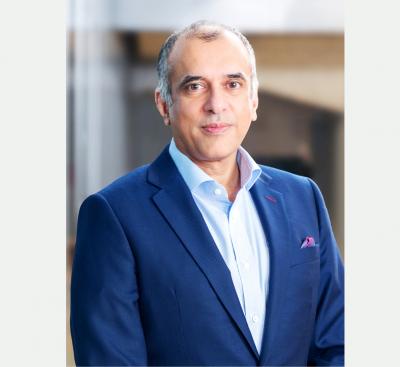
HSBC Holdings PLC is deepening its commitment to Taiwan as the economy emerges as one of the bank’s fastest-growing markets globally, driven by an artificial intelligence (AI) investment boom, expanding cross-border trade, and rising wealth creation. “The advantage that Taiwan has is a growth story linked to the semiconductor and broader AI industries, strong underlying corporate performance, and wealth creation,” said Surendra Rosha, HSBC’s co-chief executive for Asia and the Middle East, in an exclusive interview with the Taipei Times on June 2, during this year’s HSBC Taiwan Conference. That combination has helped HSBC cement its position as the most profitable international
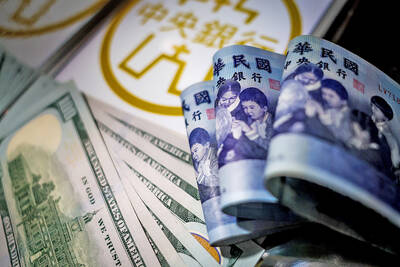
The New Taiwan dollar yesterday fell sharply against the US dollar to close at its lowest level since May 22 amid a massive outflow of funds from the country because of investors panicking over global equity markets. The NT dollar ended at NT$31.580 against the US dollar, slightly lower than its close of NT$31.568 on May 22, after moving between NT$31.5 and NT$31.648 on combined turnover of US$3.062 billion on the Taipei Foreign Exchange and the Cosmos Foreign Exchange. The NT dollar received a significant hit in the morning session, slumping as much as NT$0.173 at a time when other Asian currencies
Taiwan Semiconductor Manufacturing Co (TSMC, 台積電) is now ranked ninth among the world’s 100 most valuable companies after its market capitalization more than doubled over the past year, PricewaterhouseCoopers (PwC) Taiwan said in a report last month. TSMC’s market capitalization surged 101 percent year-on-year to US$1.427 trillion as of March 31, the accounting and consulting firm’s 2026 Global Top 100 Companies by Market Capitalization report said. The gain catapulted the world’s largest contract chipmaker from 12th place to ninth in the rankings, and it was the fastest-growing among the global top 10, it said. TSMC was the only Taiwanese company among the top
Taiwan Semiconductor Manufacturing Co (TSMC, 台積電) yesterday reported record revenue of NT$416.975 billion (US$13.17 billion) for last month, putting the world’s largest contract chipmaker on track to set a record for quarterly revenue. Last month’s figure surpassed March’s record NT$415.19 billion and represented increases of 1.5 percent from April and 30.1 percent from a year earlier. For the first five months of the year, TSMC generated NT$1.96 trillion in revenue, up 30 percent year-on-year, it said in a statement. TSMC has forecast second-quarter revenue of between US$39 billion and US$40.2 billion, representing sequential growth of about 10 percent and year-on-year growth of about


 RSS
RSS