


The leaders of the central banks of some of the world's major economies -- US Fed Chairman Ben Bernanke, European Central Bank (ECB) President Jean-Claude Trichet and Chinese central bank Zhou Xiaochuan (
But the three, joined by Kazumasa Iwata, the deputy governor of the Bank of Japan (BOJ), gave no hints about the biggest question for consumers: Will interest rates keep rising?
Instead, the men -- the star attractions of the fourth annual European Central Banking Conference -- focused on the technical and academic ways in which central banks formulate monetary policy.
One issue was what role should be played by money supply, something the ECB considers quite important. The Federal Reserve closely follows the money supply but does not let that information alone set policy, Bernanke said.
"Although a heavy reliance on monetary aggregates as a guide to policy would seem to be unwise in the US context, money growth may still contain important information about future economic developments," he said.
Trichet said that strong money supply and credit growth in the 12-member euro zone played a dominant role in the ECB's decision to raise interest rates in five steps from 2 percent in December last year to 3.25 percent last month.
"At that time the signals coming from the economic analysis were not yet so strong," he told the analysts, economists and others who attending the two-day conference. "But the continued expansion of money and credit through the course of 2005 gave an intensifying indication of increasing risks to medium and long-term price stability."
Trichet added that the strong economic growth in the euro zone this year justified the rate increases. Analysts expect another quarter-point increase next month.
"Without our thorough monetary analysis, we could have been in danger of falling behind the curve," Trichet said.
Iwata, too, said monetary policy could not be ignored or relegated to a low profile and cited the affects of external conditions on setting interest rates.
"Price stability was restored after the yen appreciation," he said, referring to the currency's strength in the 1980s. "That reflected investors willing to take more risk."
Zhou, central banker for one of the world's most dynamic economies, said that monetary expansion in China was likely stronger than it should be, but said that low inflation had been a reliable counterweight.
"The expansion of money supply, we think, is a little bit higher than we should have, but inflation is low," Zhou said, adding that unlike the US, EU or Japan, China's economy is one that remains in transition.
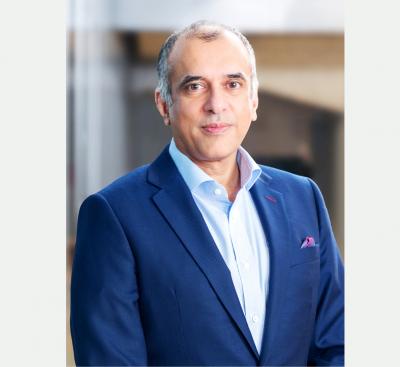
HSBC Holdings PLC is deepening its commitment to Taiwan as the economy emerges as one of the bank’s fastest-growing markets globally, driven by an artificial intelligence (AI) investment boom, expanding cross-border trade, and rising wealth creation. “The advantage that Taiwan has is a growth story linked to the semiconductor and broader AI industries, strong underlying corporate performance, and wealth creation,” said Surendra Rosha, HSBC’s co-chief executive for Asia and the Middle East, in an exclusive interview with the Taipei Times on June 2, during this year’s HSBC Taiwan Conference. That combination has helped HSBC cement its position as the most profitable international
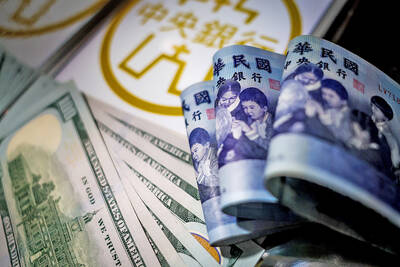
The New Taiwan dollar yesterday fell sharply against the US dollar to close at its lowest level since May 22 amid a massive outflow of funds from the country because of investors panicking over global equity markets. The NT dollar ended at NT$31.580 against the US dollar, slightly lower than its close of NT$31.568 on May 22, after moving between NT$31.5 and NT$31.648 on combined turnover of US$3.062 billion on the Taipei Foreign Exchange and the Cosmos Foreign Exchange. The NT dollar received a significant hit in the morning session, slumping as much as NT$0.173 at a time when other Asian currencies
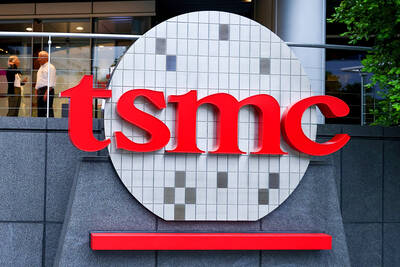
Taiwan Semiconductor Manufacturing Co (TSMC, 台積電) is now ranked ninth among the world’s 100 most valuable companies after its market capitalization more than doubled over the past year, PricewaterhouseCoopers (PwC) Taiwan said in a report last month. TSMC’s market capitalization surged 101 percent year-on-year to US$1.427 trillion as of March 31, the accounting and consulting firm’s 2026 Global Top 100 Companies by Market Capitalization report said. The gain catapulted the world’s largest contract chipmaker from 12th place to ninth in the rankings, and it was the fastest-growing among the global top 10, it said. TSMC was the only Taiwanese company among the top
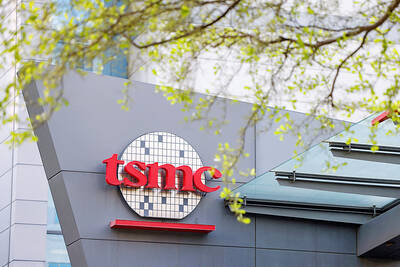
Taiwan Semiconductor Manufacturing Co (TSMC, 台積電) yesterday reported record revenue of NT$416.975 billion (US$13.17 billion) for last month, putting the world’s largest contract chipmaker on track to set a record for quarterly revenue. Last month’s figure surpassed March’s record NT$415.19 billion and represented increases of 1.5 percent from April and 30.1 percent from a year earlier. For the first five months of the year, TSMC generated NT$1.96 trillion in revenue, up 30 percent year-on-year, it said in a statement. TSMC has forecast second-quarter revenue of between US$39 billion and US$40.2 billion, representing sequential growth of about 10 percent and year-on-year growth of about


 RSS
RSS