


Microsoft Corp, the world's largest software maker, will not adjust prices of its Xbox 360 game console this year in response to the scheduled release of Sony Corp's PlayStation 3 in November.
Microsoft plans to cut the price of its most expensive Xbox 360 from US$399 to US$299, DigiTimes reported yesterday, citing unidentified Taiwanese suppliers. Microsoft denied the report, the Taipei-based newspaper said.
No plans
"We have no plans to cut the price of Xbox 360 before the end of this year," Freda Lee (
Chairman Bill Gates said on May 9 that the company, based in Redmond, Washington, will sell 10 million of its next-generation consoles before Sony's PS3 goes on sale. The company sold 5 million of the game machines by the end of June, Microsoft said in a presentation to investors on July 20.
Sony's price
Sony, based in Tokyo, will release its PS3 in Japan on Nov. 11 and in the US and Europe on Nov. 17 at US$499 for the cheapest version, compared with US$299 for the least expensive Xbox 360.
The Japanese company had 64 percent of the market for the previous generation of game consoles, according to a May 2 research note from Merrill Lynch & Co. Sales of gaming consoles, software and accessories totaled US$10.5 billion last year, according to Port Washington, New York-based research firm NPD Group.

South Korea’s equity benchmark yesterday crossed a new milestone just a month after surpassing the once-unthinkable 5,000 mark as surging global memory demand powers the country’s biggest chipmakers. The KOSPI advanced as much as 2.6 percent to a record 6,123, with Samsung Electronics Co and SK Hynix Inc each gaining more than 2 percent. With the benchmark now up 45 percent this year, South Korea’s stock market capitalization has also moved past France’s, following last month’s overtaking of Germany’s. Long overlooked by foreign funds, despite being undervalued, South Korean stocks have now emerged as clear winners in the global market. The so-called “artificial intelligence

NEW IDENTITY: Known for its software, India has expanded into hardware, with its semiconductor industry growing from US$38bn in 2023 to US$45bn to US$50bn India on Saturday inaugurated its first semiconductor assembly and test facility, a milestone in the government’s push to reduce dependence on foreign chipmakers and stake a claim in a sector dominated by China. Indian Prime Minister Narendra Modi opened US firm Micron Technology Inc’s semiconductor assembly, test and packaging unit in his home state of Gujarat, hailing the “dawn of a new era” for India’s technology ambitions. “When young Indians look back in the future, they will see this decade as the turning point in our tech future,” Modi told the event, which was broadcast on his YouTube channel. The plant would convert

‘SEISMIC SHIFT’: The researcher forecast there would be about 1.1 billion mobile shipments this year, down from 1.26 billion the prior year and erasing years of gains The global smartphone market is expected to contract 12.9 percent this year due to the unprecedented memorychip shortage, marking “a crisis like no other,” researcher International Data Corp (IDC) said. The new forecast, a dramatic revision down from earlier estimates, gives the latest accounting of the ongoing memory crunch that is affecting every corner of the electronics industry. The demand for advanced memory to power artificial intelligence (AI) tasks has drained global supply until well into next year and jeopardizes the business model of many smartphone makers. IDC forecast about 1.1 billion mobile shipments this year, down from 1.26 billion the prior
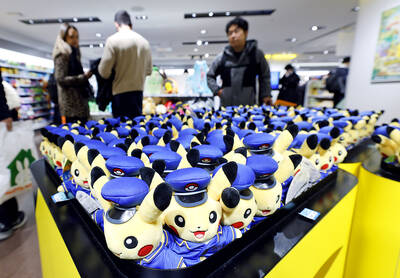
People stand in a Pokemon store in Tokyo on Thursday. One of the world highest-grossing franchises is celebrated its 30th anniversary yesterday.


 RSS
RSS