


■ TAIEX marginally down
Share prices closed 0.13 percent lower yesterday as profit-taking reversed early gains following Wall Street's moderate advance overnight and a further pull-back in oil prices, dealers said.
They said the market settled back in thin trade as investors opted not to push Tuesday's technical rebound any further given prevailing tensions in the Middle East and an upturn in oil prices during Asian business hours.
The market also wanted to wait for US Federal Reserve chairman Ben Bernanke's congressional testimony later in the day for a further lead on the outlook for inflation and interest rates.
The TAIEX slipped 8.07 points to the day's low of 6,277.24, on turnover of NT$64.19 billion (US$1.95 billion). Declines led risers 480 to 445, with 155 stocks unchanged.
■ HSBC personnel change
HSBC Taiwan introduced Sanjiv Sud yesterday, who will take over Martin Spurling's position as the new head of personal financial services next Friday.
Sud, 43, previously served as HSBC's business manager for credit cards in Malaysia for three years. He received a bachelor's degree in economics from the University of Delhi and has worked with HSBC for 14 years.
Spurling has been in charge of the multinational's consumer banking business in Taiwan since January 2004. The 40-year-old executive been promoted as chief executive officer of HSBC Bank International and will work in its offshore private bank in Jersey in the Channel Islands.
■ Taiwan Coop gets BBB rating
Fitch Ratings yesterday affirmed Taiwan Cooperative Bank's (合作金庫銀行) credit rating after its merger with the Farmers Bank of China (農民銀行) on May 1. The bank's long-term issuer default rating is "BBB," short-term "F3," national long-term "A+(twn)," national short-term "F1(twn)," individual "D/E" and support "2," according to a press release.
At the same time, the agency withdrew its ratings on Farmers Bank.
The enlarged Taiwan Cooperative is now the second-largest bank in Taiwan with 252 domestic branches and assets of NT$2.6 trillion (US$79 billion) as of March, accounting for 8.6 percent of system-wide assets.
■ EU withdraws duty threat
The EU withdrew a threat to impose a herbicide duty on Taiwan's Sinon Corp (興農) meant to protect producers in the bloc from cheaper imports.
The EU in September 2004 exempted Sinon from a 29.9 percent tariff on glyphosate, used to remove weeds before crop planting, imported from Taiwan, China and Malaysia. Last August, the bloc opened a probe into whether Sinon had a previously undisclosed link to a Taiwanese exporter subject to the five-year levy and said the exemption might be revoked.
"There is no evidence to show that the conditions for exemption were not met," the European Commission, the 25-nation EU's trade authority in Brussels, said yesterday in its official journal. "Moreover, it is found that the conditions for exemption continue to be met."
The EU introduced a five-year anti-dumping duty of 24 percent on glyphosate from China in 1998 and doubled the levy in 2000. The bloc extended the duty to Taiwan and Malaysia in 2002 before imposing the new tariff of 29.9 percent against all three countries in September 2004.
■ NT dollar remains weak
The New Taiwan dollar remained weak against its US counterpart yesterday, dropping NT$0.031 to close at NT$32.897 on the Taipei foreign exchange market.
Turnover was US$810 million.
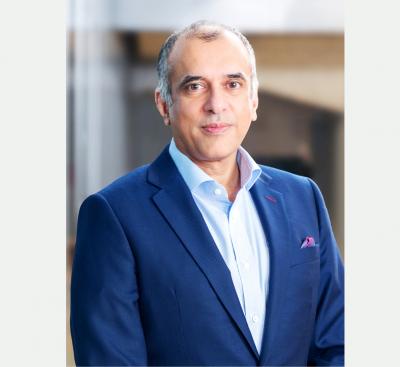
HSBC Holdings PLC is deepening its commitment to Taiwan as the economy emerges as one of the bank’s fastest-growing markets globally, driven by an artificial intelligence (AI) investment boom, expanding cross-border trade, and rising wealth creation. “The advantage that Taiwan has is a growth story linked to the semiconductor and broader AI industries, strong underlying corporate performance, and wealth creation,” said Surendra Rosha, HSBC’s co-chief executive for Asia and the Middle East, in an exclusive interview with the Taipei Times on June 2, during this year’s HSBC Taiwan Conference. That combination has helped HSBC cement its position as the most profitable international
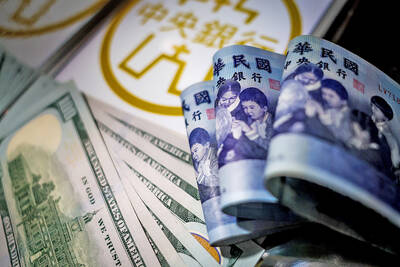
The New Taiwan dollar yesterday fell sharply against the US dollar to close at its lowest level since May 22 amid a massive outflow of funds from the country because of investors panicking over global equity markets. The NT dollar ended at NT$31.580 against the US dollar, slightly lower than its close of NT$31.568 on May 22, after moving between NT$31.5 and NT$31.648 on combined turnover of US$3.062 billion on the Taipei Foreign Exchange and the Cosmos Foreign Exchange. The NT dollar received a significant hit in the morning session, slumping as much as NT$0.173 at a time when other Asian currencies
Taiwan Semiconductor Manufacturing Co (TSMC, 台積電) is now ranked ninth among the world’s 100 most valuable companies after its market capitalization more than doubled over the past year, PricewaterhouseCoopers (PwC) Taiwan said in a report last month. TSMC’s market capitalization surged 101 percent year-on-year to US$1.427 trillion as of March 31, the accounting and consulting firm’s 2026 Global Top 100 Companies by Market Capitalization report said. The gain catapulted the world’s largest contract chipmaker from 12th place to ninth in the rankings, and it was the fastest-growing among the global top 10, it said. TSMC was the only Taiwanese company among the top
Taiwan Semiconductor Manufacturing Co (TSMC, 台積電) yesterday reported record revenue of NT$416.975 billion (US$13.17 billion) for last month, putting the world’s largest contract chipmaker on track to set a record for quarterly revenue. Last month’s figure surpassed March’s record NT$415.19 billion and represented increases of 1.5 percent from April and 30.1 percent from a year earlier. For the first five months of the year, TSMC generated NT$1.96 trillion in revenue, up 30 percent year-on-year, it said in a statement. TSMC has forecast second-quarter revenue of between US$39 billion and US$40.2 billion, representing sequential growth of about 10 percent and year-on-year growth of about


 RSS
RSS