


The recent political disputes would not upset foreign investors, while the anticipation for further liberalization of cross-strait relations has built up investment confidence in the local market, analysts said yesterday.
"We are optimistic about the market for the whole year ... and want to put more money into Taiwan," said Peter Sutton, head of research at CLSA Ltd (Taipei), on the sidelines of a lunch yesterday.
The lunch themed "Preparing for full cross-strait business normalization" was organized by the European Chamber of Commerce Taipei. Sutton was ajudged the best Taiwan market strategist for this year by Institutional Investors last month.
He said the market is expected to experience another peak in the second half of this year, with the TAIEX hitting as high as 7,500 points.
Sutton did not think the rising political tensions caused by the opposition's plan to recall President Chen Shui-bian (陳水扁) would be a major threat to the local bourse. Local markets have largely factored in the political confrontation that Taiwan has seen in recent years.
The recent correction of the local bourse was part of a worldwide phenomenon, in part driven by fears of further interest rates hikes to contain inflationary pressures, according to Sutton. He cited similar corrections in the Japanese, Korean and US stock markets during the same period.
The TAIEX was up 149.38 points, or 2.32 percent, to 6,575.77 at closing time yesterday, with foreign investors buying a net of NT$10.33 billion (US$317 million).
An increasing social consensus on improving cross-strait relations would encourage the government to relax restrictions, and political disputes were unlikely to affect the trend, Sutton said.
Following the relaxation of restrictions on charter flights, he expected the government to announce more liberalization measures after a national economic development conference scheduled for next month.
Among the proposed topics for the conference is a plan to remove the cap on China-bound investment. Currently, China investment cannot exceed 40 percent of a Taiwanese companies' net value.
Meanwhile, it is also likely that there will be an adjustment in cross-strait policy in the near future as differences in the Cabinet's internal viewpoints is narrowing, the Central News Agency quoted Vice Premier Tsai Ing-wen (
Speaking before the Chinese National Association of Industry and Commerce (
BNP Paribas Securities (Tai-wan) said yesterday it remained bullish on the Taiex as the recent opening of charter flights is expected to accelerate liberalization.
The French brokerage said that, despite the recall bid, China seemed willing to ink an agreement with the Chen administration in light of the opening of charter flights, and that the opposition parties were likely to continue to push for the approval of a direct links bill currently under review in the legislature.
Moreover, BNP Paribas said it would be in Premier Su Tseng-chang's (蘇貞昌) political interest to expedite liberalization with China, as the move would steal the initiative from the pan-blue camp's proposed recall motion.
Yet, Calvin Wang (王治平), chairman of Jones Lang LaSalle appeared less positive about any possible relaxation of cross-Strait policy for the coming six months, citing the uncertainty of the endgame in the current political standoff.
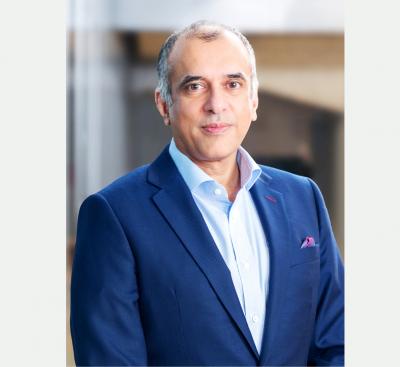
HSBC Holdings PLC is deepening its commitment to Taiwan as the economy emerges as one of the bank’s fastest-growing markets globally, driven by an artificial intelligence (AI) investment boom, expanding cross-border trade, and rising wealth creation. “The advantage that Taiwan has is a growth story linked to the semiconductor and broader AI industries, strong underlying corporate performance, and wealth creation,” said Surendra Rosha, HSBC’s co-chief executive for Asia and the Middle East, in an exclusive interview with the Taipei Times on June 2, during this year’s HSBC Taiwan Conference. That combination has helped HSBC cement its position as the most profitable international
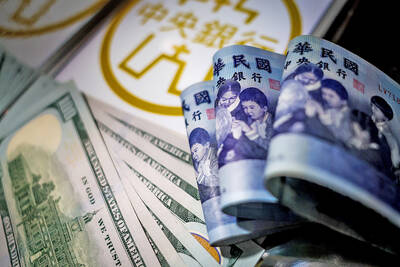
The New Taiwan dollar yesterday fell sharply against the US dollar to close at its lowest level since May 22 amid a massive outflow of funds from the country because of investors panicking over global equity markets. The NT dollar ended at NT$31.580 against the US dollar, slightly lower than its close of NT$31.568 on May 22, after moving between NT$31.5 and NT$31.648 on combined turnover of US$3.062 billion on the Taipei Foreign Exchange and the Cosmos Foreign Exchange. The NT dollar received a significant hit in the morning session, slumping as much as NT$0.173 at a time when other Asian currencies
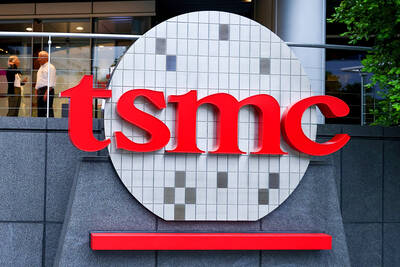
Taiwan Semiconductor Manufacturing Co (TSMC, 台積電) is now ranked ninth among the world’s 100 most valuable companies after its market capitalization more than doubled over the past year, PricewaterhouseCoopers (PwC) Taiwan said in a report last month. TSMC’s market capitalization surged 101 percent year-on-year to US$1.427 trillion as of March 31, the accounting and consulting firm’s 2026 Global Top 100 Companies by Market Capitalization report said. The gain catapulted the world’s largest contract chipmaker from 12th place to ninth in the rankings, and it was the fastest-growing among the global top 10, it said. TSMC was the only Taiwanese company among the top
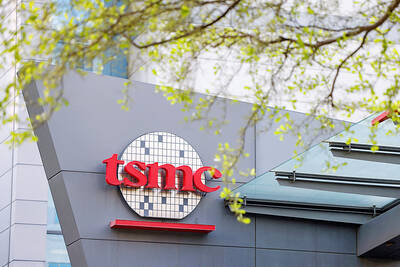
Taiwan Semiconductor Manufacturing Co (TSMC, 台積電) yesterday reported record revenue of NT$416.975 billion (US$13.17 billion) for last month, putting the world’s largest contract chipmaker on track to set a record for quarterly revenue. Last month’s figure surpassed March’s record NT$415.19 billion and represented increases of 1.5 percent from April and 30.1 percent from a year earlier. For the first five months of the year, TSMC generated NT$1.96 trillion in revenue, up 30 percent year-on-year, it said in a statement. TSMC has forecast second-quarter revenue of between US$39 billion and US$40.2 billion, representing sequential growth of about 10 percent and year-on-year growth of about


 RSS
RSS