


Like so many other Japanese trends, "cool biz" attire has spread to Taiwan, with the Ministry of Economic Affairs' Bureau of Energy spearheading a drive to make it popular.
So what is "cool biz" and what in the heck does the Bureau of Energy have to do with fashion?
A cross between smart casual and formal (minus the tie and sleeves), cool biz is the new business uniform in the age of global warming.
To further get across just what cool biz is, the bureau hosted a cool biz fashion show at the Red Playhouse (紅樓劇場) in the heart of the Ximending (西門町) shopping district last Monday -- World Environment Day.
With soaring energy prices and global warming on everybody's minds, the bureau is taking its cues from Japan, whose government slashed carbon dioxide emissions by 460,000 tonnes last year by getting people to dress more casually at work.
Fewer ties and jackets for men in the summer, not to mention less pantyhose for women, mean less air-conditioning for offices nationwide, which in turn means less air pollution for the country.
Reducing greenhouse gas emissions is at the top of the bureau's things-to-do list.
Hence, Taiwan's own cool biz fashion campaign.
But don't believe what the media says about cool biz fashion being pricey, the bureau warned in a press release last Tuesday.
"Shirt prices range from NT$500 to NT$1,000," the bureau said in the statement.
Monday's fashion show went off without a hitch, with models parading along the catwalk in tasteful, inexpensive attire designed to help office workers beat the heat.
How successful Taiwan's cool biz drive is, however, will probably depend on Japan, where cool biz fashion has met with mixed reviews.
A recent Tokyo fashion show saw three potential candidates for prime minister take the stage in their cool biz outfits, and Japanese Prime Minister Junichiro Koizumi is known to appear in parliament in a Hawaiian-style shirt, wire agencies reported on June 1.
Younger office workers are usually in favor of cool biz fashion, "but older businessmen are reluctant to ditch the tie," Agence French-Presse reported on June 1.
"I've almost gotten ... used to seeing top-ranking Cabinet ministers show up on television looking as if they'd been yanked out of a golf game for an emergency press conference," one blogger in Japan wrote.
Another Japanese blogger complained of some officials taking cool biz too far.
"I didn't need to see that the undergarment [Liberal Democratic Party Secretary-General Tsutomu Takebe] uses to rein in those man-boobs ... is a narrow-strapped tank top. I really didn't," the blogger wrote.

Cairo’s new monorail slices across the city skyline, running above the familiar chaos of blaring horns and aging buses’ exhaust fumes that mark rush hour below. The US$4.5 billion monorail, opened this month, is among Egypt’s most prominent new transport projects, part of a debt-funded infrastructure drive criticized for sapping state finances while bringing limited benefits to most of the country’s 109 million people. “It feels like you’re in a different country,” said Ramy Sayed, a restaurant manager, aboard a driverless Innovia 300 train. “No noise, no traffic, we’re not used to this.” The eastern line runs 56km from the bustling middle-class

Starlux Airlines Co (星宇航空) today unveiled a long-haul network expansion plan at a shareholders’ meeting in Taipei, including direct flights to Barcelona, Spain, and Zurich, Switzerland, as well as a service connecting Taipei, Sydney and New Zealand. Starlux is to become the first Taiwanese carrier to offer non-stop services to the two European cities, while the inaugural oceanic route is expected to expand transit opportunities within the Australia-New Zealand market, Starlux said. Flight services to Chicago, Dallas, Washington and New York are under evaluation, the airline added. Prior to the shareholders’ meeting, the airline earlier this year announced that it would be

Taiwanese prosecutors suspect that three people successfully smuggled at least one shipment of Nvidia Corp artificial intelligence (AI) chips to China after first exporting them to Japan, people familiar with the matter said. The trio was detained last week by the Keelung District Prosecutors’ Office for allegedly falsifying documents related to exports of Super Micro Computer Inc servers containing advanced Nvidia chips, which the US has barred from sale to China without a license from Washington. The move marked Taiwan’s first public crackdown on AI chip diversion after years of pressure from the US to take a more active role in curtailing
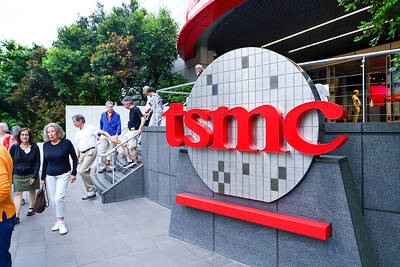
Taiwan Semiconductor Manufacturing Co (TSMC, 台積電) employee bonuses are likely to grow more than 30 percent this year, in line with the past few years as the company’s profits continue to set new records, an anonymous source cited TSMC chairman C.C. Wei (魏哲家) as saying yesterday. TSMC, the world’s largest contract chipmaker, is committed to taking care of its workers, the source said, citing Wei’s meeting with employees yesterday morning. Wei also expressed gratitude to employees for their contribution to the company’s improving bottom line, the source added. Since 2023, TSMC’s employee bonuses have grown at an annual rate of


 RSS
RSS