


BenQ Corp (
"We've always said we want to wring 500 million euros [US$640 million] from the cost base, and I would say we've achieved more than half of that," Joos said in an interview during a conference in Bonn on Thursday.
"It's a challenging target," he added.
Joos shut a handset site in Ulm, south Germany, and last month agreed to sell a Danish center to Motorola Inc to cut costs and consolidate research and development in two plants in the cities of Munich and Kamp-Lintfort. BenQ Mobile has released 14 handsets this year and will debut a similar number in the second half of the year, Joos said.
The takeover of Siemens' business vaulted BenQ from near obscurity to the No. 6 ranking on the global cellphone market and handed the Taipei-based parent, BenQ, an internationally recognized brand name.
Still, with a market share of 3.5 percent in the first quarter, according to researcher Gartner Inc, BenQ lags behind Nokia Oyj, Motorola and Samsung Electronics Co.
Shares in BenQ fell 0.2 percent to close at NT$23.85 on the Taiwan Stock Exchange yesterday. The stock has plunged 25 percent this year, compared with a 6.3 percent gain in the benchmark TAIEX.
"BenQ's cost savings are pretty [much] in line with its own guidance," said Andrew Lin (
"Market acceptance of its new models, which mostly will be rolled out in the second half, will be the key variable for the company to return to profit," he said.
BenQ said on April 24 that it had shipped 7 million mobile phones in the first quarter and expected that figure to rise by more than 30 percent in the second quarter.
Nokia and Motorola, which together control more than half of the global handset market by shipments, are increasingly relying on sales of lower-priced models in China and India as demand growth in those countries outpaces Europe and America.
Jorma Ollila, chief executive of market leader Nokia, told CNBC in an April 20 interview that average selling prices were "likely to go down a bit for the industry this year" because of the rising share of phone sales in emerging markets. The average price of a Nokia handset has dropped more than one-fifth in the past two years.
In contrast, BenQ, whose average prices have lagged behind rivals, is seeking to narrow the gap by focusing on more expensive models that feature music players and high-resolution cameras.
"Nokia and Motorola are adding many first-time users," Joos said. "We don't try to compete on scale."
BenQ phones' average selling price, which was close to 80 euros in the first quarter, will rise by more than 10 percent in the current quarter, Joos said, reiterating an April forecast. Sony Ericsson Mobile Communications Ltd, which ranks one notch above BenQ by market share, reported a first-quarter average selling price of 150 euros.
BenQ, which also makes laptop computers, DVD recorders and digital projectors, posted a first-quarter net loss of NT$4.99 billion (US$155 million) because of costs related to the purchase of the phone unit from Siemens, Germany's largest engineering company. The enlarged handset division accounted for 35 percent of BenQ's sales in the period. BenQ Mobile will be profitable by the end of this year, Joos said.
Advertising spending for BenQ Mobile will increase this year and includes sponsoring Spanish soccer club Real Madrid from next season through 2010, gaining an advertising platform on jerseys of players including Brazil's Ronaldo and David Beckham.
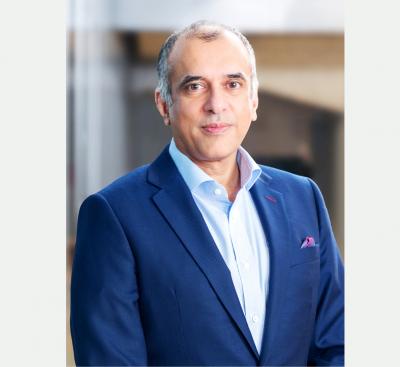
HSBC Holdings PLC is deepening its commitment to Taiwan as the economy emerges as one of the bank’s fastest-growing markets globally, driven by an artificial intelligence (AI) investment boom, expanding cross-border trade, and rising wealth creation. “The advantage that Taiwan has is a growth story linked to the semiconductor and broader AI industries, strong underlying corporate performance, and wealth creation,” said Surendra Rosha, HSBC’s co-chief executive for Asia and the Middle East, in an exclusive interview with the Taipei Times on June 2, during this year’s HSBC Taiwan Conference. That combination has helped HSBC cement its position as the most profitable international
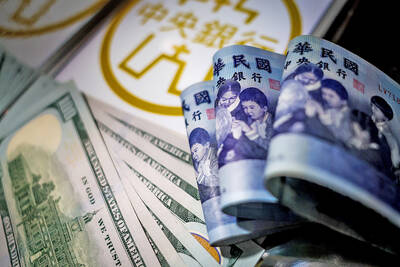
The New Taiwan dollar yesterday fell sharply against the US dollar to close at its lowest level since May 22 amid a massive outflow of funds from the country because of investors panicking over global equity markets. The NT dollar ended at NT$31.580 against the US dollar, slightly lower than its close of NT$31.568 on May 22, after moving between NT$31.5 and NT$31.648 on combined turnover of US$3.062 billion on the Taipei Foreign Exchange and the Cosmos Foreign Exchange. The NT dollar received a significant hit in the morning session, slumping as much as NT$0.173 at a time when other Asian currencies
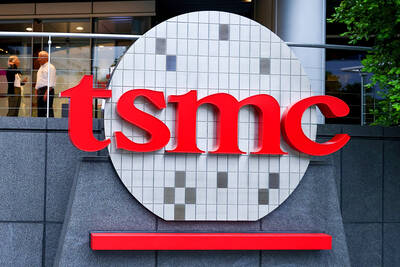
Taiwan Semiconductor Manufacturing Co (TSMC, 台積電) is now ranked ninth among the world’s 100 most valuable companies after its market capitalization more than doubled over the past year, PricewaterhouseCoopers (PwC) Taiwan said in a report last month. TSMC’s market capitalization surged 101 percent year-on-year to US$1.427 trillion as of March 31, the accounting and consulting firm’s 2026 Global Top 100 Companies by Market Capitalization report said. The gain catapulted the world’s largest contract chipmaker from 12th place to ninth in the rankings, and it was the fastest-growing among the global top 10, it said. TSMC was the only Taiwanese company among the top
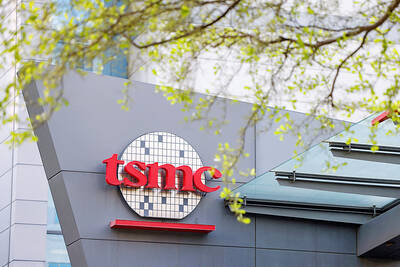
Taiwan Semiconductor Manufacturing Co (TSMC, 台積電) yesterday reported record revenue of NT$416.975 billion (US$13.17 billion) for last month, putting the world’s largest contract chipmaker on track to set a record for quarterly revenue. Last month’s figure surpassed March’s record NT$415.19 billion and represented increases of 1.5 percent from April and 30.1 percent from a year earlier. For the first five months of the year, TSMC generated NT$1.96 trillion in revenue, up 30 percent year-on-year, it said in a statement. TSMC has forecast second-quarter revenue of between US$39 billion and US$40.2 billion, representing sequential growth of about 10 percent and year-on-year growth of about


 RSS
RSS