


■ New TFT-LCD process unveiled
A breakthrough in TFT-LCD manufacturing technology was announced yesterday by the Industrial Technology Research Institute (ITRI, 工研院) in Hsinchu. The technology, called "plasma processing and system technology for LC alignment," is particularly suitable for the manufacturing of large panels, according to Lee Chin-yang (李金揚), a researcher at ITRI's Mechanical Industry Research Laboratories and director of the program. It will enable the production of panels with resolutions so high that they can be used in medical equipment, Lee said. Furthermore, the manufacturing process does not generate dust or static, which can undermine the quality of the product. Rather, it will shorten the manufacturing process, enhance yields and thereby save on production costs, he said. In order to develop the new technology, the project has has already yielded two patents, with another six patents under application, he added.
■ Lenders invited
Bank of Taiwan (台灣銀行) and nine other arrangers of a record loan for Powerchip Semiconduc-tor Corp (力晶半導體) are inviting lenders to help provide NT$30 billion (US$926 million), a banker involved in the deal said. The loan has a five-year NT$4 billion tranche and a seven-year NT$26 billion tranche, the banker said. "We are going with a syndicated loan to diversify our funding source. Raising funds from selling shares or convertible bonds may dilute our shares," Eric Tang (譚仲民), a spokesman at Powerchip, said in an interview. "Our capital expenditure is more than last year, which is between NT$50 billion to NT$55 billion." Proceeds will help pay for NT$60 billion in equipment for a plant that Powerchip bought from Macronix International Co (旺宏電子), a maker of chips for game consoles. Powerchip paid NT$5.3 billion for the factory, which it expects to eventually produce 35,000 wafers per month, the company said in a statement on Jan. 18.
■ Imported cars selling well
Despite a decline in Taiwan's car market, sales of imported cars remained brisk in March, according to tallies released yesterday. A total of 6,116 imported cars were sold in the Taiwanese market during March, more than double the figure recorded in the previous month. The year-on-year fall in total car sales expanded from 17.8 percent in February to 30 percent in March. The top six imported car brands were Volkswagen, Toyota, Mercedes Benz, BMW, Suzuki and Mazda. While the number of Mercedes Benz E-Classes and Mercedes Benz S-Classes sold in March totalled 518, a total of 813 Volks-wagen Golfs and Volkswagen Passats were sold during the same period. In March, 1,084 Volkswagen cars were sold, up 34 percent from the same time last year. The brand seized a 17.7 percent share of the Taiwan market and remained the most popular imported car brand in the country.
■ Airport passengers down
The number of passengers traveling through Taiwan's airports totalled 6.93 million for the first two months of this year, down 0.7 percent from a year-earlier level, the Directorate General of Budget, Accounting and Statistics (DGBAS) said on Tuesday. Among them, the number of passengers on international flights accounted for 3.73 million, marking an 8 percent year-on-year increase. However, domestic flight passengers fell 10.9 percent compared with the same period last year, totaling 2.79 million passengers. The number of transit passengers accounted for 410,000, up 4.6 percent from a year-earlier level. Meanwhile, the DGBAS said there were 27 million travelers on Taiwan's railways and 58 million Mass Rapid Transit (MRT) passengers during the same period.
■ BenQ supplying Volkswagen
BenQ Corp (明基) is supplying parts to Volkswagen AG as a result of taking over Siemens AG's mobile phone unit last year, the Economic Daily News reported, citing an unidentified Industrial Development Bureau official. BenQ is shipping multimedia products such as DVDs and affiliate AU Optronics Corp (友達光電) is sending flat panels, the Chinese-language newspaper said.

SECOND-RATE: Models distilled from US products do not perform the same as the original and undo measures that ensure the systems are neutral, the US’ cable said The US Department of State has ordered a global push to bring attention to what it said are widespread efforts by Chinese companies, including artificial intelligence (AI) start-up DeepSeek (深度求索), to steal intellectual property from US AI labs, according to a diplomatic cable. The cable, dated Friday and sent to diplomatic and consular posts around the world, instructs diplomatic staff to speak to their foreign counterparts about “concerns over adversaries’ extraction and distillation of US AI models.” Distillation is the process of training smaller AI models using output from larger, more expensive ones to lower the costs of training a powerful new

Singapore-based ride-hailing and delivery giant Grab Holdings’ planned acquisition of Foodpanda’s Taiwan operations has yet to enter the formal review stage, as regulators await supplementary documents, the Fair Trade Commission (FTC) said yesterday. Acting FTC Chairman Chen Chih-min (陳志民) told the legislature’s Economics Committee that although Grab submitted its application on March 27, the case has not been officially accepted because required materials remain incomplete. Once the filing is finalized, the FTC would launch a formal probe into the deal, focusing on issues such as cross-shareholding and potential restrictions on market competition, Chen told lawmakers. Grab last month announced that it would acquire
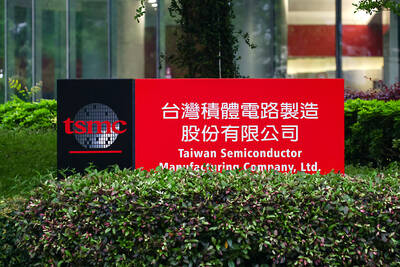
Shares of Taiwan Semiconductor Manufacturing Co (TSMC, 台積電) have repeatedly hit new highs, but an equity analyst said the stock’s valuation remains within a reasonable range and any pullback would likely be technical. The contract chipmaker’s historical price-to-earnings (P/E) ratio has ranged between 20 and 30, Cathay Futures Consultant Co (國泰證期) analyst Tsai Ming-han (蔡明翰) told Central News Agency. With market consensus projecting that TSMC would post earnings per share of about NT$100 (US$3.17) this year, supported by strong global demand for artificial intelligence (AI) applications, and the stock currently trading at a P/E ratio of below 25, Tsai said the valuation
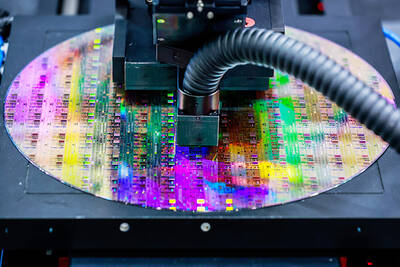
The artificial intelligence (AI) boom has triggered a seismic reshuffling of global equity markets, with Taiwan and South Korea muscling past European nations one by one. With its stock market now valued at nearly US$4.3 trillion, Taiwan surpassed the UK, Europe’s biggest market, earlier this month, data compiled by Bloomberg showed. South Korea is about US$140 billion away from doing the same. The tech-heavy Asian markets have shot past Germany and France in the past seven months. The shift is largely down to massive gains in shares of three companies that provide essential hardware for AI: Taiwan Semiconductor Manufacturing Co (TSMC, 台積電),


 RSS
RSS