

Lenovo Group Ltd (
Laurence Hwang (
Hwang declined to disclose the models and prices Lenovo will bring to Taiwan. But he said the company won't join the price war in the local notebook market, which started in the third quarter last year and saw vendors pushing portable computers priced below NT$20,000.
"The price war is disruptive and not sustainable over the long run," added James Arnold, an executive of Lenovo's Taiwan branch, who oversees brand and marketing activities.
Instead, Lenovo's products will come in stylish exterior designs and latest industry specifications to tempt consumers into buying these brand-new products, he added.
To further differentiate from the Think brand -- which includes ThinkPad notebooks and ThinkCenter desktops inherited from IBM Corp's ailing PC unit in May last year -- the Lenovo brand will be geared toward the consumer segment rather than mid- and large-sized enterprises, according to Arnold.
Shares of Lenovo, however, fell yesterday in Hong Kong on concern the company's marketing costs will rise as it promotes its own-brand products. Its stock closed 2.3 percent lower at HK$3.25.
Since local consumers are price sensitive, technologically savvy, and often shun products made by Chinese vendors, Lenovo may have a tough road ahead, said Amy Teng (
It is a prerequisite for Lenovo to attract consumers by offering competitively-priced products such as those from Asustek Computer Inc (
"However, I don't expect Lenovo to slash prices to make the products very low-end in their debut, since this would damage its brand image," she added.
As Lenovo is just testing the waters in the second quarter this year, the real test of its performance and market acceptance will be in the third quarter, which traditionally is the peak selling season, she said.
Lenovo increased its global computer shipments to 13.9 million units last year, up from 4.3 million a year earlier, according to the latest preliminary results from ISuppli Corp.
In the fourth quarter, Lenovo's 4.4 million units accounted for 7 percent of global shipments. The company's shipments grew 242 percent in the fourth quarter from a year earlier, the research firm said.

INFRINGEMENT: The investigation comes after a complaint from Vicor Corp, with the company seeking a limited exclusion order as well as cease-and-desist orders, the ITA said The US International Trade Commission (USITC) has launched a Section 337 investigation naming Taiwanese technology companies, including Hon Hai Precision Industry Co (鴻海), Delta Electronics Inc (台達電) and Quanta Computer Inc (廣達), as respondents. The Ministry of Economic Affairs (MOEA) pledged assistance if needed. The USITC said on Friday in a statement that it had voted to institute an investigation under Section 337 of the US Tariff Act of 1930 into certain vertical power delivery systems, related components and computing devices incorporating such systems. The investigation covers 20 companies from Taiwan, China, Germany and the US, the commission said, adding that it

IN GOOD FAITH: Lai said he appreciates Micron’s commitment to Taiwan and that it would continue expanding its investment in the country, while also working with labor President William Lai (賴清德) yesterday called for US memory maker Micron Technology Inc and its workers to negotiate “sincerely” ahead of a possible strike by the company’s union in Taiwan. Last week, a Taiwanese union representing workers at Micron said it had secured authorization from its members to strike over a dispute concerning the company’s bonus scheme, escalating a labor conflict at the chipmaker’s largest manufacturing hub. Micron employs about 15,000 people in Taiwan and has said it invested more than NT$1.6 trillion (US$49.6 billion) in the country. Speaking in Taichung at the opening of a new Micron advanced assembly and testing facility,
A man charged along with Super Micro Computer Inc co-founder Yih-Shyan “Wally” Liaw (廖益賢) of conspiring to send cutting-edge chips to China in violation of US export controls pleaded guilty, court documents said. Ting-Wei “Willy” Sun (孫廷瑋), a former outside contractor described by US authorities as a “fixer” who allegedly aided in the sales, pleaded guilty on Thursday at a hearing in federal court in New York as part of an agreement with prosecutors, court filings showed. Prosecutors claimed the men were part of a scheme to send Nvidia Corp-powered servers to an unnamed Southeast Asian company and then divert them to
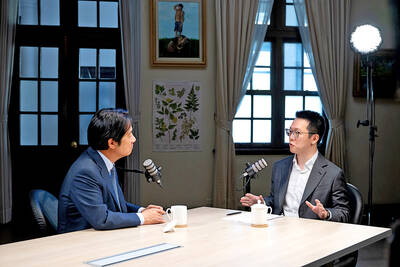
Taiwan should not rule out any energy source or abandon environmental sustainability in favor of ideology and short-term benefits, President William Lai (賴清德) said in an interview, calling for a “professional assessment” of whether nuclear power should be reintroduced into Taiwan’s energy mix. In an online interview with influencer Yu Ting-hao (游庭皓) that aired yesterday, Lai reiterated his position on nuclear power. SHIFT Lai’s remarks marked a shift from the Democratic Progressive Party’s (DPP’s) longstanding opposition to nuclear power. As premier from 2017 to 2019, Lai pushed for more gas-fired power capacity while sticking to the DPP’s nuclear free homeland ideology and rejected the


 RSS
RSS