


■ ING Antai names manager
ING Antai (ING安泰人壽) yesterday announced that chief executive officer Chan Pi-yao's (陳丕耀) term will expire at the end of this month, and his post will be taken over by John Wylie, regional general manager of ING Asia Pacific, the company said in a press release. Taiwan has become ING Group's second-largest life insurance market in Asia. To strengthen its foothold here with an eye on the potential retirement pension market, the group decided to have Wylie, an expert in pension programs, lead the company to further boost its sales and market share. ING Antai, the nation's fourth-largest life insurer announced last month that its Taiwanese operations will be upgraded from a branch to a subsidiary company of the Hague-based ING Group, starting March 1.
■ New FSC official announced
The Financial Supervisory Commission's secretary-general William Tseng (曾銘宗) will take over as acting director-general of the commission's Examination Bureau, the commission's spokesman Lin Chung-cheng (林忠正) said yesterday. Lee Chin-chen (李進誠), the former director-general of the bureau, was charged last October and may face an eight-year jail sentence for his alleged leaking of confidential information about a government probe into Power Quotient International Co (勁永國際) to an investor who profited from the information.
■ Foreign investment still rising
Foreign investors continued their interest in Taiwan's shares in February, with net foreign remittances to the stock market amounting to US$1.09 billion from the start of the month until Feb. 10, according to figures released yesterday by the Financial Supervisory Commission's Securities and Futures Bureau. Taiwan has seen net inward remittances by foreign investors increase for three consecutive months since November last year, with the amount hitting a single-month record high of US$8.52 billion in December.
Since the stock market reopened after the Lunar New Year holiday (Feb. 3 until Feb. 10), foreign investors bought listed shares worth NT$569.4 billion (US$17.5 billion) and sold listed shares worth NT$493.4 billion in Taiwan, posting a net buying worth of NT$76 billion, the tallies show.
■ Direct selling booming
Taiwan's direct selling industry is expected to post a growth rate of 30 percent this year, despite competition from other retail businesses, a leading direct selling company said yesterday. According to Amway Taiwan, the market scale of Taiwan's multi-level network marketing amounted to some NT$68.3 billion (US$2.1 billion) in 2004, up 30 percent over the previous year. They noted that health food and skin-care products are the two main product lines fielded by Taiwan's direct selling industry, with the two categories together accounting for more than 60 percent of total sales. They said Amway Taiwan posted sales of NT$6.57 billion in 2005, 28 percent higher than 2004, and that the company was aiming to boost that amount to top NT$7 billion in 2006.
■ NT dollar falls
The New Taiwan dollar declined against its US counterpart yesterday on speculation that foreign investors will add to sales of Taiwan stocks, flocking to the US after the Federal Reserve Chairman Ben S. Bernanke said interest rates might increase, traders said. The NT dollar fell NT$0.049 to close at NT$32.401 on the Taipei foreign exchange market, on turnover of US$712 million.

Cairo’s new monorail slices across the city skyline, running above the familiar chaos of blaring horns and aging buses’ exhaust fumes that mark rush hour below. The US$4.5 billion monorail, opened this month, is among Egypt’s most prominent new transport projects, part of a debt-funded infrastructure drive criticized for sapping state finances while bringing limited benefits to most of the country’s 109 million people. “It feels like you’re in a different country,” said Ramy Sayed, a restaurant manager, aboard a driverless Innovia 300 train. “No noise, no traffic, we’re not used to this.” The eastern line runs 56km from the bustling middle-class
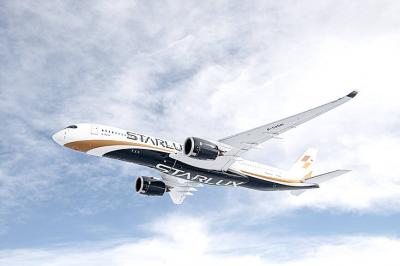
Starlux Airlines Co (星宇航空) today unveiled a long-haul network expansion plan at a shareholders’ meeting in Taipei, including direct flights to Barcelona, Spain, and Zurich, Switzerland, as well as a service connecting Taipei, Sydney and New Zealand. Starlux is to become the first Taiwanese carrier to offer non-stop services to the two European cities, while the inaugural oceanic route is expected to expand transit opportunities within the Australia-New Zealand market, Starlux said. Flight services to Chicago, Dallas, Washington and New York are under evaluation, the airline added. Prior to the shareholders’ meeting, the airline earlier this year announced that it would be

Taiwanese prosecutors suspect that three people successfully smuggled at least one shipment of Nvidia Corp artificial intelligence (AI) chips to China after first exporting them to Japan, people familiar with the matter said. The trio was detained last week by the Keelung District Prosecutors’ Office for allegedly falsifying documents related to exports of Super Micro Computer Inc servers containing advanced Nvidia chips, which the US has barred from sale to China without a license from Washington. The move marked Taiwan’s first public crackdown on AI chip diversion after years of pressure from the US to take a more active role in curtailing
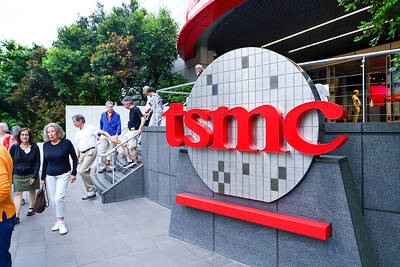
Taiwan Semiconductor Manufacturing Co (TSMC, 台積電) employee bonuses are likely to grow more than 30 percent this year, in line with the past few years as the company’s profits continue to set new records, an anonymous source cited TSMC chairman C.C. Wei (魏哲家) as saying yesterday. TSMC, the world’s largest contract chipmaker, is committed to taking care of its workers, the source said, citing Wei’s meeting with employees yesterday morning. Wei also expressed gratitude to employees for their contribution to the company’s improving bottom line, the source added. Since 2023, TSMC’s employee bonuses have grown at an annual rate of


 RSS
RSS