


More than 2,000 tonnes of US beef has piled up at Japanese customs warehouses after this month's renewed import ban, an industry official said yesterday.
Tokyo eased its ban on US beef imports on Dec. 12, but halted imports again Jan. 20 after a beef shipment arrived in Japan with banned spinal bones in it. Japan considers such bones to be at risk for mad cow disease.
Some 1,380 tonnes of beef products imported from the US have been held up at Japanese ports since Tokyo halted the imports for the second time, or are currently in shipment, said Tatsuo Iwama, executive director of Japan Meat Traders Association.
By adding those imported by companies outside the association's 17 US beef importers, the amount of stranded beef products could reach as much as 2,300 tonnes, Iwama added.
The cost for the importers would be as much as ? billion (US$17 million), he said.
Most of the intended US beef imports were high-quality chilled beef, with the consumption date expiring within two months, Iwama said.
He said the association plans to ask the government's help to arrange a deal so they can have the US exporters take them back and cover the entire cost.
Responsibility
"The problem was caused by the US side, so we would like the party with primary responsibility to take care of the cost. It's so unfortunate that we're going through the trouble immediately after the import resumed," Iwama said.
According to Japanese customs inspector Koichi Tsunokami, goods subject to import suspension are usually returned to senders, sent to a third country or disposed of, because keeping unwanted goods only costs importers storage fees.
"The US beef products cannot go through customs and there will be no quarantine for them. They will have to be returned to senders, sent to a third country or disposed here," Tsunokami said.
When Japan banned US beef products in December 2003, most Japanese importers sent them back to exporters, he added. Many others burned them at their own expense.
According to a poll released by the Asahi newspaper yesterday, 62 percent of the Japanese said they don't want to eat US beef when it returns to Japanese stores, compared with 30 percent who said they would try it. The Asahi, which surveyed 1,915 adults through telephone interviews over the weekend, gave no margin of error.
The US beef products issue on Monday also brought chaos to parliament as Japanese Agricultural Minister Shoichi Nakagawa admitted Tokyo failed to inspect US cattle facilities before easing the ban, inviting a flurry of criticism and prompting opposition lawmakers to walk out of a session.
Suspicious parts
The Food Safety Commission approved lifting the previous ban on conditions that imports be limited to meat from cows aged 20 months or less and that parts of cattle thought to be at particularly high risk of containing mad cow disease be removed.
Japan's farm minister, facing calls to quit after failing to follow the Cabinet's policy of inspecting US meatpackers before allowing beef imports to resume, said yesterday he had no intention of stepping down.
Agriculture Minister Shoichi Nakagawa admitted on Monday that Japan had only begun the inspections after lifting the ban.
"I am not considering leaving my post," Nakagawa told a news conference yesterday.
"My duty is to carry out agriculture administration and ensure food safety," he said, adding that Japan was waiting for a US report before it would restart beef imports.
The public furore over the minister's admission on Monday is another headache for the government of Prime Minister Junichiro Koizumi, which is grappling with a series of scandals.
The main opposition Democratic Party had called for Nakagawa to resign after he acknowledged the government's promise had not been kept, and a consumers' group echoed that stance.
"The Japanese government should not have accepted what the United States said at face value, but should have checked the US safety measures and policy itself," said Hiroko Mizuhara, secretary general of the Consumers Union of Japan.

Among the rows of vibrators, rubber torsos and leather harnesses at a Chinese sex toys exhibition in Shanghai this weekend, the beginnings of an artificial intelligence (AI)-driven shift in the industry quietly pulsed. China manufactures about 70 percent of the world’s sex toys, most of it the “hardware” on display at the fair — whether that be technicolor tentacled dildos or hyper-realistic personalized silicone dolls. Yet smart toys have been rising in popularity for some time. Many major European and US brands already offer tech-enhanced products that can enable long-distance love, monitor well-being and even bring people one step closer to

Malaysia’s leader yesterday announced plans to build a massive semiconductor design park, aiming to boost the Southeast Asian nation’s role in the global chip industry. A prominent player in the semiconductor industry for decades, Malaysia accounts for an estimated 13 percent of global back-end manufacturing, according to German tech giant Bosch. Now it wants to go beyond production and emerge as a chip design powerhouse too, Malaysian Prime Minister Anwar Ibrahim said. “I am pleased to announce the largest IC (integrated circuit) Design Park in Southeast Asia, that will house world-class anchor tenants and collaborate with global companies such as Arm [Holdings PLC],”
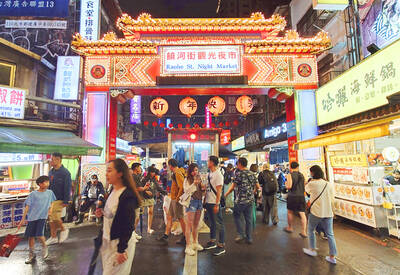
Sales in the retail, and food and beverage sectors last month continued to rise, increasing 0.7 percent and 13.6 percent respectively from a year earlier, setting record highs for the month of March, the Ministry of Economic Affairs said yesterday. Sales in the wholesale sector also grew last month by 4.6 annually, mainly due to the business opportunities for emerging applications related to artificial intelligence (AI) and high-performance computing technologies, the ministry said in a report. The ministry forecast that retail, and food and beverage sales this month would retain their growth momentum as the former would benefit from Tomb Sweeping Day
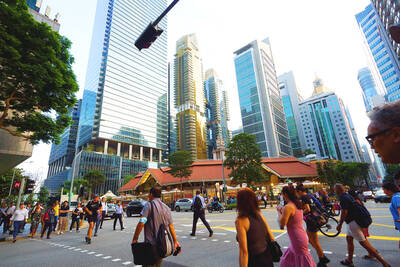
Thousands of parents in Singapore are furious after a Cordlife Group Ltd (康盛人生集團), a major operator of cord blood banks in Asia, irreparably damaged their children’s samples through improper handling, with some now pursuing legal action. The ongoing case, one of the worst to hit the largely untested industry, has renewed concerns over companies marketing themselves to anxious parents with mostly unproven assurances. This has implications across the region, given Cordlife’s operations in Hong Kong, Macau, Indonesia, the Philippines and India. The parents paid for years to have their infants’ cord blood stored, with the understanding that the stem cells they contained


 RSS
RSS