


The world's first and largest free-trade air cargo zone, the Farglory Free Trade Zone (
"The multifunctional facility will no doubt enhance Taiwan's competitiveness not only in the region but also in the world," Chao Teng-hsiung (
"Of the more than 600 cargo zones and free-trade ports in the world, Farglory is the only one that combines the functions of both, and more," Chao said.
The 45-hectare free trade zone, located near Chiang Kai-shek International Airport, will encompass five main facilities: an air cargo terminal, a building for forwarders, a value-added park, an international logistics center and a business operations center.
Farglory has completed the first phase of construction, having finished two buildings within the value-added zone and the cargo park, with an investment of NT$8.6 billion (US$259 million), Chao said.
The zone is expected to be completed within the next five years with a total investment of NT$24.5 billion, he added.
The zone is within Taiwan's territory but outside the jurisdiction of customs authorities, which allows imports to be stored or processed before being reshipped to a third country or region without going through a customs inspection.
The design allows customers to turn around 98 percent or even all goods to clients in two days.
As imports from China can enter the zone, local and foreign manufacturers can import cheaper semi-finished goods from China and process them in the zone to add value to them, Chao said.
To take advantage of this, about 40 companies, including United Airlines, will start operating in the zone, said Yeh Chun-yao (
When the zone is completed, it will be able to process 1.2 million tonnes of goods every year, creating an annual output value of NT$800 billion, and creating at least 25,000 jobs. Companies in the park can hire foreign laborers, but their number can't exceed 40 percent of staff.
Cargo volume is expected to quickly surpass those of Taiwan Air Cargo Terminal Ltd (
But for the zone to be able to achieve the best result, Chao called on the government to amend policies to lure more companies to the facility.
Although businesses in the zone will be exempt from tariffs, commodity taxes, tobacco and alcohol taxes, and port service fees, the government will impose a 25 percent business income tax on them, and tax rates in China and South Korea are lower, Chao said.
A reasonable level for business income tax in the zone should be about 15 percent, he said.
The government has also stipulated that Aboriginal laborers should account for up to 5 percent of all the staff hired in the zone, which is considered too high, Yeh said.
Another major challenge is the absence of direct transportation with China, and the government should lift the ban to turn Taiwan into a regional hub, he said.

Among the rows of vibrators, rubber torsos and leather harnesses at a Chinese sex toys exhibition in Shanghai this weekend, the beginnings of an artificial intelligence (AI)-driven shift in the industry quietly pulsed. China manufactures about 70 percent of the world’s sex toys, most of it the “hardware” on display at the fair — whether that be technicolor tentacled dildos or hyper-realistic personalized silicone dolls. Yet smart toys have been rising in popularity for some time. Many major European and US brands already offer tech-enhanced products that can enable long-distance love, monitor well-being and even bring people one step closer to

Malaysia’s leader yesterday announced plans to build a massive semiconductor design park, aiming to boost the Southeast Asian nation’s role in the global chip industry. A prominent player in the semiconductor industry for decades, Malaysia accounts for an estimated 13 percent of global back-end manufacturing, according to German tech giant Bosch. Now it wants to go beyond production and emerge as a chip design powerhouse too, Malaysian Prime Minister Anwar Ibrahim said. “I am pleased to announce the largest IC (integrated circuit) Design Park in Southeast Asia, that will house world-class anchor tenants and collaborate with global companies such as Arm [Holdings PLC],”
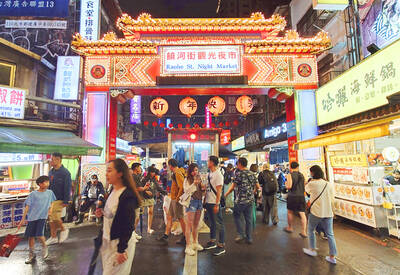
Sales in the retail, and food and beverage sectors last month continued to rise, increasing 0.7 percent and 13.6 percent respectively from a year earlier, setting record highs for the month of March, the Ministry of Economic Affairs said yesterday. Sales in the wholesale sector also grew last month by 4.6 annually, mainly due to the business opportunities for emerging applications related to artificial intelligence (AI) and high-performance computing technologies, the ministry said in a report. The ministry forecast that retail, and food and beverage sales this month would retain their growth momentum as the former would benefit from Tomb Sweeping Day
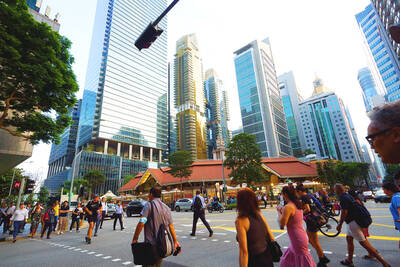
Thousands of parents in Singapore are furious after a Cordlife Group Ltd (康盛人生集團), a major operator of cord blood banks in Asia, irreparably damaged their children’s samples through improper handling, with some now pursuing legal action. The ongoing case, one of the worst to hit the largely untested industry, has renewed concerns over companies marketing themselves to anxious parents with mostly unproven assurances. This has implications across the region, given Cordlife’s operations in Hong Kong, Macau, Indonesia, the Philippines and India. The parents paid for years to have their infants’ cord blood stored, with the understanding that the stem cells they contained


 RSS
RSS